






Categories
Discover our diverse collection of categories covering multiple topics to meet your various interestsDa\'wa cards that highlight great meanings of the verses of the Holy Quran and the noble prophetic hadiths in a simple style and attractive display that helps the Muslim to have a deeper understanding of his religion in an easy way
﴿ يَٰٓأَيُّهَا ٱلنَّبِيُّ إِذَا جَآءَكَ ٱلۡمُؤۡمِنَٰتُ يُبَايِعۡنَكَ عَلَىٰٓ أَن لَّا يُشۡرِكۡنَ بِٱللَّهِ شَيۡـٔٗا وَلَا يَسۡرِقۡنَ وَلَا يَزۡنِينَ وَلَا يَقۡتُلۡنَ أَوۡلَٰدَهُنَّ وَلَا يَأۡتِينَ بِبُهۡتَٰنٖ يَفۡتَرِينَهُۥ بَيۡنَ أَيۡدِيهِنَّ وَأَرۡجُلِهِنَّ وَلَا يَعۡصِينَكَ فِي مَعۡرُوفٖ فَبَايِعۡهُنَّ وَٱسۡتَغۡفِرۡ لَهُنَّ ٱللَّهَۚ إِنَّ ٱللَّهَ غَفُورٞ رَّحِيمٞ ﴾
سورة الممتحنة
12. O Prophet! When believing women come to you to give you the Bai‘ah (pledge), that they will not associate anything in worship with Allâh, that they will not steal, that they will not commit illegal sexual intercourse, that they will not kill their children, that they will not utter slander, intentionally forging falsehood (i.e. by making illegal children belonging to their husbands), and that they will not disobey you in Ma‘rûf (Islâmic Monotheism and all that which Islâm ordains), then accept their Bai‘ah (pledge), and ask Allâh to forgive them. Verily, Allâh is Oft-Forgiving, Most Merciful.

﴿ فَٱلۡتَقَطَهُۥٓ ءَالُ فِرۡعَوۡنَ لِيَكُونَ لَهُمۡ عَدُوّٗا وَحَزَنًاۗ إِنَّ فِرۡعَوۡنَ وَهَٰمَٰنَ وَجُنُودَهُمَا كَانُواْ خَٰطِـِٔينَ ﴾
سورة القصص
And the family of Pharaoh picked him up [out of the river] so that he would become to them an enemy and a [cause of] grief. Indeed, Pharaoh and Hāmān and their soldiers were deliberate sinners.
﴿ يَقۡدُمُ قَوۡمَهُۥ يَوۡمَ ٱلۡقِيَٰمَةِ فَأَوۡرَدَهُمُ ٱلنَّارَۖ وَبِئۡسَ ٱلۡوِرۡدُ ٱلۡمَوۡرُودُ ﴾
سورة هود
98. He will go ahead of his people on the Day of Resurrection, and will lead them into the Fire, and evil indeed is the place to which they are led.
﴿ قَالَ يَٰقَوۡمِ لَيۡسَ بِي ضَلَٰلَةٞ وَلَٰكِنِّي رَسُولٞ مِّن رَّبِّ ٱلۡعَٰلَمِينَ ﴾
سورة الأعراف
61. [Nûh (Noah)] said: "O my people! There is no error in me, but I am a Messenger from the Lord of the ‘Âlamîn (mankind, jinn and all that exists)!
﴿ مَّا يَفۡتَحِ ٱللَّهُ لِلنَّاسِ مِن رَّحۡمَةٖ فَلَا مُمۡسِكَ لَهَاۖ وَمَا يُمۡسِكۡ فَلَا مُرۡسِلَ لَهُۥ مِنۢ بَعۡدِهِۦۚ وَهُوَ ٱلۡعَزِيزُ ٱلۡحَكِيمُ ﴾
سورة فاطر
2. Whatever of mercy (i.e. of good), Allâh may grant to mankind, none can withhold it; and whatever He may withhold, none can grant it thereafter. And He is the All-Mighty, the All-Wise.
﴿ فَلۡيَدۡعُ نَادِيَهُۥ ﴾
سورة العلق
17. Then let him call upon his council (of helpers).
﴿ قَالُواْ سَنُرَٰوِدُ عَنۡهُ أَبَاهُ وَإِنَّا لَفَٰعِلُونَ ﴾
سورة يوسف
They said, “We will persuade his father to send him[24], and we will surely do our best.”
﴿ وَمِنَ ٱلۡأَنۡعَٰمِ حَمُولَةٗ وَفَرۡشٗاۚ كُلُواْ مِمَّا رَزَقَكُمُ ٱللَّهُ وَلَا تَتَّبِعُواْ خُطُوَٰتِ ٱلشَّيۡطَٰنِۚ إِنَّهُۥ لَكُمۡ عَدُوّٞ مُّبِينٞ ﴾
سورة الأنعام
142. And of the cattle (are some) for burden (like camels) and (some are) small (unable to carry burden like sheep and goats - for food, meat, milk and wool). Eat of what Allâh has provided for you, and follow not the footsteps of Shaitân (Satan). Surely he is to you an open enemy.
﴿ فَٱسۡتَمۡسِكۡ بِٱلَّذِيٓ أُوحِيَ إِلَيۡكَۖ إِنَّكَ عَلَىٰ صِرَٰطٖ مُّسۡتَقِيمٖ ﴾
سورة الزخرف
So adhere to that which is revealed to you. Indeed, you are on a straight path.
‘Abdullāh ibn ‘Amr ibn al-‘Ās (may Allah be pleased with him) reported: The Messenger of Allah (may Allah’s peace and blessings be upon him) said: "Indeed, Allah will distinguish a man from my Ummah before all of creation on the Day of Judgment. Ninety-nine scrolls will be laid out for him; each scroll will be as far as the eye can see. Then, He will say: 'Do you deny any of this? Have those who recorded this wronged you?' He will say: 'No, O Lord!' He will say: 'Do you have an excuse?' He will say: 'No, O Lord!' So, He will say: 'Rather you have a good deed with us; so, you will not be wronged today.' Then, He will bring out a card, in which it is written: 'I testify that there is no god but Allah and I testify that Muhammad is His servant and Messenger.' He will say: 'Bring your scale.' He will say: 'O Lord, what good is this card next to these scrolls?' He will say: 'You will not be wronged.' The scrolls will be put on a pan (of the scale), and the card on (the other) pan. The scrolls will be light, and the card will be heavy, for nothing is heavier than the name of Allah."
Narrated by At-Termedhy & Ibn Majah
The Prophet (may Allah's peace and blessings be upon him) reported that Allah will select a man from his Ummah before all the creation on the Day of Judgment. He will be summoned for reckoning. Ninety-nine scrolls, the records of his bad deeds which he did in worldly life will be presented to him, with each scroll being as long as the eye can see. Then, Allah Almighty will say to this the person: Do you deny any of what is written in these scrolls? Have My scribe angels wronged you? The person will say: No, O Lord. Then, Allah Almighty will say: Do you have an excuse that may be accepted regarding the deeds you did in worldly life, like doing them out of forgetfulness or ignorance or by mistake? The man will say: No, Lord, I have no excuse. Allah Almighty will say: Rather, you have a good deed with us, and you will not be wronged today. He said: He will bring out a card, in which it is written, I testify that there is no god but Allah and I testify that Muhammad is His servant and Messenger. Then, Allah Almighty will say to this man: Bring your scale. The man will say in wonder: O Lord, what weight can this card have next to these scrolls?! Allah Almighty will say: You will not be subject to injustice. He said: The scrolls will be put on one pan, and the card on the other pan. The pan of the scrolls will be light, and the pan of the card will be heavier, so Allah will forgive him.
Abu Hurayrah (may Allah be pleased with him) reported: The Messenger of Allah (may Allah’s peace and blessings be upon him) said: "When Allah created Paradise and Hellfire, He sent Jibrīl (Gabriel) (peace be upon him) to Paradise, saying: 'Look at it and at what I have prepared in it for its inhabitants.' So, he looked at it, returned, and said: 'By Your Honor, no one will hear of it except that he will enter it.' Then, He gave the order for it to be surrounded with hardships. He said: 'Return to it and look at it, and at what I have prepared in it for its inhabitants.' So, he returned to it and found it surrounded with hardships. He said: 'By Your Honor, I fear that no one will enter it.' He said: 'Go to Hellfire and look at it and at what I have prepared in it for its inhabitants.' So, he looked at it and found that its parts are piling up one over another. Then, he returned and said: 'By Your Honor, none will enter it.' He gave the order for it to be surrounded with desires. Then, He said: 'Return and look at it.' He looked at it and found it surrounded with desires. He returned and said: 'By Your Honor, I fear that no one will be saved from it except that he will enter it.'"
Narrated by Abu Daoud & At-Termedhy & An-Nasa'i
The Prophet (may Allah's peace and blessings be upon him) reported that when Allah created Paradise and Hellfire, He said to Jibrīl (peace be upon him): Go to Paradise and look at it. He went, looked at it, and returned. Jibrīl said: O Lord, by Your Honor, none will hear about it and the bliss, bounty, and pleasant things therein except that he will love to enter it and exert effort for that purpose. Then, Allah surrounded Paradise with hardships and difficulties, involving the fulfillment of commands and the avoidance of prohibitions. So, whoever wants to enter it should go through these hardships. Then, Allah Almighty said: O Jibrīl, go and look at Paradise - after He had surrounded it with hardships. He went and looked at it. Then, he returned and said: O Lord, by Your Honor, I fear that no one will enter it due to the difficulties and hardships that lie on the path to it. And when Allah created Hellfire, He said: O Jibrīl, go and look at it. He went and looked at it. Then, Jibrīl returned and said: O Lord, by Your Honor, none will hear about the punishment, torments, and torture contained therein except that he will hate to enter it and will keep away from the means leading to it. Then, Allah Almighty surrounded Hellfire with desires and pleasures and made them lie on the path to it. Then, He said: O Jibrīl, go and look at it. Jibrīl went, looked at it, then came back, and said: O Lord, by Your Honor, I am fearful and apprehensive that no one will be saved from it - due to the desires and pleasures around it.
‘Abdullāh ibn ‘Amr ibn al-‘Ās (may Allah be pleased with him) reported: I heard the Messenger of Allah (may Allah’s peace and blessings be upon him) say: "Allah decreed the destinies of the creatures fifty thousand years before He created the heavens and the earth." He said: "when His Throne was upon the water.”
Narrated by Muslim
The Prophet (may Allah's peace and blessings be upon him) says that Allah decreed the future destinies of the creatures in detail, including life, death, sustenance, and so on in the Preserved Tablet fifty thousand years before He created the heavens and the earth - and these will take place according to Allah's decree. Everything that comes into being, is so according to Allah's decree and predestination. So, whatever befalls a person would not have missed him, and whatever misses him would not have befallen him.
Jābir (may Allah be pleased with him) reported: I heard the Prophet (may Allah’s peace and blessings be upon him) say: "What stands between a man and polytheism and disbelief is the abandonment of the prayers."
Narrated by Muslim
The Prophet (may Allah's peace and blessings be upon him) warned against abandoning the obligatory prayers and informed us that what stands between a man and falling into Shirk (polytheism) and disbelief is the abandonment of prayer. Prayer is the second pillar of Islam and is of great significance in this religion. Whoever abandons it out of denial of its obligation has become a disbeliever by consensus among the Muslims, and whoever abandons it altogether out of negligence or lethargy is a disbeliever, a ruling the Companions are reported to have agreed upon unanimously. But if a person abandons it sometimes and performs it at other times, he is subject to this stern warning.
Buraydah (may Allah be pleased with him) reported: The Messenger of Allah (may Allah’s peace and blessings be upon him) said: "The covenant between us and them is prayer; so, whoever abandons it has disbelieved."
Narrated by At-Termedhy & An-Nasa'i & Ibn Majah & Ahmad
The Prophet (may Allah's peace and blessings be upon him) pointed out that the covenant and pledge between the Muslims and the disbelievers and hypocrites is prayer. So, whoever abandons it has become a disbeliever.
‘Umar ibn al-Khattāb (may Allah be pleased with him) reported that the Messenger of Allah (may Allah's peace and blessings be upon him) said: "Indeed, Allah Almighty forbids you to swear by your forefathers." ‘Umar said: By Allah, I have never sworn by that since I heard that the Messenger of Allah (may Allah's peace and blessings be upon him) forbade it, neither deliberately nor reporting it from others.
Narrated by Bukhari & Muslim
The Prophet (may Allah's peace and blessings be upon him) informed us that Allah Almighty forbids swearing by the forefathers. So, whoever wants to swear should swear by Allah only and none but Him. ‘Umar ibn al-Khattāb, then, mentioned that ever since he heard the Prophet (may Allah's peace and blessings be upon him) prohibit it, he never swore by other than Allah neither intentionally nor by reporting such an oath on behalf of others.
‘Abdullah ibn Mas‘ūd (may Allah be pleased with him) reported that the Messenger of Allah (may Allah's peace and blessings be upon him) said: "The first cases to be settled among people on the Day of Judgement will be the cases of blood (homicide)."
Narrated by Bukhari & Muslim
The Prophet (may Allah's peace and blessings be upon him) mentioned that the first cases to be settled on the Day of Judgment, regarding the injustices committed among people, would be the cases of blood like homicide and the infliction of wounds.
Ibn ‘Abbās (may Allah be pleased with him and his father) reported: The Prophet (may Allah's peace and blessings be upon him) passed by two graves and said: "They are being tormented, but they are not tormented for a major sin. One of them would not save himself from being soiled with his urine, while the other used to walk about spreading malicious gossip." He then took a green leaf of a date palm, split it into two, and planted one on each grave. They said: O Messenger of Allah, why did you do that? He replied: "Their torment might be alleviated until they become dry."
Narrated by Bukhari & Muslim
The Prophet (may Allah's peace and blessings be upon him) passed by two graves and said: The two buried in these graves are being tormented but not for something that you would consider significant, although it is significant in the sight of Allah. One of them used to be heedless of keeping his body and clothes clean from the traces of urine when relieving himself, while the other used to spread slander among people, transferring others' talk with the intention of causing harm, dissension, and enmity among them.
Anas (may Allah be pleased with him) reported: A man asked the Prophet (may Allah's peace and blessings be upon him): "When is the Hour?" He said: "What have you prepared for it?" He said: "Nothing, except that I love Allah and His Messenger (may Allah's peace and blessings be upon him)." He said: "You will be with whom you love." Anas said: We did not feel more joyful than we did due to the Prophet's statement: "You will be with whom you love." Anas said: I love the Prophet (may Allah's peace and blessings be upon him) and Abu Bakr and ‘Umar, and I hope I will be with them by virtue of my love for them, even if I did not perform deeds like their deeds.
Narrated by Bukhari & Muslim
A Bedouin man, among the dwellers of the desert, asked the Prophet (may Allah's peace and blessings be upon him) about the time of the Hour. The Prophet (may Allah's peace and blessings be upon him) said to him: What righteous deeds have you prepared for it? The questioner said: I have not prepared much deeds for it, except that I love Allah and His Messenger. He did not mention any other act of worship, be it by the heart, body, or property, for these are all branches of love dependent on it, and because true love motivates a person to strive to do righteous deeds. Thereupon, the Prophet (may Allah's peace and blessings be upon him) said to him: You will be with whom you love in Paradise. The Prophet's Companions greatly rejoiced at this good news. Then, Anas (may Allah be pleased with him) informed that he loved the Prophet (may Allah's peace and blessings be upon him) and Abu Bakr and ‘Umar and hoped he would be with them, even though his deeds were not like their deeds.
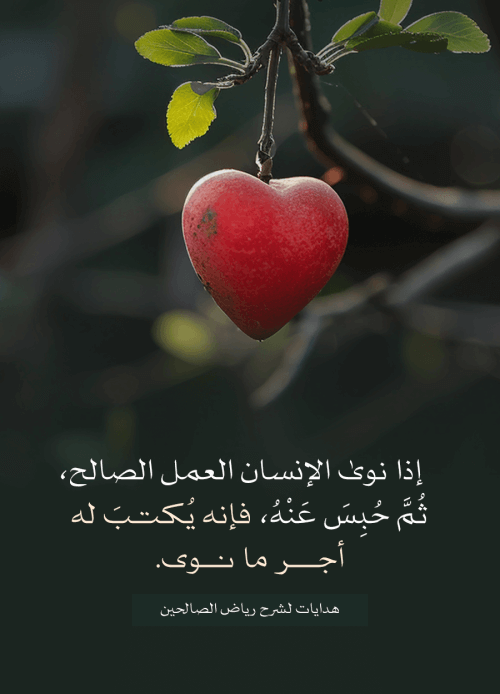
If someone intends to do a good deed but was prevented by a valid excuse, he shall gain the reward of his intention.
Riyadh Al-Salheen with explanation and benefits
Variation of reward for good deeds is based on sincerity and following of the Prophet’s guidance. The more a person is sincere to Allah, and the keener he is on following the Prophet (may Allah’s peace and blessings be upon him), the more perfect his worship will be, and consequently his reward will be bigger.
Riyadh Al-Salheen with explanation and benefits
People differ with regards to their acts of worship according to their intentions. The intentions of some people have reached the ultimate level of sincerity (to Allah) and keenness in following the Sunnah (of the Messenger of Allah) with regard to doing good and righteous deeds, while the intentions of others are below that.
Riyadh Al-Salheen with explanation and benefits
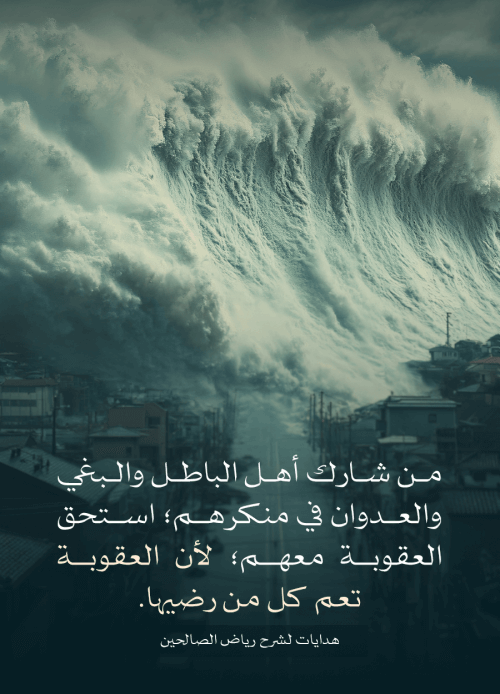
Anyone partaking a role with transgressors and wrongdoers will share their punishment because it is inclusive.
Riyadh Al-Salheen with explanation and benefits
If someone intends to do a good deed but was prevented by a valid excuse, he shall gain the reward of his intention.
Riyadh Al-Salheen with explanation and benefits
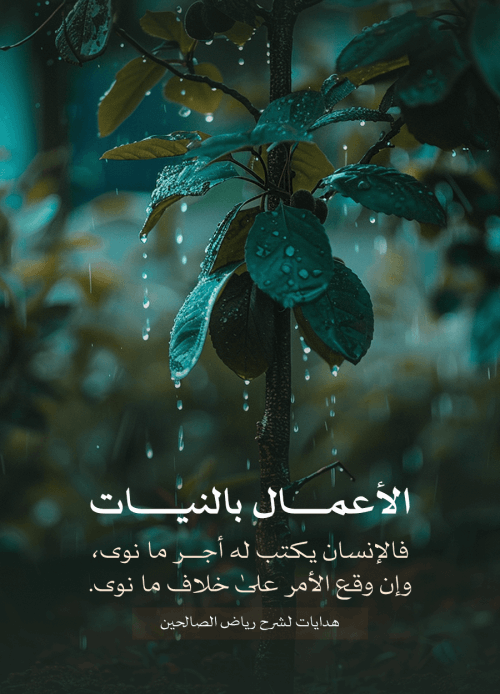
Actions are recompensed according to the intentions behind them, and the individual shall receive the reward of what he intended even if the outcome was contrary to his intention.
Riyadh Al-Salheen with explanation and benefits
There is not a single good deed intended sincerely to please Allah except that its doer will be raised in rank and status thereby, so that he would reap the full reward.
Riyadh Al-Salheen with explanation and benefits
Love and contentment is measured by good deeds and intentions because they are the criteria for Allah’s acceptance of the servant; perhaps a small deed reaps great reward because of the intention behind it and perhaps a big deed reaps little reward because of the intention behind it
Riyadh Al-Salheen with explanation and benefits
One of the proofs Allah supports the servant is the latter’s sincere endeavor to rectify his intention and purify his heart by good deeds.
هدايات لشرح رياض الصالحين