



Hedayat Fruitful selections from the gardens of
﴾Verses and Hadiths ﴿
Inspiring Dawah cards that highlight the profound meanings of Quranic verses and Prophetic Hadiths. Presented in an accessible and engaging style to help Muslims gain a deeper understanding of their faith with ease.
About Hedayat
Hedayat is a platform that combines design simplicity and ease of use, displaying benefits derived from verses and hadiths in attractive cards with unique designs
Unique Designs
Cards with unique and attractive designs that express the content of the text
Easy Browsing
You can browse the cards easily and display them effortlessly
Different Languages
Cards are available in more than 40 languages for the benefit of all
Reliable Materials
Scientifically reliable benefits reviewed by a group of scholars
Hedayat Menu
﴿ وَلَمَّا فَتَحُواْ مَتَٰعَهُمۡ وَجَدُواْ بِضَٰعَتَهُمۡ رُدَّتۡ إِلَيۡهِمۡۖ قَالُواْ يَٰٓأَبَانَا مَا نَبۡغِيۖ هَٰذِهِۦ بِضَٰعَتُنَا رُدَّتۡ إِلَيۡنَاۖ وَنَمِيرُ أَهۡلَنَا وَنَحۡفَظُ أَخَانَا وَنَزۡدَادُ كَيۡلَ بَعِيرٖۖ ذَٰلِكَ كَيۡلٞ يَسِيرٞ ﴾
سورة يوسف
When they opened their baggage, they found that their merchandise had been returned to them. They said, “O our father, what more could we ask for? Here are our trading goods returned to us. We can bring more food to our family, protect our brother, and obtain an extra camel-load of grain[26]. That measure is easily secured.”
﴿ إِنۡ هُوَ إِلَّا وَحۡيٞ يُوحَىٰ ﴾
سورة النجم
It is not but a revelation revealed,
﴿ قَدۡ فَرَضَ ٱللَّهُ لَكُمۡ تَحِلَّةَ أَيۡمَٰنِكُمۡۚ وَٱللَّهُ مَوۡلَىٰكُمۡۖ وَهُوَ ٱلۡعَلِيمُ ٱلۡحَكِيمُ ﴾
سورة التحريم
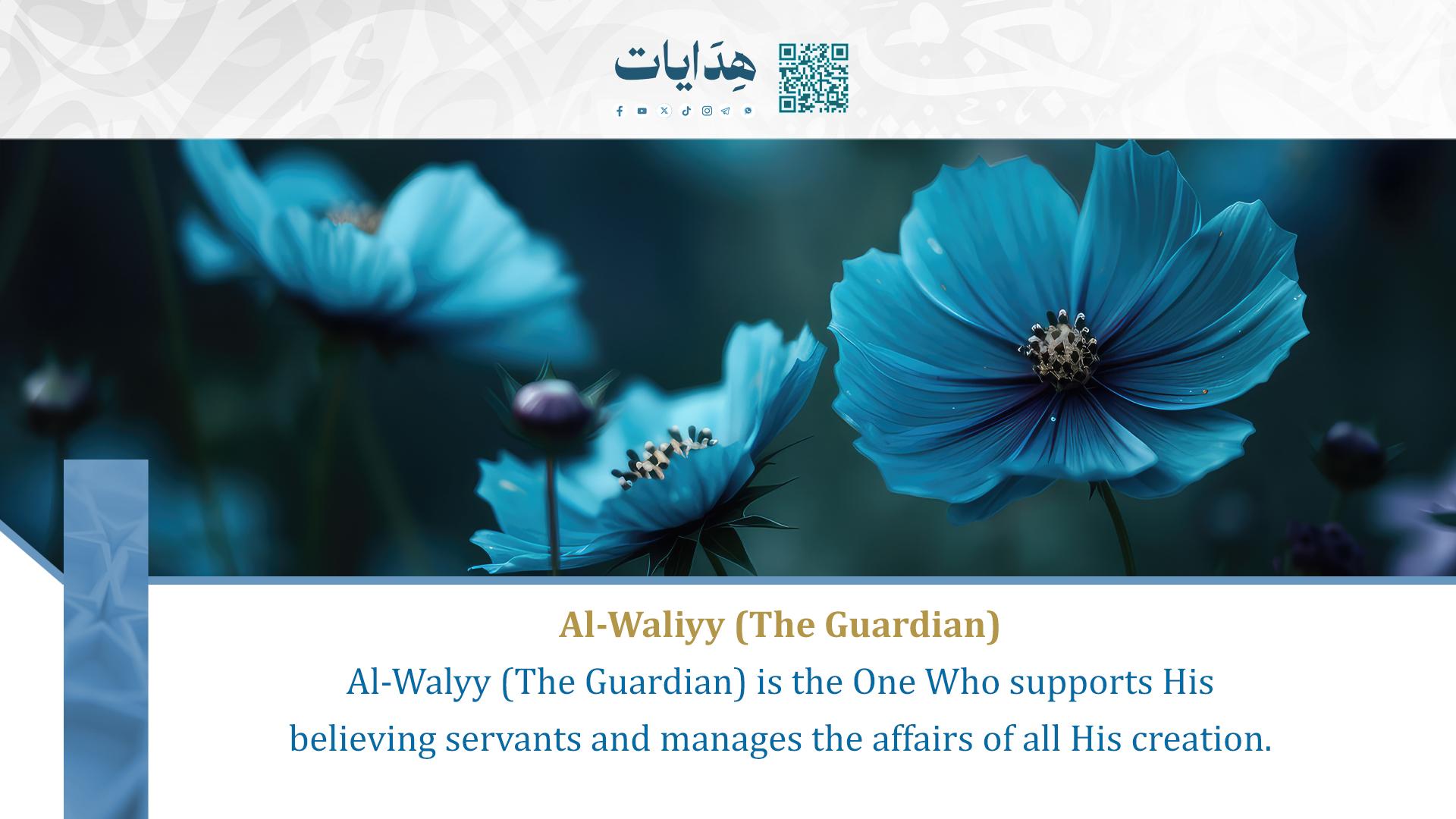
Allah has ordained for you the way to absolve yourselves from your oaths[1]. Allah is your Guardian, and He is the All-Knowing, the All-Wise.
﴿ وَقَالَ ٱلَّذِينَ كَفَرُوٓاْ إِنۡ هَٰذَآ إِلَّآ إِفۡكٌ ٱفۡتَرَىٰهُ وَأَعَانَهُۥ عَلَيۡهِ قَوۡمٌ ءَاخَرُونَۖ فَقَدۡ جَآءُو ظُلۡمٗا وَزُورٗا ﴾
سورة الفرقان
And those who disbelieve say, "This [Qur’ān] is not except a falsehood he invented, and another people assisted him in it." But they have committed an injustice and a lie.
﴿ وَٱلۡحَمۡدُ لِلَّهِ رَبِّ ٱلۡعَٰلَمِينَ ﴾
سورة الصافات
and all praise be to Allah, the Lord of the worlds.
﴿ وَلَئِن سَأَلۡتَهُمۡ لَيَقُولُنَّ إِنَّمَا كُنَّا نَخُوضُ وَنَلۡعَبُۚ قُلۡ أَبِٱللَّهِ وَءَايَٰتِهِۦ وَرَسُولِهِۦ كُنتُمۡ تَسۡتَهۡزِءُونَ ﴾
سورة التوبة
65. If you ask them (about this), they declare: "We were only talking idly and joking." Say: "Was it at Allâh (عز وجل), and His Ayât (proofs, evidence, verses, lessons, signs, revelations) and His Messenger (صلى الله عليه وسلم) that you were mocking?"
﴿ قَالَ يَٰٓـَٔادَمُ أَنۢبِئۡهُم بِأَسۡمَآئِهِمۡۖ فَلَمَّآ أَنۢبَأَهُم بِأَسۡمَآئِهِمۡ قَالَ أَلَمۡ أَقُل لَّكُمۡ إِنِّيٓ أَعۡلَمُ غَيۡبَ ٱلسَّمَٰوَٰتِ وَٱلۡأَرۡضِ وَأَعۡلَمُ مَا تُبۡدُونَ وَمَا كُنتُمۡ تَكۡتُمُونَ ﴾
سورة البقرة
33. He said: "O Adam! Inform them of their names," and when he had informed them of their names, He said: "Did I not tell you that I know the Ghaib (Unseen) in the heavens and the earth, and I know what you reveal and what you have been concealing?"
﴿ أَلَّا تَتَّبِعَنِۖ أَفَعَصَيۡتَ أَمۡرِي ﴾
سورة طه
from following me? Did you disobey my command?”[29]
﴿ وَوُجُوهٞ يَوۡمَئِذِۭ بَاسِرَةٞ ﴾
سورة القيامة
And [some] faces, that Day, will be contorted,
﴿ إِنَّا جَعَلۡنَا مَا عَلَى ٱلۡأَرۡضِ زِينَةٗ لَّهَا لِنَبۡلُوَهُمۡ أَيُّهُمۡ أَحۡسَنُ عَمَلٗا ﴾
سورة الكهف
Indeed, We have made that which is on the earth adornment for it that We may test them [as to] which of them is best in deed.
Abu Mūsa (may Allah be pleased with him) reported: The Messenger of Allah (may Allah's peace and blessings be upon him) said: "Many men attained perfection, but of women none attained perfection except Āsiyah, the wife of Pharaoh, and Maryam, the daughter of ‘Imrān. Indeed, the superiority of ‘Ā'ishah to other women is like the superiority of Tharīd to other meals."
Narrated by Bukhari & Muslim
The men who attained religious and moral perfection are many. Some reached the common level of perfection such as scholars, righteous men, and pious allies of Allah. Others reached the most sublime levels of perfection such as the prophets. However, there are very few women who attained perfection; on top of which were Āsiyah bint Muzāhim, the wife of Pharaoh. Allah presented her as an example of perfect faith in the Qur'an: {And Allah presents an example of those who believed: the wife of Pharaoh, when she said: "My Lord, build for me near You a house in Paradise and save me from Pharaoh and his deeds and save me from the wrongdoing people"} [Sūrat At-Tahrīm:11]. She believed in Mūsa (peace be upon him) when he overcame the magicians of Pharaoh. When Pharaoh found out about her conversion, he tortured her severely until she died adhering to her faith. The other perfect lady was Maryam, the daughter of ‘Imrān. Allah presented her as an example of chastity and perfect worship in the Qur'an. Finally, the Prophet (may Allah's peace and blessings be upon him) said that the merit of ‘Ā'ishah over women is like the merit of Tharīd over all other food. Tharīd is the most delicious food for Arabs. It is made of bread and meat. So, ‘Ā'ishah is the best of women, just as the Tharīd is the best of food.
‘Umar ibn al-Khattāb (may Allah be pleased with him) said: “A woman whose husband is missing and whose whereabouts is unknown to her must wait for four years and then observe the ‘Iddah (of a widow) for four months and ten days. After that, she is allowed to marry.”
Maalik
In this tradition, ‘Umar ibn al-Khattāb (may Allah be pleased with him) explains that any woman whose husband went missing must wait for four years, starting from the date when she lost him. Then she should observe the ‘Iddah of a widow for four months and ten days. After that, she is allowed to marry. Muslim jurists said that this tradition and similar ones apply to the husband whose death is almost certain, such as the one who went missing in a war, drowned at sea, etc.
‘Ā’ishah, Mother of the Believers, (may Allah be pleased with her) reported saying: O Messenger of Allah, we consider Jihad the best deed; should we not perform Jihad? He said, "No; rather, the best Jihad is Mabrūr (accepted) Hajj."
Narrated by Bukhari
The Companions (may Allah be pleased with them) used to consider Jihad in the cause of Allah and fighting the enemies among the best of deeds. Therefore, ‘Ā’ishah (may Allah be pleased with her) asked the Prophet (may Allah's peace and blessings be upon him) if women should perform Jihad. He (may Allah's peace and blessings be upon him) guided them to the best Jihad they could perform, namely the Mabrūr Hajj that conforms with the Qur’an and Sunnah and that is free of sin and ostentation.
Abu ‘Abdullāh Jābir ibn Samurah (may Allah be pleased with him) reported: I used to pray with the Prophet (may Allah's peace and blessings be upon him) and his prayer was moderate in length and his sermon was moderate in length.
Narrated by Muslim
The Prophet's prayer and sermon were not overly long or brief. Yet, they were moderate, being performed and given by the role model for Muslims in general and for Imāms and preachers in particular. So, no one should cite this Hadīth as evidence that the prayer and sermon may take place very quickly, for the Prophet's guidance points to moderation, and sometimes prolongation that causes no boredom.
Abu Hurayrah (may Allah be pleased with him) reported: Khawlah bint Yasār (may Allah be pleased with her) came to the Prophet (may Allah's peace and blessings be upon him) and said: "O Messenger of Allah, I have only one dress and I menstruate in it. What should I do?" He said: "When you are purified, wash it and pray in it." She asked: "What if the blood is not removed?" He said: "It is enough for you to wash the blood, and there is nothing wrong with its mark."
Narrated by Abu Daoud - Narrated by Ahmad
Abu Hurayrah (may Allah be pleased with him) reported that Khawlah bint Yasār (may Allah be pleased with her) came to the Prophet (may Allah's peace and blessing be upon him) and complained to him that she had only one dress, which would be tainted with menstrual blood during her period. She asked about what she should do. The Prophet (may Allah's peace and blessings be upon him) ordered her to wash it with water when she got purified and then pray in it. She mentioned, however, that traces of blood might remain on the dress after rubbing and washing it well, as related in other narrations of the Hadīth. In response, the Prophet (may Allah's peace and blessings be upon him) explained to her that water is enough for purifying the dress and the remaining trace is harmless, after a person tries his best to wash it.
Ubayy ibn Ka‘b (may Allah be pleased with him) reported: The Messenger of Allah (may Allah’s peace and blessings be upon him) said: "O Abu al-Mundhir, do you know which verse of Allah's Book that you have is the greatest?" I replied: "Allah and His Messenger know best." He said: "O Abu al-Mundhir, do you know which verse of Allah's Book that you have is the greatest?" I said: "{Allah: none has the right to be worshiped except Him, the Ever-Living, All-Sustaining...} [Surat al-Baqarah: 255]." Thereupon, he struck me on the chest and said: "May knowledge be pleasant for you, O Abu al-Mundhir!"
Narrated by Muslim
The Prophet (may Allah's peace and blessings be upon him) asked Ubayy ibn Ka‘b about the greatest verse in Allah's Book. He initially hesitated about the answer and then said: {Allah: none has the right to be worshiped except Him, the Ever-Living, All-Sustaining...} The Prophet (may Allah's peace and blessings be upon him) agreed with him and struck him on the chest, indicating that it is filled with knowledge and wisdom. He also supplicated that this knowledge be pleasant and easy for him.
Masrūq reported: I was reclining in the house of ‘Ā’ishah when she said: "O Abu ‘Ā’ishah, there are three things, whoever speaks of one of them has fabricated a tremendous lie against Allah; whoever claims that Muhammad (may Allah's peace and blessings be upon him) saw his Lord, then he has fabricated a tremendous lie against Allah." I was reclining, so I sat up an said: "O Mother of the Believers, give me enough time and do not be hasty! Did not Allah, Glorified and Exalted, say: {And truly he saw him on the clear horizon} [Sūrat At-Takwīr: 23] and: {He saw Him in another descent.} [Sūrat An-Najm: 13]?" She said: "I am the first of this Ummah who asked the Messenger of Allah (may Allah's peace and blessings be upon him) about it; and he said: ‘Verily it is Jibrīl. I have never seen him in his original form in which he was created except on those two occasions (to which these verses refer); I saw him descending from the heaven and filling (the space) from the sky to the earth with the greatness of his bodily structure.’ Have you not heard that Allah says: {Eyes comprehend Him not, but He comprehends (all) vision. and He is Subtle, and All-Aware} [Sūrat al-An‘ām: 103]? Have you not heard that Allah says: {And it is not for any human being that Allah should speak to him except by revelation or from behind a partition or that He sends a messenger to reveal, by His permission, what He wills. Indeed, He is Most High and Wise.} [Sūrat Ash-Shūra: 51]. The one who presumes that the Messenger of Allah (may Allah's peace be upon him) concealed anything from the Book of Allah has fabricated the greatest lie against Allah. Allah says: {O Messenger, announce that which has been revealed to you from your Lord, and if you do not, then you have not conveyed His message} [Sūrat al-Mā’idah: 67]. The one who presumes that he would foretell what will happen tomorrow has fabricated the greatest lie against Allah. Allah, the Almighty says: {Say: None in the heavens and earth knows the unseen except Allah.} [Sūrat An-Naml: 65]"
Narrated by Bukhari & Muslim
The venerated Tābi‘i Masrūq was reclining in the house of the Mother of the Believers ‘Ā’ishah (may Allah be pleased with her). She told him: "There are three things, and the one who speaks of one of them has fabricated a tremendous lie against Allah." He asked her: "What are they?" She answered: 1. Whoever claims that Muhammad (may Allah's peace and blessings be upon him) saw his Lord has fabricated a tremendous lie. Masrūq was reclining, but then he sat upright an wondered: "How can you say that while Allah, the Exalted, said: {And truly he saw him on the clear horizon} [Sūrat At-Takwīr: 23] and: {He saw Him in another descent...} [Sūrat An-Najm: 13]?" She told him that she was the first ever to ask the Messenger of Allah (may Allah's peace and blessings be upon him) specifically about these two verses. he told her that it was Jibrīl (peace be upon him) whom he saw and that he has not seen him in his original form upon which Allah, the Exalted, created him except in those two instants; once on earth towards the direction of the sunrise, where everything appears in its most vivid form, and once in Paradise. He saw him descending from the heavens, filling the space between the heaven and the earth with his magnificent body. Then she cited two Qur’anic verses proving that the Prophet (may Allah's peace and blessings be upon him) has not seen his Lord. Allah says: {Eyes comprehend Him not, but He comprehends (all) vision, and He is Subtle and All-Aware.} [Sūrat al-An‘ām: 103]? And His saying: {And it is not for any human being that Allah should speak to him except by revelation or from behind a partition or that He sends a messenger to reveal, by His permission, what He wills. Indeed, He is Most High and Wise.} [Sūrat Ash-Shūra: 51] 2. Whoever claims that the Messenger of Allah (may Allah's peace and blessings be upon him) concealed anything from the Book of Allah has fabricated a tremendous lie against Allah. Allah said: {O Messenger, announce that which has been revealed to you from your Lord, and if you do not, then you have not conveyed His message.} [Sūrat al-Mā’idah: 67] 3. Whoever claims that the Messenger of Allah (may Allah's peace and blessings be upon him) could foretell the future on his own without revelation from Allah, the Exalted, has fabricated a tremendous lie against Allah. Allah says: {Say: None in the heavens and earth knows the unseen except Allah.} [Sūrat An-Naml: 65]
Abu Salamah ibn ‘Abdur-Rahmān (may Allah have mercy upon him) reported that he asked ‘Ā'ishah (may Allah be pleased with her) how the Prophet's prayer was in Ramadan. She said: "Neither in Ramadan, nor in any other month, did the Messenger of Allah (may Allah's peace and blessings be upon him) exceed the eleven Rak‘ahs of prayer. He would pray four – and do not ask about their beauty and length; then he would pray another four, and do not ask about their beauty and length either, then he would pray three." ‘Ā'ishah then added: "I asked him: 'O Messenger of Allah, do you sleep before performing the Witr prayer?' he said: 'O ‘Ā'ishah, indeed, my eyes sleep but my heart does not sleep.'"
Narrated by Bukhari & Muslim
It is well-known that the Prophet (may Allah's peace and blessings be upon him) used to perform the voluntary night prayer during Ramadan and outside Ramadan. Hence, Abu Salamah (may Allah be pleased with him) asked about the voluntary night prayer to be offered in Ramadan; he wondered whether the prayer of the Prophet (may Allah's peace and blessings be upon him) during the nights of Ramadan was like his prayer outside it, in terms of the number of Rak‘ahs, or it was different. ‘Ā'ishah (may Allah be pleased with her) replied that there was no difference between his prayers during Ramadan or otherwise, since throughout the whole year he used to perform eleven Rak‘ahs and no more. Then, she clarified for him the manner in which they were performed, saying: "He would pray four", meaning: he would perform two Rak‘ahs and make Taslīm, then two more Rak‘ahs and make Taslīm, as ‘Ā'ishah (may Allah be pleased with her) clarified and explained in detail the summary of this Hadīth in another narration attributed to her in Sahīh Muslim, where she said: "In the time between the ‘Ishā' prayer and the Fajr prayer, the Messenger of Allah (may Allah's peace and blessings be upon him) used to perform eleven Rak‘ahs of prayer, making Taslīm after every two Rak‘ahs, and concluding them with one Rak‘ah, i.e. the Witr prayer." This is in addition to his statement: "The voluntary night prayer is performed in pairs of Rak‘ahs." [Al-Bukhāri and Muslim] "And do not ask about their beauty and length", meaning: do not ask about their manner (of performance), because they were the epitome of beauty and perfection, in terms of the quality of recitation and the length of standing, bowing, and prostrating. Likewise, the last four Rak‘ahs that were performed two by two; do not ask about their beauty and perfection, in terms of the quality of recitation and the length of standing, bowing, and prostrating. "Then he would pray three", meaning: what is apparently understood is that he would perform them altogether without separation. Then he would make Taslīm in the last Rak‘ah. However, another narration attributed to ‘Ā'ishah clarifies that he would make Taslīm after two Rak‘ahs, followed by a single Rak‘ah which is Witr. This is explicitly stated through her words: "He would make Taslīm after every two Rak‘ahs, followed by one Rak‘ah." This indicates that he would separate the (last) three Rak‘ahs by the Taslīm, which he made after the first two Rak‘ahs thereof. "O Messenger of Allah, do you sleep before performing the Witr prayer?" meaning: how do you sleep before performing the Witr prayer? "He said: 'O ‘Ā'ishah, indeed my eyes sleep but my heart does not sleep'", meaning: his heart is never inattentive although his eyes are sleeping. Rather, his heart is aware and feels everything, such as consideration of time and precise determination of it. That is why the visions of the prophets are considered part of the revelation.
Sālim ibn Abu al-Ja‘d reported: A man said: "I wish I had prayed and got comfort." When the people seemed to disapprove of his statement, he said: "I heard the Messenger of Allah (may Allah's peace and blessings be upon him) say: 'O Bilāl, call the Iqāmah for the prayer; give us comfort by it.'"
Narrated by Abu Daoud
A man from the Companions said: I wish I had prayed and got comfort. Those around him seemed to disapprove of his statement. So, he said: I heard the Prophet (may Allah's peace and blessings be upon him) say: O Bilāl, make the call to prayer and proclaim its commencement so that we will get comfort by it. This is because it includes private communication with Allah Almighty and provides relief for the soul and the heart.
Ibn ‘Umar (may Allah be pleased with him) reported: The Prophet (may Allah's peace and blessings be upon him) said: "The example of a companion of the Qur'an is like an owner of hobbled camels. If he vigilantly keeps them tied, he will retain them, but if he releases them, they will run away."
Narrated by Bukhari & Muslim
A companion of the Qur'an is someone who memorizes it and recites it from memory and hobbled camels are those that are tied with ropes. The commonality here is that if a camel owner keeps his camels tied up and is cautious and attentive to them, they will stay in his possession, but if he unties them and releases them, they will run away. Similarly, a person who knows the Qur’an by heart will continue to retain it in his memory if he takes care of it by consistent recitation and revision. However, if he does not do so, he will forget it and will only be able to recover it back by going through hardships and difficulties. In other words, the memorization of the Qur’an will continue in your memory if you continue to revise it and be attentive to it, in the same way that the camels will remain in their places if they are tied firmly. The parable of camels is given here because they are the domesticated animals that run away most, and it is hard to retrieve them back if they run away.
Prayer illuminates the path of truth for its observer in this life and the Sirāt (bridge over hellfire) in the Hereafter.
Riyadh Al-Salheen with explanation and benefits
When the believer bears patiently and awaits Allah’s reward, Allah Almighty expiates his sins.
Riyadh Al-Salheen with explanation and benefits
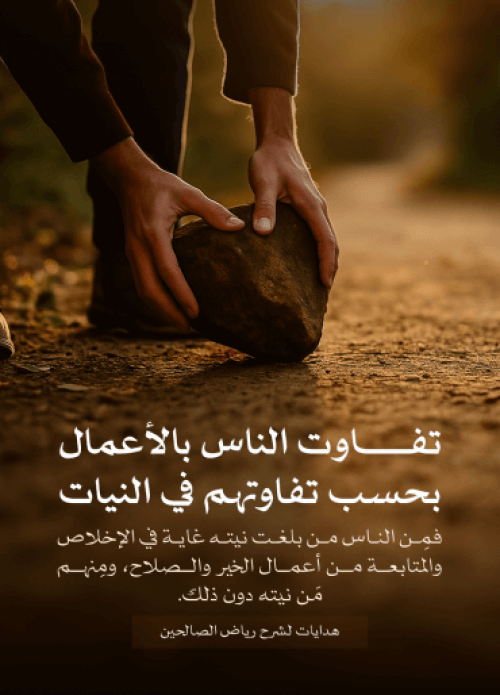
Love and contentment is measured by good deeds and intentions because they are the criteria for Allah’s acceptance of the servant; perhaps a small deed reaps great reward because of the intention behind it and perhaps a big deed reaps little reward because of the intention behind it
Riyadh Al-Salheen with explanation and benefits
Sincerity and honesty are the criteria for deeds that, once fulfilled, the doer will obtain the designated reward.
Riyadh Al-Salheen with explanation and benefits
One of the proofs Allah supports the servant is the latter’s sincere endeavor to rectify his intention and purify his heart by good deeds.
هدايات لشرح رياض الصالحين
Truthfulness of the hearts is a cause to attain what is desired. Whoever intends to do a good deed will be rewarded for it even if he were unable to do it or failed to complete it.
Riyadh Al-Salheen with explanation and benefits
Facing affliction with patience and expectation of the reward from Allah raises one’s ranks and expiates his sins.
Riyadh Al-Salheen with explanation and benefits
Once something is blessed, it becomes abundant even if it is little; and once something is stripped of blessings, it becomes little even if it is abundant.
Riyadh Al-Salheen with explanation and benefits
When the servant suffices himself with what Allah gives him rather than beg people for what they have, Allah will make him needless of people and aid him in keeping his integrity intact without having to beg.
Riyadh Al-Salheen with explanation and benefits
One of the best blessings the servant is granted is to have patience in all his affairs.
Riyadh Al-Salheen with explanation and benefitsAyat Cards
﴿ وَلَمَّا فَتَحُواْ مَتَٰعَهُمۡ وَجَدُواْ بِضَٰعَتَهُمۡ رُدَّتۡ إِلَيۡهِمۡۖ قَالُواْ يَٰٓأَبَانَا مَا نَبۡغِيۖ هَٰذِهِۦ بِضَٰعَتُنَا رُدَّتۡ إِلَيۡنَاۖ وَنَمِيرُ أَهۡلَنَا وَنَحۡفَظُ أَخَانَا وَنَزۡدَادُ كَيۡلَ بَعِيرٖۖ ذَٰلِكَ كَيۡلٞ يَسِيرٞ ﴾
سورة يوسف
When they opened their baggage, they found that their merchandise had been returned to them. They said, “O our father, what more could we ask for? Here are our trading goods returned to us. We can bring more food to our family, protect our brother, and obtain an extra camel-load of grain[26]. That measure is easily secured.”
﴿ إِنۡ هُوَ إِلَّا وَحۡيٞ يُوحَىٰ ﴾
سورة النجم
It is not but a revelation revealed,
﴿ قَدۡ فَرَضَ ٱللَّهُ لَكُمۡ تَحِلَّةَ أَيۡمَٰنِكُمۡۚ وَٱللَّهُ مَوۡلَىٰكُمۡۖ وَهُوَ ٱلۡعَلِيمُ ٱلۡحَكِيمُ ﴾
سورة التحريم
Allah has ordained for you the way to absolve yourselves from your oaths[1]. Allah is your Guardian, and He is the All-Knowing, the All-Wise.
﴿ وَقَالَ ٱلَّذِينَ كَفَرُوٓاْ إِنۡ هَٰذَآ إِلَّآ إِفۡكٌ ٱفۡتَرَىٰهُ وَأَعَانَهُۥ عَلَيۡهِ قَوۡمٌ ءَاخَرُونَۖ فَقَدۡ جَآءُو ظُلۡمٗا وَزُورٗا ﴾
سورة الفرقان
And those who disbelieve say, "This [Qur’ān] is not except a falsehood he invented, and another people assisted him in it." But they have committed an injustice and a lie.
﴿ وَٱلۡحَمۡدُ لِلَّهِ رَبِّ ٱلۡعَٰلَمِينَ ﴾
سورة الصافات
and all praise be to Allah, the Lord of the worlds.
﴿ وَلَئِن سَأَلۡتَهُمۡ لَيَقُولُنَّ إِنَّمَا كُنَّا نَخُوضُ وَنَلۡعَبُۚ قُلۡ أَبِٱللَّهِ وَءَايَٰتِهِۦ وَرَسُولِهِۦ كُنتُمۡ تَسۡتَهۡزِءُونَ ﴾
سورة التوبة
65. If you ask them (about this), they declare: "We were only talking idly and joking." Say: "Was it at Allâh (عز وجل), and His Ayât (proofs, evidence, verses, lessons, signs, revelations) and His Messenger (صلى الله عليه وسلم) that you were mocking?"
﴿ قَالَ يَٰٓـَٔادَمُ أَنۢبِئۡهُم بِأَسۡمَآئِهِمۡۖ فَلَمَّآ أَنۢبَأَهُم بِأَسۡمَآئِهِمۡ قَالَ أَلَمۡ أَقُل لَّكُمۡ إِنِّيٓ أَعۡلَمُ غَيۡبَ ٱلسَّمَٰوَٰتِ وَٱلۡأَرۡضِ وَأَعۡلَمُ مَا تُبۡدُونَ وَمَا كُنتُمۡ تَكۡتُمُونَ ﴾
سورة البقرة
33. He said: "O Adam! Inform them of their names," and when he had informed them of their names, He said: "Did I not tell you that I know the Ghaib (Unseen) in the heavens and the earth, and I know what you reveal and what you have been concealing?"
﴿ أَلَّا تَتَّبِعَنِۖ أَفَعَصَيۡتَ أَمۡرِي ﴾
سورة طه
from following me? Did you disobey my command?”[29]
﴿ وَوُجُوهٞ يَوۡمَئِذِۭ بَاسِرَةٞ ﴾
سورة القيامة
And [some] faces, that Day, will be contorted,
﴿ إِنَّا جَعَلۡنَا مَا عَلَى ٱلۡأَرۡضِ زِينَةٗ لَّهَا لِنَبۡلُوَهُمۡ أَيُّهُمۡ أَحۡسَنُ عَمَلٗا ﴾
سورة الكهف
Indeed, We have made that which is on the earth adornment for it that We may test them [as to] which of them is best in deed.
Hadith Cards
Abu Mūsa (may Allah be pleased with him) reported: The Messenger of Allah (may Allah's peace and blessings be upon him) said: "Many men attained perfection, but of women none attained perfection except Āsiyah, the wife of Pharaoh, and Maryam, the daughter of ‘Imrān. Indeed, the superiority of ‘Ā'ishah to other women is like the superiority of Tharīd to other meals."
Narrated by Bukhari & Muslim
The men who attained religious and moral perfection are many. Some reached the common level of perfection such as scholars, righteous men, and pious allies of Allah. Others reached the most sublime levels of perfection such as the prophets. However, there are very few women who attained perfection; on top of which were Āsiyah bint Muzāhim, the wife of Pharaoh. Allah presented her as an example of perfect faith in the Qur'an: {And Allah presents an example of those who believed: the wife of Pharaoh, when she said: "My Lord, build for me near You a house in Paradise and save me from Pharaoh and his deeds and save me from the wrongdoing people"} [Sūrat At-Tahrīm:11]. She believed in Mūsa (peace be upon him) when he overcame the magicians of Pharaoh. When Pharaoh found out about her conversion, he tortured her severely until she died adhering to her faith. The other perfect lady was Maryam, the daughter of ‘Imrān. Allah presented her as an example of chastity and perfect worship in the Qur'an. Finally, the Prophet (may Allah's peace and blessings be upon him) said that the merit of ‘Ā'ishah over women is like the merit of Tharīd over all other food. Tharīd is the most delicious food for Arabs. It is made of bread and meat. So, ‘Ā'ishah is the best of women, just as the Tharīd is the best of food.
‘Umar ibn al-Khattāb (may Allah be pleased with him) said: “A woman whose husband is missing and whose whereabouts is unknown to her must wait for four years and then observe the ‘Iddah (of a widow) for four months and ten days. After that, she is allowed to marry.”
Maalik
In this tradition, ‘Umar ibn al-Khattāb (may Allah be pleased with him) explains that any woman whose husband went missing must wait for four years, starting from the date when she lost him. Then she should observe the ‘Iddah of a widow for four months and ten days. After that, she is allowed to marry. Muslim jurists said that this tradition and similar ones apply to the husband whose death is almost certain, such as the one who went missing in a war, drowned at sea, etc.
‘Ā’ishah, Mother of the Believers, (may Allah be pleased with her) reported saying: O Messenger of Allah, we consider Jihad the best deed; should we not perform Jihad? He said, "No; rather, the best Jihad is Mabrūr (accepted) Hajj."
Narrated by Bukhari
The Companions (may Allah be pleased with them) used to consider Jihad in the cause of Allah and fighting the enemies among the best of deeds. Therefore, ‘Ā’ishah (may Allah be pleased with her) asked the Prophet (may Allah's peace and blessings be upon him) if women should perform Jihad. He (may Allah's peace and blessings be upon him) guided them to the best Jihad they could perform, namely the Mabrūr Hajj that conforms with the Qur’an and Sunnah and that is free of sin and ostentation.
Abu ‘Abdullāh Jābir ibn Samurah (may Allah be pleased with him) reported: I used to pray with the Prophet (may Allah's peace and blessings be upon him) and his prayer was moderate in length and his sermon was moderate in length.
Narrated by Muslim
The Prophet's prayer and sermon were not overly long or brief. Yet, they were moderate, being performed and given by the role model for Muslims in general and for Imāms and preachers in particular. So, no one should cite this Hadīth as evidence that the prayer and sermon may take place very quickly, for the Prophet's guidance points to moderation, and sometimes prolongation that causes no boredom.
Abu Hurayrah (may Allah be pleased with him) reported: Khawlah bint Yasār (may Allah be pleased with her) came to the Prophet (may Allah's peace and blessings be upon him) and said: "O Messenger of Allah, I have only one dress and I menstruate in it. What should I do?" He said: "When you are purified, wash it and pray in it." She asked: "What if the blood is not removed?" He said: "It is enough for you to wash the blood, and there is nothing wrong with its mark."
Narrated by Abu Daoud - Narrated by Ahmad
Abu Hurayrah (may Allah be pleased with him) reported that Khawlah bint Yasār (may Allah be pleased with her) came to the Prophet (may Allah's peace and blessing be upon him) and complained to him that she had only one dress, which would be tainted with menstrual blood during her period. She asked about what she should do. The Prophet (may Allah's peace and blessings be upon him) ordered her to wash it with water when she got purified and then pray in it. She mentioned, however, that traces of blood might remain on the dress after rubbing and washing it well, as related in other narrations of the Hadīth. In response, the Prophet (may Allah's peace and blessings be upon him) explained to her that water is enough for purifying the dress and the remaining trace is harmless, after a person tries his best to wash it.
Ubayy ibn Ka‘b (may Allah be pleased with him) reported: The Messenger of Allah (may Allah’s peace and blessings be upon him) said: "O Abu al-Mundhir, do you know which verse of Allah's Book that you have is the greatest?" I replied: "Allah and His Messenger know best." He said: "O Abu al-Mundhir, do you know which verse of Allah's Book that you have is the greatest?" I said: "{Allah: none has the right to be worshiped except Him, the Ever-Living, All-Sustaining...} [Surat al-Baqarah: 255]." Thereupon, he struck me on the chest and said: "May knowledge be pleasant for you, O Abu al-Mundhir!"
Narrated by Muslim
The Prophet (may Allah's peace and blessings be upon him) asked Ubayy ibn Ka‘b about the greatest verse in Allah's Book. He initially hesitated about the answer and then said: {Allah: none has the right to be worshiped except Him, the Ever-Living, All-Sustaining...} The Prophet (may Allah's peace and blessings be upon him) agreed with him and struck him on the chest, indicating that it is filled with knowledge and wisdom. He also supplicated that this knowledge be pleasant and easy for him.
Masrūq reported: I was reclining in the house of ‘Ā’ishah when she said: "O Abu ‘Ā’ishah, there are three things, whoever speaks of one of them has fabricated a tremendous lie against Allah; whoever claims that Muhammad (may Allah's peace and blessings be upon him) saw his Lord, then he has fabricated a tremendous lie against Allah." I was reclining, so I sat up an said: "O Mother of the Believers, give me enough time and do not be hasty! Did not Allah, Glorified and Exalted, say: {And truly he saw him on the clear horizon} [Sūrat At-Takwīr: 23] and: {He saw Him in another descent.} [Sūrat An-Najm: 13]?" She said: "I am the first of this Ummah who asked the Messenger of Allah (may Allah's peace and blessings be upon him) about it; and he said: ‘Verily it is Jibrīl. I have never seen him in his original form in which he was created except on those two occasions (to which these verses refer); I saw him descending from the heaven and filling (the space) from the sky to the earth with the greatness of his bodily structure.’ Have you not heard that Allah says: {Eyes comprehend Him not, but He comprehends (all) vision. and He is Subtle, and All-Aware} [Sūrat al-An‘ām: 103]? Have you not heard that Allah says: {And it is not for any human being that Allah should speak to him except by revelation or from behind a partition or that He sends a messenger to reveal, by His permission, what He wills. Indeed, He is Most High and Wise.} [Sūrat Ash-Shūra: 51]. The one who presumes that the Messenger of Allah (may Allah's peace be upon him) concealed anything from the Book of Allah has fabricated the greatest lie against Allah. Allah says: {O Messenger, announce that which has been revealed to you from your Lord, and if you do not, then you have not conveyed His message} [Sūrat al-Mā’idah: 67]. The one who presumes that he would foretell what will happen tomorrow has fabricated the greatest lie against Allah. Allah, the Almighty says: {Say: None in the heavens and earth knows the unseen except Allah.} [Sūrat An-Naml: 65]"
Narrated by Bukhari & Muslim
The venerated Tābi‘i Masrūq was reclining in the house of the Mother of the Believers ‘Ā’ishah (may Allah be pleased with her). She told him: "There are three things, and the one who speaks of one of them has fabricated a tremendous lie against Allah." He asked her: "What are they?" She answered: 1. Whoever claims that Muhammad (may Allah's peace and blessings be upon him) saw his Lord has fabricated a tremendous lie. Masrūq was reclining, but then he sat upright an wondered: "How can you say that while Allah, the Exalted, said: {And truly he saw him on the clear horizon} [Sūrat At-Takwīr: 23] and: {He saw Him in another descent...} [Sūrat An-Najm: 13]?" She told him that she was the first ever to ask the Messenger of Allah (may Allah's peace and blessings be upon him) specifically about these two verses. he told her that it was Jibrīl (peace be upon him) whom he saw and that he has not seen him in his original form upon which Allah, the Exalted, created him except in those two instants; once on earth towards the direction of the sunrise, where everything appears in its most vivid form, and once in Paradise. He saw him descending from the heavens, filling the space between the heaven and the earth with his magnificent body. Then she cited two Qur’anic verses proving that the Prophet (may Allah's peace and blessings be upon him) has not seen his Lord. Allah says: {Eyes comprehend Him not, but He comprehends (all) vision, and He is Subtle and All-Aware.} [Sūrat al-An‘ām: 103]? And His saying: {And it is not for any human being that Allah should speak to him except by revelation or from behind a partition or that He sends a messenger to reveal, by His permission, what He wills. Indeed, He is Most High and Wise.} [Sūrat Ash-Shūra: 51] 2. Whoever claims that the Messenger of Allah (may Allah's peace and blessings be upon him) concealed anything from the Book of Allah has fabricated a tremendous lie against Allah. Allah said: {O Messenger, announce that which has been revealed to you from your Lord, and if you do not, then you have not conveyed His message.} [Sūrat al-Mā’idah: 67] 3. Whoever claims that the Messenger of Allah (may Allah's peace and blessings be upon him) could foretell the future on his own without revelation from Allah, the Exalted, has fabricated a tremendous lie against Allah. Allah says: {Say: None in the heavens and earth knows the unseen except Allah.} [Sūrat An-Naml: 65]
Abu Salamah ibn ‘Abdur-Rahmān (may Allah have mercy upon him) reported that he asked ‘Ā'ishah (may Allah be pleased with her) how the Prophet's prayer was in Ramadan. She said: "Neither in Ramadan, nor in any other month, did the Messenger of Allah (may Allah's peace and blessings be upon him) exceed the eleven Rak‘ahs of prayer. He would pray four – and do not ask about their beauty and length; then he would pray another four, and do not ask about their beauty and length either, then he would pray three." ‘Ā'ishah then added: "I asked him: 'O Messenger of Allah, do you sleep before performing the Witr prayer?' he said: 'O ‘Ā'ishah, indeed, my eyes sleep but my heart does not sleep.'"
Narrated by Bukhari & Muslim
It is well-known that the Prophet (may Allah's peace and blessings be upon him) used to perform the voluntary night prayer during Ramadan and outside Ramadan. Hence, Abu Salamah (may Allah be pleased with him) asked about the voluntary night prayer to be offered in Ramadan; he wondered whether the prayer of the Prophet (may Allah's peace and blessings be upon him) during the nights of Ramadan was like his prayer outside it, in terms of the number of Rak‘ahs, or it was different. ‘Ā'ishah (may Allah be pleased with her) replied that there was no difference between his prayers during Ramadan or otherwise, since throughout the whole year he used to perform eleven Rak‘ahs and no more. Then, she clarified for him the manner in which they were performed, saying: "He would pray four", meaning: he would perform two Rak‘ahs and make Taslīm, then two more Rak‘ahs and make Taslīm, as ‘Ā'ishah (may Allah be pleased with her) clarified and explained in detail the summary of this Hadīth in another narration attributed to her in Sahīh Muslim, where she said: "In the time between the ‘Ishā' prayer and the Fajr prayer, the Messenger of Allah (may Allah's peace and blessings be upon him) used to perform eleven Rak‘ahs of prayer, making Taslīm after every two Rak‘ahs, and concluding them with one Rak‘ah, i.e. the Witr prayer." This is in addition to his statement: "The voluntary night prayer is performed in pairs of Rak‘ahs." [Al-Bukhāri and Muslim] "And do not ask about their beauty and length", meaning: do not ask about their manner (of performance), because they were the epitome of beauty and perfection, in terms of the quality of recitation and the length of standing, bowing, and prostrating. Likewise, the last four Rak‘ahs that were performed two by two; do not ask about their beauty and perfection, in terms of the quality of recitation and the length of standing, bowing, and prostrating. "Then he would pray three", meaning: what is apparently understood is that he would perform them altogether without separation. Then he would make Taslīm in the last Rak‘ah. However, another narration attributed to ‘Ā'ishah clarifies that he would make Taslīm after two Rak‘ahs, followed by a single Rak‘ah which is Witr. This is explicitly stated through her words: "He would make Taslīm after every two Rak‘ahs, followed by one Rak‘ah." This indicates that he would separate the (last) three Rak‘ahs by the Taslīm, which he made after the first two Rak‘ahs thereof. "O Messenger of Allah, do you sleep before performing the Witr prayer?" meaning: how do you sleep before performing the Witr prayer? "He said: 'O ‘Ā'ishah, indeed my eyes sleep but my heart does not sleep'", meaning: his heart is never inattentive although his eyes are sleeping. Rather, his heart is aware and feels everything, such as consideration of time and precise determination of it. That is why the visions of the prophets are considered part of the revelation.
Sālim ibn Abu al-Ja‘d reported: A man said: "I wish I had prayed and got comfort." When the people seemed to disapprove of his statement, he said: "I heard the Messenger of Allah (may Allah's peace and blessings be upon him) say: 'O Bilāl, call the Iqāmah for the prayer; give us comfort by it.'"
Narrated by Abu Daoud
A man from the Companions said: I wish I had prayed and got comfort. Those around him seemed to disapprove of his statement. So, he said: I heard the Prophet (may Allah's peace and blessings be upon him) say: O Bilāl, make the call to prayer and proclaim its commencement so that we will get comfort by it. This is because it includes private communication with Allah Almighty and provides relief for the soul and the heart.
Ibn ‘Umar (may Allah be pleased with him) reported: The Prophet (may Allah's peace and blessings be upon him) said: "The example of a companion of the Qur'an is like an owner of hobbled camels. If he vigilantly keeps them tied, he will retain them, but if he releases them, they will run away."
Narrated by Bukhari & Muslim
A companion of the Qur'an is someone who memorizes it and recites it from memory and hobbled camels are those that are tied with ropes. The commonality here is that if a camel owner keeps his camels tied up and is cautious and attentive to them, they will stay in his possession, but if he unties them and releases them, they will run away. Similarly, a person who knows the Qur’an by heart will continue to retain it in his memory if he takes care of it by consistent recitation and revision. However, if he does not do so, he will forget it and will only be able to recover it back by going through hardships and difficulties. In other words, the memorization of the Qur’an will continue in your memory if you continue to revise it and be attentive to it, in the same way that the camels will remain in their places if they are tied firmly. The parable of camels is given here because they are the domesticated animals that run away most, and it is hard to retrieve them back if they run away.
benefits Cards
Prayer illuminates the path of truth for its observer in this life and the Sirāt (bridge over hellfire) in the Hereafter.
Riyadh Al-Salheen with explanation and benefits
When the believer bears patiently and awaits Allah’s reward, Allah Almighty expiates his sins.
Riyadh Al-Salheen with explanation and benefits
Love and contentment is measured by good deeds and intentions because they are the criteria for Allah’s acceptance of the servant; perhaps a small deed reaps great reward because of the intention behind it and perhaps a big deed reaps little reward because of the intention behind it
Riyadh Al-Salheen with explanation and benefits
Sincerity and honesty are the criteria for deeds that, once fulfilled, the doer will obtain the designated reward.
Riyadh Al-Salheen with explanation and benefits
One of the proofs Allah supports the servant is the latter’s sincere endeavor to rectify his intention and purify his heart by good deeds.
هدايات لشرح رياض الصالحين
Truthfulness of the hearts is a cause to attain what is desired. Whoever intends to do a good deed will be rewarded for it even if he were unable to do it or failed to complete it.
Riyadh Al-Salheen with explanation and benefits
Facing affliction with patience and expectation of the reward from Allah raises one’s ranks and expiates his sins.
Riyadh Al-Salheen with explanation and benefits
Once something is blessed, it becomes abundant even if it is little; and once something is stripped of blessings, it becomes little even if it is abundant.
Riyadh Al-Salheen with explanation and benefits
When the servant suffices himself with what Allah gives him rather than beg people for what they have, Allah will make him needless of people and aid him in keeping his integrity intact without having to beg.
Riyadh Al-Salheen with explanation and benefits