





Categories
Discover our diverse collection of categories covering multiple topics to meet your various interestsDa\'wa cards that highlight great meanings of the verses of the Holy Quran and the noble prophetic hadiths in a simple style and attractive display that helps the Muslim to have a deeper understanding of his religion in an easy way
﴿ ذَٰلِكَ جَزَيۡنَٰهُم بِمَا كَفَرُواْۖ وَهَلۡ نُجَٰزِيٓ إِلَّا ٱلۡكَفُورَ ﴾
سورة سبأ
This is how We punished them for their ingratitude; would We punish anyone except those who are utterly ungrateful?

﴿ وَٱلَّذِينَ تَدۡعُونَ مِن دُونِهِۦ لَا يَسۡتَطِيعُونَ نَصۡرَكُمۡ وَلَآ أَنفُسَهُمۡ يَنصُرُونَ ﴾
سورة الأعراف
But those whom you supplicate besides Him cannot help you, nor can they help themselves.”
﴿ وَٱلَّذِينَ هُم بِـَٔايَٰتِ رَبِّهِمۡ يُؤۡمِنُونَ ﴾
سورة المؤمنون
and those who believe in the verses of their Lord,
﴿ فَٱنظُرۡ كَيۡفَ كَانَ عَٰقِبَةُ مَكۡرِهِمۡ أَنَّا دَمَّرۡنَٰهُمۡ وَقَوۡمَهُمۡ أَجۡمَعِينَ ﴾
سورة النمل
Then look how was the outcome of their plan - that We destroyed them and their people, all.
﴿ إِنۡ هُوَ إِلَّا وَحۡيٞ يُوحَىٰ ﴾
سورة النجم
It is not but a revelation revealed,
﴿ أَوۡ يَذَّكَّرُ فَتَنفَعَهُ ٱلذِّكۡرَىٰٓ ﴾
سورة عبس
or he might take heed and benefit from the reminder?
﴿ فَكَيۡفَ كَانَ عَذَابِي وَنُذُرِ ﴾
سورة القمر
Then how were My punishment and My warnings[6]?
﴿ لِّلطَّٰغِينَ مَـَٔابٗا ﴾
سورة النبأ
a resort for the transgressors,
﴿ وَٱسۡتَعِينُواْ بِٱلصَّبۡرِ وَٱلصَّلَوٰةِۚ وَإِنَّهَا لَكَبِيرَةٌ إِلَّا عَلَى ٱلۡخَٰشِعِينَ ﴾
سورة البقرة
45. And seek help in patience and As-Salât (the prayer) and truly it is extremely heavy and hard except for Al-Khâshi‘ûn [i.e. the true believers in Allâh - those who obey Allâh with full submission, fear much from His Punishment, and believe in His Promise (Paradise) and in His Warnings (Hell)].
Abu Hurayrah (may Allah be pleased with him) reported: The Messenger of Allah (may Allah's peace and blessings be upon him) said: "Faith has over seventy branches - or over sixty branches - the most excellent of which is the declaration that 'lā ilāha illa Allah (there is no god but Allah)', and the lowest of which is the removal of what is harmful from the way; and modesty is a branch of faith."
Narrated by Bukhari & Muslim
The Prophet (may Allah's peace and blessings be upon him) informs that faith consists of many branches and elements comprising various deeds, beliefs, and words. And he states that the best and most sublime among the elements of faith is to say "there is no god but Allah" while knowing its meaning and acting according to it - that Allah is the One true God Who is worthy of worship, alone, and apart from all else. And that the lowest act of faith is to remove any object harmful to people from their ways. Then, the Prophet (may Allah's peace and blessings be upon him) informed that modesty is one of the elements of faith, and it is a character trait that prompts one to do what is good and deters him from doing what is evil.
Abu Bashīr al-Ansāri (may Allah be pleased with him) reported: He was with the Messenger of Allah (may Allah's peace and blessings be upon him) on one of his journeys, and he sent a messenger ordering: "There should not remain any necklace of string or any other kind of necklace around the necks of camels without being cut."
Narrated by Bukhari & Muslim
As the Prophet (may Allah's peace and blessings be upon him) was on one of his journeys, and the people were in their sleeping places where they would pass the night in their dwellings and tents, he sent someone to the people ordering them to cut the necklaces hung around the camels' necks, be they made of strings - bowstrings - or any other material, like bells or sandals. This is because they used to hang these necklaces for protection against the evil eye. Hence, they were ordered to cut them, as they are of no avail against the evil eye, and benefit and harm lie in the Hand of Allah alone, with no partner.
‘Abdullāh ibn ‘Akīm (may Allah be pleased with him) reported that the Prophet (may Allah's peace and blessings be upon him) said: "Whoever is attached to something will be entrusted to that thing."
Narrated by At-Termedhy - Narrated by Ahmad
Whoever turns with his heart or deeds or both to something hoping that it would benefit him or keep harm away, then Allah will entrust him to that thing that he is attached to. So, whoever is attached to Allah, Allah shall grant him sufficiency and will make every difficult affair easy for him, and whoever is attached to anything other than Allah, then Allah will entrust him to it and it will fail him.
Tāriq ibn Ashīm al-Ashja‘i (may Allah be pleased with him) reported: I heard the Messenger of Allah (may Allah’s peace and blessings be upon him) say: "Whoever says 'lā ilāha illa Allah (there is no god but Allah)' and disbelieves in everything worshiped besides Allah, his property and blood becomes inviolable, and his reckoning will be with Allah."
Narrated by Muslim
The Prophet (may Allah's peace and blessings be upon him) informs that if a person says and bears witness that "there is no god but Allah" - which means that none is truly worthy of worship except Allah - and disbelieves in everything worshiped apart from Allah and disavows all other religions besides Islam, his property and blood become inviolable to the Muslims. We only judge according to his apparent reality. So, his property may not be taken, or his blood be shed unless he commits a crime or an offence that entails such punishment as per Islamic laws. And Allah will be responsible for his reckoning on the Day of Judgment. If he is sincere, He will reward him, and if he is insincere, He will punish him.
‘Abdullāh ibn ‘Amr (may Allah be pleased with him) reported: The Prophet (may Allah's peace and blessings be upon him) said: "Those who are merciful are shown mercy by the Most Merciful. Be merciful to the inhabitants of earth and the One in the heaven will be merciful to you."
Narrated by Abu Daoud & At-Termedhy & Ahmad
The Prophet (may Allah's peace and blessings be upon him) points out that those who show mercy to others are shown mercy by the Most Merciful with His mercy, which encompasses all things - a fitting recompense. Then, he (may Allah's peace and blessings be upon him) enjoined mercy towards all those on earth, including human beings, animals, birds, and other kinds of creatures. As recompense for that, Allah, from above His heavens, will show mercy to you.
‘Ā’ishah (may Allah be pleased with her) reported: Some people asked the Messenger of Allah (may Allah's peace and blessings be upon him) about diviners, and he said to them: "They are of no account." They said: "O Messenger of Allah, but they sometimes make true predictions." Thereupon, the Messenger of Allah (may Allah's peace and blessings be upon him) said: "That is a word pertaining to the truth which a jinn snatches and whispers into his friend's ears as a hen does. Then, they mix it with more than a hundred lies."
Narrated by Bukhari & Muslim
The Prophet (may Allah's peace and blessings be upon him) was asked about those who speak about unseen and future things, and he said: Pay no attention to them and do not believe them. They said: Their statements sometimes conform with reality - they say that something will occur in such and such month on such and such day, it actually happens as they stated. Thereupon, the Prophet (may Allah's peace and blessings be upon him) said: The jinn snatch what they hear from the heavenly information, descend upon their allies from among the diviners, and convey what they heard to them. Then, the diviners add a hundred lies to this piece of information that reached them from heaven.
Anas ibn Mālik (may Allah be pleased with him) reported: As the Prophet (may Allah's peace and blessings be upon him) was riding a mount with Mu‘ādh behind him, he said: "O Mu‘ādh ibn Jabal!" He replied: "Here I am at your service, O Messenger of Allah." He again said: "O Mu‘ādh!" Mu‘ādh replied: "Here I am at your service, O Messenger of Allah." This was said three times. Then, the Prophet (may Allah's peace and blessings be upon him) said: "There is no one who bears witness that there is no god but Allah and that Muhammad is His slave and Messenger, sincerely from his heart, except that Allah will make him forbidden to Hellfire." He said: "O Messenger of Allah, should I not inform the people of that so that they may rejoice?" He replied: "Then they would rely on this alone." Mu‘ādh narrated this Hadīth at the time of his death to avoid the sin of concealing knowledge.
Narrated by Bukhari & Muslim
Mu‘ādh ibn Jabal (may Allah be pleased with him) was riding on a mount behind the Prophet (may Allah's peace and blessings be upon him), who called him: O Mu‘ādh! He repeated the call three times to show the significance of what he was about to say. Meanwhile, Mu‘ādh was replying: "Here I am at your service, O Messenger of Allah." That's I am answering your call, O Messenger of Allah, and seek happiness in answering you. The Prophet (may Allah's peace and blessings be upon him) told him that if anyone bears witness that there is no god but Allah - which means that none is truly worthy of worship except Allah - and that Muhammad is the Messenger of Allah, sincerely from his heart, not lying, and then he dies in this state, Allah will make him forbidden to Hellfire. Mu‘ādh (may Allah be pleased with him) asked the Prophet (may Allah's peace and blessings be upon him) whether he could tell people about that so that they would rejoice and feel hopeful. But the Prophet (may Allah's peace and blessings be upon him) feared that they might solely rely upon that and their good deeds might decrease. So, Mu‘ādh did not narrate this Hadīth to anyone, except at the time of his death, fearing that he would incur the sin of concealing knowledge.
Abu Hurayrah (may Allah be pleased with him) reported: The Messenger of Allah (may Allah's peace and blessings be upon him) said: "Our Lord, Glorified and Exalted, descends every night to the lowest heaven when the last third of the night remains and says: ‘Who supplicates Me so that I may answer him? Who asks Me so that I may give him? Who seeks forgiveness from Me so that I may forgive him?'"
Narrated by Bukhari & Muslim
The Prophet (may Allah's peace and blessings be upon him) pointed out that Allah Almighty descends every night to the lowest heaven when the last third of the night remains and encourages His servants to supplicate Him, for He responds to those who supplicate Him, and He urges them to ask Him for whatever they want, for He gives those who ask Him, and He recommends them to seek His forgiveness for their sins, for He forgives His believing servants.
Abu Marthad al-Ghanawi (may Allah be pleased with him) reported: The Messenger of Allah (may Allah's peace and blessings be upon him) said: "Do not sit on graves, and do not pray towards them."
Narrated by Muslim
The Prophet (may Allah's peace and blessings be upon him) forbade sitting on the graves. He also forbade praying while facing the graves if the grave lies in the direction of the Qiblah for the praying person because this is one of the means leading to polytheism.
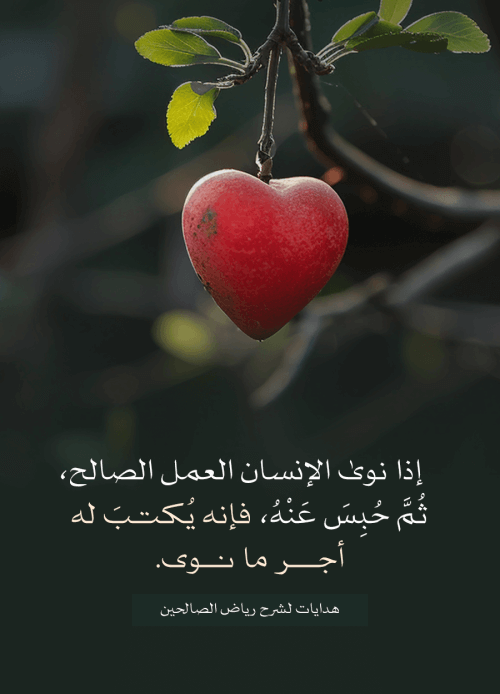
If someone intends to do a good deed but was prevented by a valid excuse, he shall gain the reward of his intention.
Riyadh Al-Salheen with explanation and benefits
Variation of reward for good deeds is based on sincerity and following of the Prophet’s guidance. The more a person is sincere to Allah, and the keener he is on following the Prophet (may Allah’s peace and blessings be upon him), the more perfect his worship will be, and consequently his reward will be bigger.
Riyadh Al-Salheen with explanation and benefits
People differ with regards to their acts of worship according to their intentions. The intentions of some people have reached the ultimate level of sincerity (to Allah) and keenness in following the Sunnah (of the Messenger of Allah) with regard to doing good and righteous deeds, while the intentions of others are below that.
Riyadh Al-Salheen with explanation and benefits
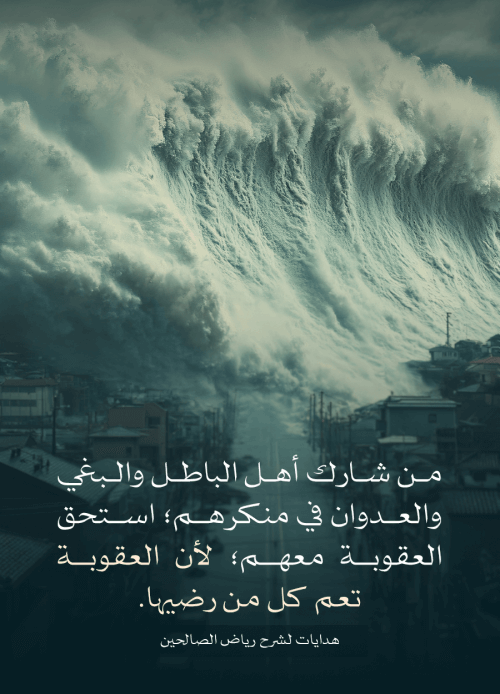
Anyone partaking a role with transgressors and wrongdoers will share their punishment because it is inclusive.
Riyadh Al-Salheen with explanation and benefits
If someone intends to do a good deed but was prevented by a valid excuse, he shall gain the reward of his intention.
Riyadh Al-Salheen with explanation and benefits
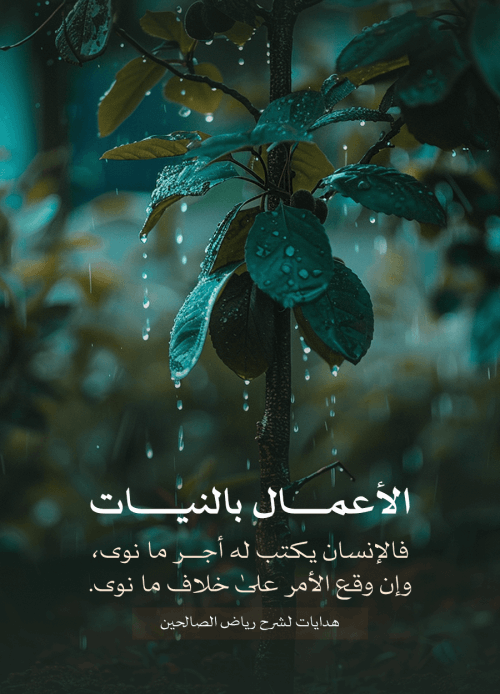
Actions are recompensed according to the intentions behind them, and the individual shall receive the reward of what he intended even if the outcome was contrary to his intention.
Riyadh Al-Salheen with explanation and benefits
There is not a single good deed intended sincerely to please Allah except that its doer will be raised in rank and status thereby, so that he would reap the full reward.
Riyadh Al-Salheen with explanation and benefits
Love and contentment is measured by good deeds and intentions because they are the criteria for Allah’s acceptance of the servant; perhaps a small deed reaps great reward because of the intention behind it and perhaps a big deed reaps little reward because of the intention behind it
Riyadh Al-Salheen with explanation and benefits
One of the proofs Allah supports the servant is the latter’s sincere endeavor to rectify his intention and purify his heart by good deeds.
هدايات لشرح رياض الصالحين