








Categories
Discover our diverse collection of categories covering multiple topics to meet your various interestsDa\'wa cards that highlight great meanings of the verses of the Holy Quran and the noble prophetic hadiths in a simple style and attractive display that helps the Muslim to have a deeper understanding of his religion in an easy way
﴿ وَسِيقَ ٱلَّذِينَ ٱتَّقَوۡاْ رَبَّهُمۡ إِلَى ٱلۡجَنَّةِ زُمَرًاۖ حَتَّىٰٓ إِذَا جَآءُوهَا وَفُتِحَتۡ أَبۡوَٰبُهَا وَقَالَ لَهُمۡ خَزَنَتُهَا سَلَٰمٌ عَلَيۡكُمۡ طِبۡتُمۡ فَٱدۡخُلُوهَا خَٰلِدِينَ ﴾
سورة الزمر
But those who feared their Lord will be driven to Paradise in groups until, when they reach it while its gates have been opened and its keepers say, "Peace be upon you; you have become pure; so enter it to abide eternally therein," [they will enter].[1362]

﴿ وَلَا يَحُضُّ عَلَىٰ طَعَامِ ٱلۡمِسۡكِينِ ﴾
سورة الحاقة
nor did he encourage feeding the needy.
﴿ فَإِذَا قُضِيَتِ ٱلصَّلَوٰةُ فَٱنتَشِرُواْ فِي ٱلۡأَرۡضِ وَٱبۡتَغُواْ مِن فَضۡلِ ٱللَّهِ وَٱذۡكُرُواْ ٱللَّهَ كَثِيرٗا لَّعَلَّكُمۡ تُفۡلِحُونَ ﴾
سورة الجمعة
10. Then when the (Jumu‘ah) Salât (prayer) is ended, you may disperse through the land, and seek the Bounty of Allâh (by working, etc.), and remember Allâh much: that you may be successful.
﴿ لَمَجۡمُوعُونَ إِلَىٰ مِيقَٰتِ يَوۡمٖ مَّعۡلُومٖ ﴾
سورة الواقعة
will be gathered on a predetermined Day.
﴿ وَأَنَّ ٱلۡمَسَٰجِدَ لِلَّهِ فَلَا تَدۡعُواْ مَعَ ٱللَّهِ أَحَدٗا ﴾
سورة الجن
18. And the mosques are for Allâh (Alone): so invoke not anyone along with Allâh.[3]
﴿ ۞ فَلۡيُقَٰتِلۡ فِي سَبِيلِ ٱللَّهِ ٱلَّذِينَ يَشۡرُونَ ٱلۡحَيَوٰةَ ٱلدُّنۡيَا بِٱلۡأٓخِرَةِۚ وَمَن يُقَٰتِلۡ فِي سَبِيلِ ٱللَّهِ فَيُقۡتَلۡ أَوۡ يَغۡلِبۡ فَسَوۡفَ نُؤۡتِيهِ أَجۡرًا عَظِيمٗا ﴾
سورة النساء
So let those fight in the cause of Allāh who sell the life of this world for the Hereafter. And he who fights in the cause of Allāh and is killed or achieves victory - We will bestow upon him a great reward.
﴿ وَٱلَّذِينَ هُم بِرَبِّهِمۡ لَا يُشۡرِكُونَ ﴾
سورة المؤمنون
59. And those who join not anyone (in worship) as partners with their Lord;
﴿ لَوۡ أَرَدۡنَآ أَن نَّتَّخِذَ لَهۡوٗا لَّٱتَّخَذۡنَٰهُ مِن لَّدُنَّآ إِن كُنَّا فَٰعِلِينَ ﴾
سورة الأنبياء
If We had wished for a pastime[9], We could have had it from Our own, if We were to do so.
﴿ حَتَّىٰٓ إِذَا بَلَغَ مَطۡلِعَ ٱلشَّمۡسِ وَجَدَهَا تَطۡلُعُ عَلَىٰ قَوۡمٖ لَّمۡ نَجۡعَل لَّهُم مِّن دُونِهَا سِتۡرٗا ﴾
سورة الكهف
Until, when he came to the rising of the sun [i.e., the east], he found it rising on a people for whom We had not made against it any shield.
‘Ā’ishah (may Allah be pleased with her) reported: The Prophet (may Allah’s peace and blessings be upon him) said: "The most hated person in the sight of Allah is the most quarrelsome person."
Narrated by Bukhari & Muslim
The Prophet (may Allah's peace and blessings be upon him) informs that Allah Almighty dislikes people who are given to tough quarreling, those who refuse to submit to the truth and try to repel it with their argumentation, or they engage in rightful arguments. Still, they do so in an immoderate manner or without knowledge.
Samurah ibn Jundub (may Allah be pleased with him) reported: The Messenger of Allah (may Allah's peace and blessings be upon him) said: "The most beloved speech to Allah are four: subhān Allah (glory be Allah), al-hamdulillāh (praise be to Allah), la ilāha illa Allah (there is no god but Allah), and Allāhu akbar (Allah is the Most Great), and it does not matter which one of them you start with."
Narrated by Muslim
The Prophet (may Allah's peace and blessings be upon him) informs that the most beloved speech to Allah Almighty are four: Subhān Allah: It is exalting Allah Almighty far above any imperfection. Al-hamdulillāh: It is ascribing complete perfection to Allah, along with loving and extolling Him. La ilāha illa Allah: It means none is worthy of being worshiped except Allah. Allāhu akbar: It means He is more Sublime, Greater, and more Powerful than everything. For obtaining the merit and reward of these words, it is not required to utter them in order.
Abu Hurayrah (may Allah be pleased with him) reported: The Messenger of Allah (may Allah's peace and blessings be upon him) was asked about the foremost deed that leads people to Paradise, and he replied: "Fear of Allah and good character." Then, he was asked about the things that most lead people to Hellfire, and he said: "The tongue and the private parts."
Narrated by At-Termedhy & Ibn Majah & Ahmad
The Prophet (may Allah's peace and blessings be upon him) pointed out that the greatest means that lead one to Paradise are: Fear of Allah and good character. Fear of Allah (taqwa) is to make wiqāya (shield) between oneself and the punishment of Allah, by observing His commands and prohibitions. Good character: by having a cheerful face, doing good to others, and averting harm from them. And that the greatest causes for a person's entry into Hellfire are: The tongue and the private parts. The sins committed by the tongue include: lying, backbiting, and tale-bearing. The sins committed by the private parts include: adultery, sodomy, etc.
‘Abdullāh ibn ‘Umar (may Allah be pleased with him) reported: The Prophet (may Allah's peace and blessings be upon him) heard a man preaching to his brother about modesty; he said: "Modesty is part of faith."
Narrated by Bukhari & Muslim
The Prophet (may Allah's peace and blessings be upon him) heard a man advising his brother to refrain from excessive modesty, and he clarified to him that modesty is part of faith and brings nothing but good. Modesty is a noble manner that prompts one to do what is good and refrain from detestable things.
An-Nu‘mān ibn Bashīr (may Allah be pleased with him) reported: I heard the Prophet (may Allah's peace and blessings be upon him) say: "Supplication is worship." Then, he recited: {Your Lord says: "Call upon Me; I will respond to you. Those who are too proud to worship Me will enter Hell, utterly debased."} [Surat Ghāfir: 60]
Narrated by Abu Daoud & At-Termedhy Ibn Majah & Ahmad
The Prophet (may Allah's peace and blessings be upon him) informed that supplication is worship. So, it should be purely directed to Allah, whether supplication is that of request, as the supplicant asks Allah Almighty to bring him what is beneficial and avert from him what is harmful in this world and in the Hereafter, or supplication of worship, involving such words and deeds, inward and outward, that are beloved and pleasing to Allah, acts of worship performed within the heart or through one's body or money. Then, the Prophet (may Allah's peace and blessings be upon him) cited as evidence the verse that reads: {Call upon Me; I will respond to you. Those who are too proud to worship Me will enter Hell, utterly debased.}
Abu Hurayrah (may Allah be pleased with him) reported: The Prophet (may Allah's peace and blessings be upon him) said: "There are two words that are light on the tongue, heavy on the scale, and dear to the Most Merciful: subhān Allah al-‘azhīm (glory be to Allah, the Majestic), subhān Allah wa bihamdih (glory and praise be to Allah)."
Narrated by Bukhari & Muslim
The Prophet (may Allah's peace and blessings be upon him) told about two words that the tongue utters without effort and in any condition, they bring great reward when weighed on the scale, and the Most Merciful Lord loves them: Glory be to Allah, the Majestic; glory and praise be to Allah. This is because these two words contain attributes of greatness and perfection of Allah Almighty and exalting Him far above defects and imperfections.
Abu Hurayrah (may Allah be pleased with him) reported: The Prophet (may Allah's peace and blessings be upon him) said: "Nothing is more honorable in the sight of Allah Almighty than supplication."
Narrated by At-Termedhy & Ibn Majah & Ahmad
The Prophet (may Allah's peace and blessings be upon him) pointed out that no act of worship is more virtuous in the sight of Allah Almighty than supplication. This is because supplication comprises recognition of Allah's self-sufficiency and the servant's helplessness and need of his Lord.
Abu ad-Dardā’ (may Allah be pleased with him) reported: The Prophet (may Allah’s peace and blessings be upon him) said: "Whoever protects the honor of his brother in his absence, Allah will protect his face from the Fire on the Day of Judgment."
Narrated by At-Termedhy & Ahmad
The Prophet (may Allah's peace and blessings be upon him) informs that if a Muslim defends the honour of his fellow Muslim in his absence by preventing others from backbiting him, Allah will protect him from the punishment on the Day of Judgment.
Abu Hurayrah (may Allah be pleased with him) reported: The Messenger of Allah (may Allah’s peace and blessings be upon him) said: "Whoever says ‘subhān Allah wa bihamdih (glory be to Allah, and praise be to Him)’ one hundred times a day, his sins will be erased, even if they were as much as the foam of the sea."
Narrated by Bukhari & Muslim
The Prophet (may Allah's peace and blessings be upon him) informs that whoever says "subhān Allah wa bihamdih (glory be to Allah, and praise be to Him)" one hundred times a day, his sins will be erased and forgiven, even if they were as much as the white foam that appears above the water of the sea when it is wavy and stormy.
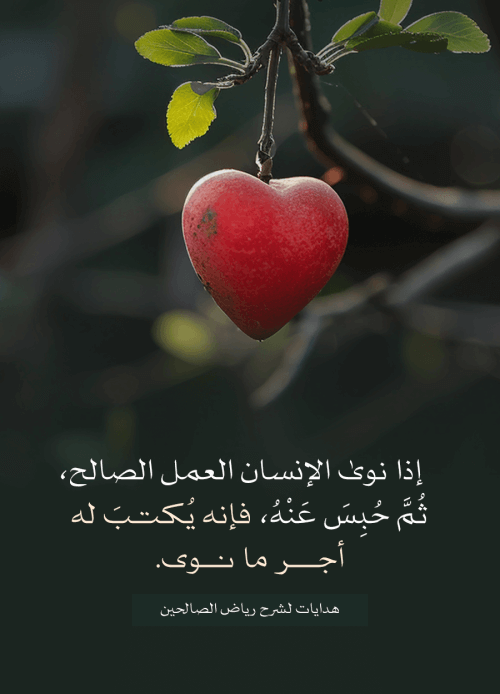
If someone intends to do a good deed but was prevented by a valid excuse, he shall gain the reward of his intention.
Riyadh Al-Salheen with explanation and benefits
Variation of reward for good deeds is based on sincerity and following of the Prophet’s guidance. The more a person is sincere to Allah, and the keener he is on following the Prophet (may Allah’s peace and blessings be upon him), the more perfect his worship will be, and consequently his reward will be bigger.
Riyadh Al-Salheen with explanation and benefits
People differ with regards to their acts of worship according to their intentions. The intentions of some people have reached the ultimate level of sincerity (to Allah) and keenness in following the Sunnah (of the Messenger of Allah) with regard to doing good and righteous deeds, while the intentions of others are below that.
Riyadh Al-Salheen with explanation and benefits
Anyone partaking a role with transgressors and wrongdoers will share their punishment because it is inclusive.
Riyadh Al-Salheen with explanation and benefits
If someone intends to do a good deed but was prevented by a valid excuse, he shall gain the reward of his intention.
Riyadh Al-Salheen with explanation and benefits
Actions are recompensed according to the intentions behind them, and the individual shall receive the reward of what he intended even if the outcome was contrary to his intention.
Riyadh Al-Salheen with explanation and benefits
There is not a single good deed intended sincerely to please Allah except that its doer will be raised in rank and status thereby, so that he would reap the full reward.
Riyadh Al-Salheen with explanation and benefits
Love and contentment is measured by good deeds and intentions because they are the criteria for Allah’s acceptance of the servant; perhaps a small deed reaps great reward because of the intention behind it and perhaps a big deed reaps little reward because of the intention behind it
Riyadh Al-Salheen with explanation and benefits
One of the proofs Allah supports the servant is the latter’s sincere endeavor to rectify his intention and purify his heart by good deeds.
هدايات لشرح رياض الصالحين