

Categories
Discover our diverse collection of categories covering multiple topics to meet your various interestsDa\'wa cards that highlight great meanings of the verses of the Holy Quran and the noble prophetic hadiths in a simple style and attractive display that helps the Muslim to have a deeper understanding of his religion in an easy way
﴿ بَقِيَّتُ ٱللَّهِ خَيۡرٞ لَّكُمۡ إِن كُنتُم مُّؤۡمِنِينَۚ وَمَآ أَنَا۠ عَلَيۡكُم بِحَفِيظٖ ﴾
سورة هود
86. "That which is left by Allâh for you (after giving the rights of the people) is better for you, if you are believers. And I am not a guardian over you.

﴿ هَلۡ يَنظُرُونَ إِلَّآ أَن تَأۡتِيَهُمُ ٱلۡمَلَٰٓئِكَةُ أَوۡ يَأۡتِيَ رَبُّكَ أَوۡ يَأۡتِيَ بَعۡضُ ءَايَٰتِ رَبِّكَۗ يَوۡمَ يَأۡتِي بَعۡضُ ءَايَٰتِ رَبِّكَ لَا يَنفَعُ نَفۡسًا إِيمَٰنُهَا لَمۡ تَكُنۡ ءَامَنَتۡ مِن قَبۡلُ أَوۡ كَسَبَتۡ فِيٓ إِيمَٰنِهَا خَيۡرٗاۗ قُلِ ٱنتَظِرُوٓاْ إِنَّا مُنتَظِرُونَ ﴾
سورة الأنعام
Are they waiting for the coming of the angels, or the coming of your Lord, or the coming of some of your Lord’s signs[55]? On the Day when some of your Lord’s signs come, belief will be of no benefit to those who did not believe before, or those who did not do some good through their faith. Say, “Wait then; we too are waiting.”
﴿ يُؤۡمِنُونَ بِٱللَّهِ وَٱلۡيَوۡمِ ٱلۡأٓخِرِ وَيَأۡمُرُونَ بِٱلۡمَعۡرُوفِ وَيَنۡهَوۡنَ عَنِ ٱلۡمُنكَرِ وَيُسَٰرِعُونَ فِي ٱلۡخَيۡرَٰتِۖ وَأُوْلَٰٓئِكَ مِنَ ٱلصَّٰلِحِينَ ﴾
سورة آل عمران
They believe in Allah and the Last Day; enjoin what is right and forbid what is wrong; and hasten in doing good deeds. They are among the righteous.
﴿ يَٰٓأَيُّهَا ٱلَّذِينَ ءَامَنُواْ لَا تَدۡخُلُواْ بُيُوتَ ٱلنَّبِيِّ إِلَّآ أَن يُؤۡذَنَ لَكُمۡ إِلَىٰ طَعَامٍ غَيۡرَ نَٰظِرِينَ إِنَىٰهُ وَلَٰكِنۡ إِذَا دُعِيتُمۡ فَٱدۡخُلُواْ فَإِذَا طَعِمۡتُمۡ فَٱنتَشِرُواْ وَلَا مُسۡتَـٔۡنِسِينَ لِحَدِيثٍۚ إِنَّ ذَٰلِكُمۡ كَانَ يُؤۡذِي ٱلنَّبِيَّ فَيَسۡتَحۡيِۦ مِنكُمۡۖ وَٱللَّهُ لَا يَسۡتَحۡيِۦ مِنَ ٱلۡحَقِّۚ وَإِذَا سَأَلۡتُمُوهُنَّ مَتَٰعٗا فَسۡـَٔلُوهُنَّ مِن وَرَآءِ حِجَابٖۚ ذَٰلِكُمۡ أَطۡهَرُ لِقُلُوبِكُمۡ وَقُلُوبِهِنَّۚ وَمَا كَانَ لَكُمۡ أَن تُؤۡذُواْ رَسُولَ ٱللَّهِ وَلَآ أَن تَنكِحُوٓاْ أَزۡوَٰجَهُۥ مِنۢ بَعۡدِهِۦٓ أَبَدًاۚ إِنَّ ذَٰلِكُمۡ كَانَ عِندَ ٱللَّهِ عَظِيمًا ﴾
سورة الأحزاب
O you who have believed, do not enter the houses of the Prophet except when you are permitted for a meal, without awaiting its readiness. But when you are invited, then enter; and when you have eaten, disperse without seeking to remain for conversation. Indeed, that [behavior] was troubling the Prophet, and he is shy of [dismissing] you. But Allāh is not shy of the truth. And when you ask [his wives] for something, ask them from behind a partition. That is purer for your hearts and their hearts. And it is not [conceivable or lawful] for you to harm the Messenger of Allāh or to marry his wives after him, ever. Indeed, that would be in the sight of Allāh an enormity.
﴿ يَٰٓأَيُّهَا ٱلَّذِينَ ءَامَنُواْ ٱذۡكُرُواْ نِعۡمَةَ ٱللَّهِ عَلَيۡكُمۡ إِذۡ جَآءَتۡكُمۡ جُنُودٞ فَأَرۡسَلۡنَا عَلَيۡهِمۡ رِيحٗا وَجُنُودٗا لَّمۡ تَرَوۡهَاۚ وَكَانَ ٱللَّهُ بِمَا تَعۡمَلُونَ بَصِيرًا ﴾
سورة الأحزاب
9. O you who believe! Remember Allâh’s Favour to you, when there came against you hosts, and We sent against them a wind and forces that you saw not [i.e. troops of angels during the battle of Al-Ahzâb (the Confederates)]. And Allâh is Ever All-Seer of what you do.
﴿ فَكُلًّا أَخَذۡنَا بِذَنۢبِهِۦۖ فَمِنۡهُم مَّنۡ أَرۡسَلۡنَا عَلَيۡهِ حَاصِبٗا وَمِنۡهُم مَّنۡ أَخَذَتۡهُ ٱلصَّيۡحَةُ وَمِنۡهُم مَّنۡ خَسَفۡنَا بِهِ ٱلۡأَرۡضَ وَمِنۡهُم مَّنۡ أَغۡرَقۡنَاۚ وَمَا كَانَ ٱللَّهُ لِيَظۡلِمَهُمۡ وَلَٰكِن كَانُوٓاْ أَنفُسَهُمۡ يَظۡلِمُونَ ﴾
سورة العنكبوت
40. So We punished each (of them) for his sins; of them were some on whom We sent Hâsib (a violent wind with shower of stones) [as on the people of Lût (Lot)], and of them were some who were overtaken by As-Saihah [torment - awful cry. (as Thamûd or Shu‘aib’s people)], and of them were some whom We caused the earth to swallow [as Qârûn (Korah)], and of them were some whom We drowned [as the people of Nûh (Noah), or Fir‘aun (Pharaoh) and his people]. It was not Allâh Who wronged them, but they wronged themselves.
﴿ لَّن يَسۡتَنكِفَ ٱلۡمَسِيحُ أَن يَكُونَ عَبۡدٗا لِّلَّهِ وَلَا ٱلۡمَلَٰٓئِكَةُ ٱلۡمُقَرَّبُونَۚ وَمَن يَسۡتَنكِفۡ عَنۡ عِبَادَتِهِۦ وَيَسۡتَكۡبِرۡ فَسَيَحۡشُرُهُمۡ إِلَيۡهِ جَمِيعٗا ﴾
سورة النساء
The Messiah would never disdain to be a slave of Allah, nor would the nearest angels to Him. Those who disdain to worship Him and are arrogant, He will gather them all together before Him.
﴿ يَوۡمَ نَقُولُ لِجَهَنَّمَ هَلِ ٱمۡتَلَأۡتِ وَتَقُولُ هَلۡ مِن مَّزِيدٖ ﴾
سورة ق
[Beware of] the Day when We will say to Hell, “Have you reached your fill?” It will say, “Are there any more?”
﴿ فَفَرَرۡتُ مِنكُمۡ لَمَّا خِفۡتُكُمۡ فَوَهَبَ لِي رَبِّي حُكۡمٗا وَجَعَلَنِي مِنَ ٱلۡمُرۡسَلِينَ ﴾
سورة الشعراء
So I fled from you when I feared you. Then my Lord granted me judgement [i.e., wisdom and prophethood] and appointed me [as one] of the messengers.
Abu Hurayrah (may Allah be pleased with him) reported that the Messenger of Allah (may Allah's peace and blessings be upon him) said: “Beware of the two things that provoke cursing.” They said: “O Messenger of Allah, what are those two things which provoke cursing?” He said: “The one who relieves himself on people’s roads or under their shades.”
Narrated by Muslim
Avoid the two things that provoke curse from people, for the one who does any of them is usually abused and reviled by others. These two things are: relieving oneself on the pathways used by people or in the shade, where they take shelter. A similar meaning occurs in the verse that reads: {And do not abuse those they invoke other than Allah, lest they abuse Allah in enmity without knowledge} [Sūrat al-An‘ām: 108]. In other words: Do not cause them to abuse Allah, the Almighty, by abusing their gods. Similarly, the Prophet (may Allah's peace and blessings be upon him) prohibited that a man should abuse his father and mother. Thereupon, the Companions asked: “Would anyone abuse his own parents?” He said: “Yes. He abuses someone else’s father and that person retaliates by abusing his father and mother.” So it is as if he himself has cursed his own parents, because he was the reason behind it. “The one who relieves himself on people’s roads;” meaning: he urinates or defecates in the places where people walk and pass through. This is undoubtedly prohibited, regardless of whether it is done by a resident or a traveler, as it causes harm to the people. In the Qur'an, Allah, the Almighty, says: {And those who harm believing men and believing women for [something] other than what they have earned have certainly born upon themselves a slander and manifest sin} [Sūrat al-Ahzāb: 58]. If, however, a person relieves himself on a road not frequented by people, there is nothing wrong with that, given the lack of harm. “Or in their shade;” meaning: he relieves himself in the shade, where people take shelter and rest. There is nothing wrong, however, if one answers the call of nature in the shade in empty places that are not used or frequented by people, given the lack of harm. The Messenger (may Allah’s peace and blessings be upon him) would sometimes relieve himself in the shade of a host of palm trees.
‘Ā’ishah (may Allah be pleased with her) reported: The Messenger of Allah (may Allah's peace and blessings be upon him) used to sleep while in a state of Janābah without touching water.
Narrated by Ibn Majah - Narrated by At-Termedhy - An-Nasaa’i - Narrated by Abu Daoud - Narrated by Ahmad
The Prophet (may Allah's peace and blessings be upon him) used to sleep after having had intercourse without having water touch his skin, neither the water of ablution, nor the bathing water, nor water even to wash his private parts, since the word 'water' here is mentioned in a general sense, so it includes all the uses of water. The second possibility is that it means that he did not touch the water of ritual bath, not necessarily the water of ablution. This agrees with the Hadīths of the two Sahīhs that clearly state that he used to wash his private parts and perform ablution (when in a state of Janābah) before he would sleep, eat, drink, or have intercourse. One of such Hadīths is the Hadīth of Ibn ‘Umar in which ‘Umar said: "O Messenger of Allah, could any of us sleep while in a state of Janābah?" He said: "Yes, as long as he performs ablution." [Al-Bukhāri and Muslim] ‘Ammār ibn Yāsir reported: "The Prophet (may Allah's peace and blessings be upon him) allowed the one in a state of Janabah to eat, drink, or sleep after having performed ablution the same way one does before praying" [Ahmad and At-Tirmidhi]. However, the generality of the Hadīth refutes this interpretation. It is better to say that the Prophet (may Allah's peace and blessings be upon him) would not touch water sometimes in order to clarify the permissibility of doing this, for if he had done that regularly, it would have been thought to be obligatory, and this was all done out of facilitation and alleviation for the Ummah.
‘Amr ibn ‘Āmir related that Anas ibn Mālik reported: The Prophet (may Allah’s peace and blessings be upon him) used to perform ablution upon every prayer. I asked: "What did you guys use to do?" He said: "Ablution would remain valid for any of us until he broke it."
Narrated by Bukhari
The Prophet (may Allah's peace and blessings be upon him) used to perform ablution for every obligatory prayer, even if his ablution was not broken. This is to attain the reward and merit. It is permissible to perform more than one obligatory prayer with one ablution, so long as the ablution remains valid.
Ibn ‘Abbās (may Allah be pleased with him) reported: The Prophet (may Allah’s peace and blessings be upon him) performed ablution by washing the body parts once.
Narrated by Bukhari
When the Prophet (may Allah's peace and blessings be upon him) performed ablution, he would sometimes wash each organ of the organs of ablution once - washing the face - including rinsing the mouth and sniffing water into the nostrils - and the hands and feet once. This is the due amount.
‘Abdullāh ibn Zayd (may Allah be pleased with him) reported: The Prophet (may Allah’s peace and blessings be upon him) performed ablution by washing the body parts twice.
Narrated by Bukhari
When the Prophet (may Allah's peace and blessings be upon him) performed ablution, he would sometimes wash each body part of the parts of ablution once - washing the face - including rinsing the mouth and sniffing water into the nostrils - and the hands and feet twice.
Abu Hurayrah (may Allah be pleased with him) reported: The Messenger of Allah (may Allah's peace and blessings be upon him) said: "It is due upon every Muslim to bathe for one day every seven days, in which he should wash his head and body."
Narrated by Bukhari & Muslim
The Messenger of Allah (may Allah's peace and blessings be upon him) informed that it is due upon every rational and mature Muslim to take a bath once a week, in which he washes his head and body, seeking purification and cleanliness. The worthiest among these days is Friday, as understood from some versions. For example, bathing on Friday before the prayer is highly recommended, even if one has taken one on Thursday. What indicates that the bath on Friday is not obligatory is the statement by 'Ā’ishah (may Allah be pleased with her): "The people used to work, and whenever they went for the Friday prayer, they would go in the same condition as they had been in work. So, it was said to them: 'If only you had taken a bath'" [Narrated by Al-Bukhāri]. In another version by him: "They were smelling bad", i.e., the smell of sweat. Despite that, it was said to them: "If only you had taken a bath." so that others are more likely to do so.
Qays ibn ‘Āsim (may Allah be pleased with him) reported: I came to the Prophet (may Allah’s peace and blessings be upon him) with the intention of embracing Islam. He commanded me to take a bath with water and the leaves of a lote tree.
Narrated by Abu Daoud & At-Termedhy & An-Nasa'i
Qays ibn 'Āsim came to the Prophet (may Allah's peace and blessings be upon him) with the intention to embrace Islam. So, the Prophet (may Allah's peace and blessings be upon him) instructed him to bathe with water and lote tree leaves, which are used for cleaning and have a good scent.
‘Abdullāh ibn ‘Umar (may Allah be pleased with him) reported: One day I climbed over Hafsah's house, and I saw the Prophet (may Allah's peace and blessings be upon him) relieving himself while facing the Levant, with his back toward the Ka‘bah. In another version, he said: "while facing Bait al-Maqdis."
Narrated by Bukhari & Muslim
Ibn ‘Umar (may Allah be pleased with him) mentions that one day he went to the house of his sister Hafsah, the Prophet's wife. He went up on the roof of her house and saw the Prophet (may Allah's peace and blessings be upon him) answering the call of nature while facing the direction of the Levant and his back was toward the Qiblah. Ibn ‘Umar (may Allah be pleased with them) said this in response to those who said that one should not face the direction of Jerusalem, while answering the call of nature, and that is why the author mentioned the other version which adds: "...facing Bait al-Maqdis." So, if someone faces the Qiblah while praying within a building, there is nothing wrong with that.
Anas ibn Mālik (may Allah be pleased with him) reported that a Bedouin came and urinated in a corner of the mosque. So, the people rebuked him. The Prophet (may Allah's peace and blessings be upon him) stopped them and when he finished urinating, the Prophet (may Allah's peace and blessings be upon him) ordered that a bucket of water should be poured over that place, and they did so.
Narrated by Bukhari & Muslim
Harshness and ignorance are natural habits of the Bedouins because they live in isolation from learning what Allah, the Almighty, revealed unto His Messenger (may Allah's peace and blessings be upon him). Once, while the Prophet (may Allah's peace and blessings be upon him) was with his Companions in the mosque, a Bedouin entered and urinated in one corner of the mosque assuming it was an open space. His action offended the Companions (may Allah be pleased with them), due to the mosque's sanctity. As a result, they rebuked him while he was urinating. Knowing the habits of the Bedouins, however, the Prophet (may Allah's peace and blessings be upon him) who was sent with ease and glad tidings ordered them to stop rebuking him, otherwise he would urinate on a larger spot in the mosque, or make his clothes impure, and to avoid harm had he been interrupted during passing urine. Moreover, he would be more inclined that way to accept the advice of the Prophet (may Allah's peace and blessings be upon him) when he advises him. He ordered them to purify the place where he urinated by pouring a bucket of water over it.
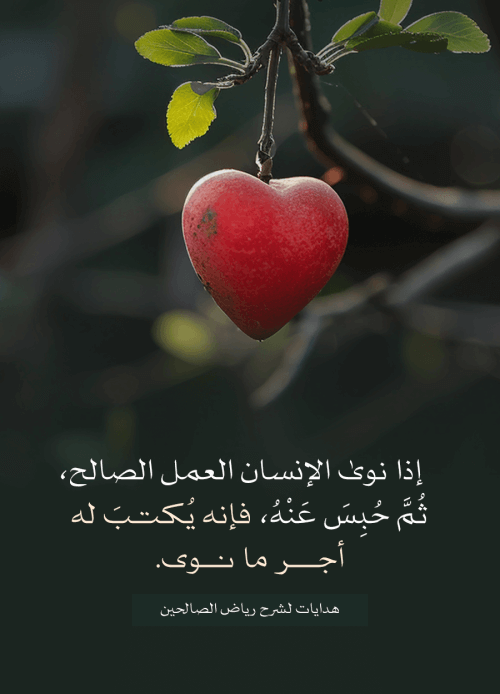
If someone intends to do a good deed but was prevented by a valid excuse, he shall gain the reward of his intention.
Riyadh Al-Salheen with explanation and benefits
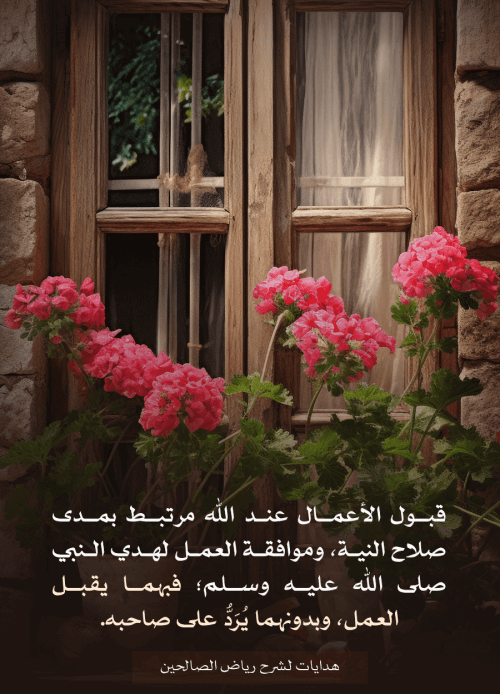
Variation of reward for good deeds is based on sincerity and following of the Prophet’s guidance. The more a person is sincere to Allah, and the keener he is on following the Prophet (may Allah’s peace and blessings be upon him), the more perfect his worship will be, and consequently his reward will be bigger.
Riyadh Al-Salheen with explanation and benefits
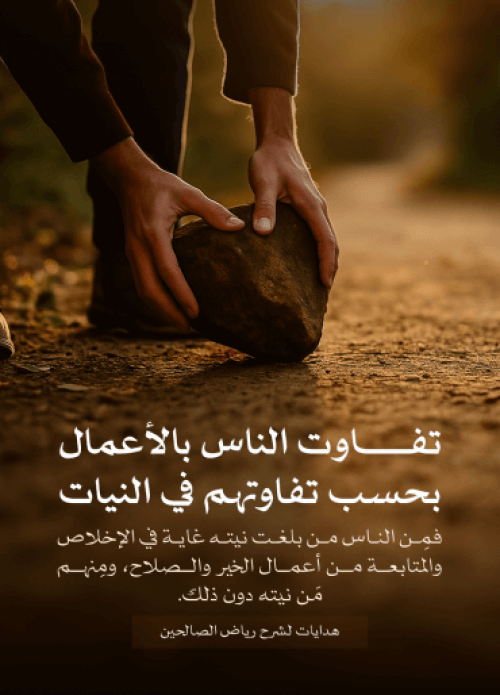
People differ with regards to their acts of worship according to their intentions. The intentions of some people have reached the ultimate level of sincerity (to Allah) and keenness in following the Sunnah (of the Messenger of Allah) with regard to doing good and righteous deeds, while the intentions of others are below that.
Riyadh Al-Salheen with explanation and benefits
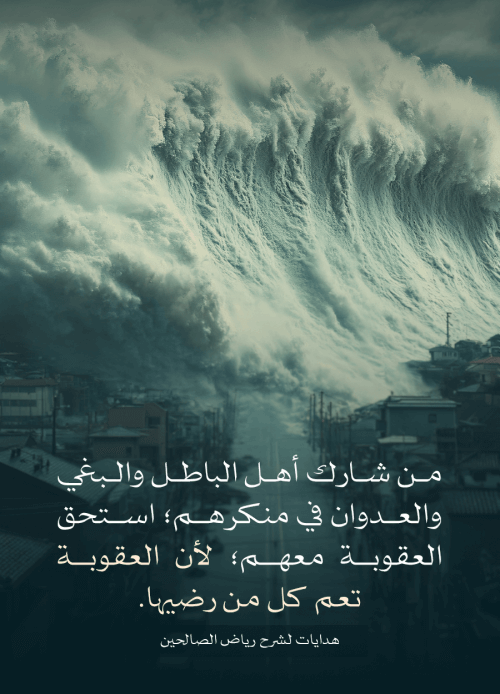
Anyone partaking a role with transgressors and wrongdoers will share their punishment because it is inclusive.
Riyadh Al-Salheen with explanation and benefits
If someone intends to do a good deed but was prevented by a valid excuse, he shall gain the reward of his intention.
Riyadh Al-Salheen with explanation and benefits
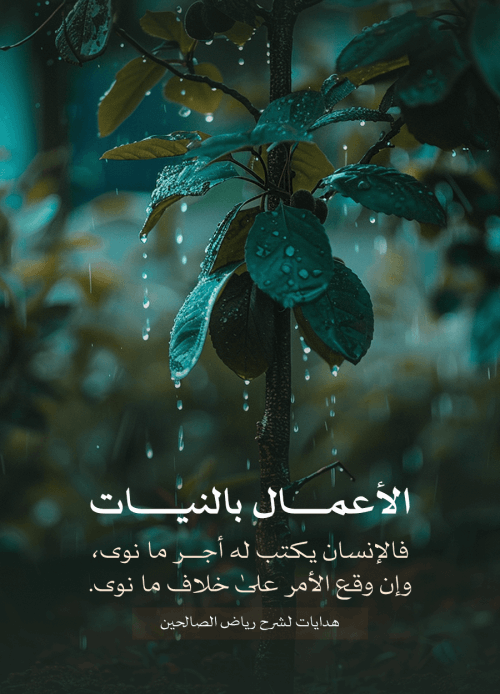
Actions are recompensed according to the intentions behind them, and the individual shall receive the reward of what he intended even if the outcome was contrary to his intention.
Riyadh Al-Salheen with explanation and benefits
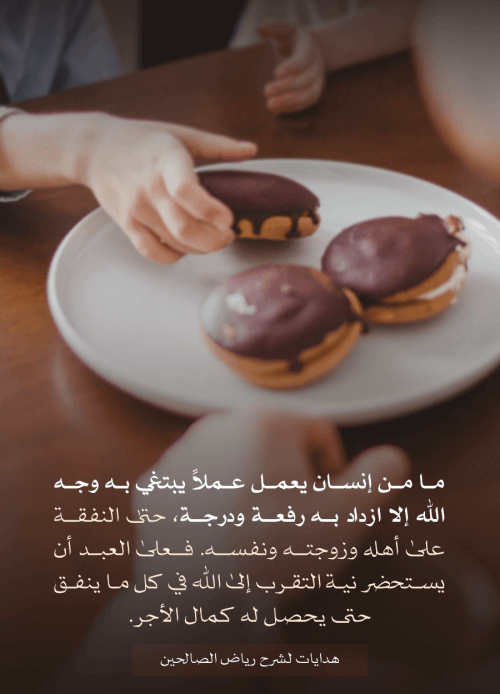
There is not a single good deed intended sincerely to please Allah except that its doer will be raised in rank and status thereby, so that he would reap the full reward.
Riyadh Al-Salheen with explanation and benefits
Love and contentment is measured by good deeds and intentions because they are the criteria for Allah’s acceptance of the servant; perhaps a small deed reaps great reward because of the intention behind it and perhaps a big deed reaps little reward because of the intention behind it
Riyadh Al-Salheen with explanation and benefits
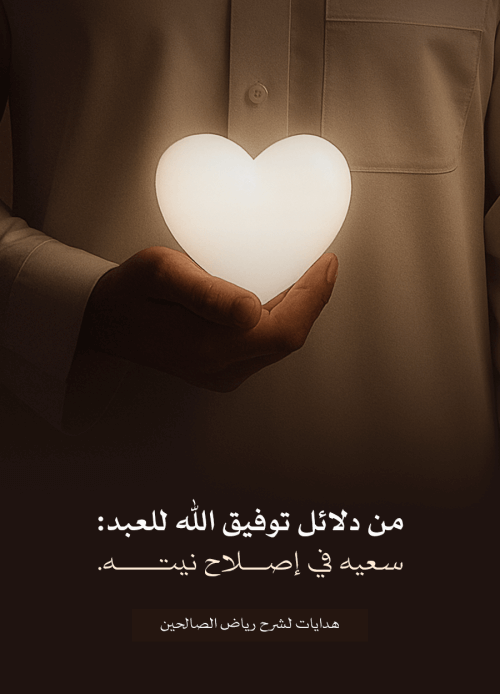
One of the proofs Allah supports the servant is the latter’s sincere endeavor to rectify his intention and purify his heart by good deeds.
هدايات لشرح رياض الصالحين