







Categories
Discover our diverse collection of categories covering multiple topics to meet your various interestsDa\'wa cards that highlight great meanings of the verses of the Holy Quran and the noble prophetic hadiths in a simple style and attractive display that helps the Muslim to have a deeper understanding of his religion in an easy way
﴿ وَلَا تَكُونَنَّ مِنَ ٱلَّذِينَ كَذَّبُواْ بِـَٔايَٰتِ ٱللَّهِ فَتَكُونَ مِنَ ٱلۡخَٰسِرِينَ ﴾
سورة يونس
and never be of those who reject the signs of Allah, for then you would be among the losers.

﴿ ٱلَّذِي جَعَلَ لَكُم مِّنَ ٱلشَّجَرِ ٱلۡأَخۡضَرِ نَارٗا فَإِذَآ أَنتُم مِّنۡهُ تُوقِدُونَ ﴾
سورة يس
the One Who made for you fire out of the green tree, with which you kindle your fires[25].”
﴿ قَالَ فَإِنِ ٱتَّبَعۡتَنِي فَلَا تَسۡـَٔلۡنِي عَن شَيۡءٍ حَتَّىٰٓ أُحۡدِثَ لَكَ مِنۡهُ ذِكۡرٗا ﴾
سورة الكهف
He said, "Then if you follow me, do not ask me about anything until I make to you about it mention [i.e., explanation]."
﴿ كِتَٰبٌ أَنزَلۡنَٰهُ إِلَيۡكَ مُبَٰرَكٞ لِّيَدَّبَّرُوٓاْ ءَايَٰتِهِۦ وَلِيَتَذَكَّرَ أُوْلُواْ ٱلۡأَلۡبَٰبِ ﴾
سورة ص
[This is] a blessed Book which We have revealed to you, [O Muḥammad], that they might reflect upon its verses and that those of understanding would be reminded.
﴿ ٱلَّذِينَ يُؤۡمِنُونَ بِٱلۡغَيۡبِ وَيُقِيمُونَ ٱلصَّلَوٰةَ وَمِمَّا رَزَقۡنَٰهُمۡ يُنفِقُونَ ﴾
سورة البقرة
Who believe in the unseen, establish prayer,[9] and spend out of what We[10] have provided for them,
﴿ وَمَالِيَ لَآ أَعۡبُدُ ٱلَّذِي فَطَرَنِي وَإِلَيۡهِ تُرۡجَعُونَ ﴾
سورة يس
22. "And why should I not worship Him (Allâh Alone) Who has created me and to Whom you shall be returned.
﴿ وَنَسُوقُ ٱلۡمُجۡرِمِينَ إِلَىٰ جَهَنَّمَ وِرۡدٗا ﴾
سورة مريم
And will drive the criminals to Hell in thirst
﴿ سُبۡحَٰنَ رَبِّكَ رَبِّ ٱلۡعِزَّةِ عَمَّا يَصِفُونَ ﴾
سورة الصافات
Glory be to your Lord, the Lord of Might, far above what they ascribe [to Him],
﴿ فَٱصۡبِرۡ لِحُكۡمِ رَبِّكَ وَلَا تُطِعۡ مِنۡهُمۡ ءَاثِمًا أَوۡ كَفُورٗا ﴾
سورة الإنسان
So be patient for the decision of your Lord and do not obey from among them a sinner or ungrateful [disbeliever].
Abu Hurayrah (may Allah be pleased with him) reported that the Messenger of Allah (may Allah's peace and blessings be upon him) said: "Verily, Allah gets jealous and the believer gets jealous. The jealousy of Allah is when the believer commits what He has made unlawful for him."
Narrated by Bukhari & Muslim
The Prophet (may Allah's peace and blessings be upon him) informs us that Allah Almighty gets jealous, hates, and detests. Likewise, the believer gets jealous, hates, and detests. The reason why Allah gets jealous is when the believer commits shameful acts that Allah has made unlawful for him like adultery, sodomy, theft, consuming alcohol, etc.
Ibn ‘Umar (may Allah be pleased with him) reported that he heard a man saying: “No, by the Ka‘bah.” He said to him: "Do not swear by other than Allah, for I heard the Messenger of Allah (may Allah’s peace and blessings be upon him) say: 'Whoever swears by other than Allah has disbelieved or associated partners with Allah.'"
Narrated by Abu Daoud & At-Termedhy & Ahmad
The Prophet (may Allah's peace and blessings be upon him) informs that whoever swears by other than Allah and His names and attributes has disbelieved in Allah or associated partners with Him. This is because swearing entails extolment of the one by whom swearing is done, whereas all greatness belongs to Allah alone. So, we must only swear by Allah, His names, and attributes. This type of swearing falls under minor polytheism. However, if the swearer extols what he swears by like the extolment of Allah or greater, then his swearing constitutes major polytheism.
Abu Hurayrah (may Allah be pleased with him) reported: The Messenger of Allah (may Allah's peace and blessings be upon him) said: "The most burdensome prayers for the hypocrites are the ‘Ishā’ and Fajr prayers. If they were to know the virtue of them, they would come to them, even if they had to crawl. I have almost intended to order for the prayer to be established, and appoint a man to lead the people in prayer, and then I would go along with some men having bundles of firewood, to the people who are not attending the prayer and burn their houses upon them with fire."
Narrated by Bukhari & Muslim
The Prophet (may Allah's peace and blessings be upon him) tells about the hypocrites and their laziness when it comes to attending the prayer, especially the 'Ishā' and Fajr prayers, and that if they were to know the amount of reward for attending them along with the Muslim congregation, they would come to it even if they had to crawl like infants upon their hands and knees. . The Prophet (may Allah's peace and blessings be upon him) thought of ordering the prayer to be commenced and appointing someone to lead the people in prayer instead of him. Then he would go, along with people carrying firewood, to men who were not attending the congregational prayer and burn their houses with fire, given the gravity of their sin in doing so. Yet, he did not do that because the houses contained women, innocent children, and others with valid excuses for not attending the prayer - for they committed no sin.
‘Abdullah ibn Mas‘ūd (may Allah be pleased with him) reported that he heard the Messenger of Allah (may Allah's peace and blessings be upon him) say: "Among the most wicked people are those who will be alive when the Hour comes, and those who take the graves as places of worship."
Narrated by Ahmad
The Prophet (may Allah's peace and blessings be upon him) informs about the most wicked people; they are those who will be alive and witness the advent of the Hour, as well as those who take the graves as places of worship and pray at or towards them.
Mahmūd ibn Labīd (may Allah be pleased with him) reported that the Messenger of Allah (may Allah's peace and blessings be upon him) said: "The thing that I fear most for you is minor Shirk (polytheism).' They said: 'What is minor Shirk, O Messenger of Allah?' He said: 'It is Riyā’ (showing off). Allah Almighty will say on the Day of Judgment when He will requite all people for their deeds: "Go to those before whom you used to show off with your deeds in the worldly life and see whether you find any reward with them?"
Narrated by Ahmad
The Prophet (may Allah's peace and blessings be upon him) informs that what he fears most for his Ummah is minor Shirk, which is showing off, i.e., doing good deeds for the sake of people. Then, he (may Allah's peace and blessings be upon him) informs of the punishment of those who show off with their good deeds as it will be said to them on the Day of Judgment: Go to those for the sake of whom you offered your good deeds and see if they have the ability to reward you for such deeds.
‘Adiyy ibn Hātim (may Allah be pleased with him) reported: I heard the Prophet (may Allah's peace and blessings be upon him) recite this verse: {They have taken their scholars and monks as lords besides Allah, and [also] the Messiah, the son of Mariyam. And they were not commanded except to worship one God; there is no deity except Him. Exalted is He above whatever they associate with Him.} So I said to him: "We do not worship them." He replied: "Don't they forbid what Allah allows, so you forbid it? Don't they allow what Allah forbids, so you allow it?" I said: 'Yes.' He said: "That is how you worship them."
Narrated by At-Termedhy
‘Adiyy ibn Hātim, a noble Companion, heard the Prophet (may Allah's peace and blessings be upon him) recite a verse indicating that the Jews and Christians took their scholars and devout people as deities. They would legislate for them rulings opposite to Allah's legislations and would be obeyed. On hearing the verse, ‘Adiyy could not understand what it means, because he thought that worship was confined to prostration and similar acts. Therefore, the Prophet (may Allah's peace and blessings be upon him) told him that part of worshipping the rabbis and monks lies in obeying them in forbidding the lawful and allowing the forbidden, thus contradicting the divine and prophetic legislation.
Ibn ‘Abbās (may Allah be pleased with him) reported: The Messenger of Allah (may Allah’s peace and blessings be upon him) said to Mu‘ādh ibn Jabal as he was sending him to Yemen: "You will come to a people of the Scripture. When you reach them, invite them to testify that none is worthy of worship except Allah and that Muhammad is the Messenger of Allah. If they obey you in that, tell them that Allah has enjoined on them five prayers every day and night. If they obey you in that, tell them that Allah has enjoined Zakah on them, to be taken from the rich amongst them and given to the poor amongst them. If they obey you in that, beware of taking their best properties; and fear the invocation of an oppressed person, for there is no barrier between his invocation and Allah.”
Narrated by Bukhari & Muslim
When the Prophet (may Allah's peace and blessings be upon him) sent Mu‘ādh ibn Jabal (may Allah be pleased with him) to Yemen to call its people to Allah and teach them, he clarified to him that he would meet Christian people and that he should first call them to what is more important and then to what is less important, and so on. He should first call them to reform their creed by testifying that none is worthy of worship except Allah and that Muhammad is the Messenger of Allah. This is because they enter Islam with this testimony. If they complied with that, he should then enjoin them to establish the prayer, for it is the most important obligation after the testimony of Tawhīd (monotheistic belief). If they established the prayer, he should then order the rich amongst them to pay Zakah on their property to the poor amongst them. Thereafter, the Prophet (may Allah's peace and blessings be upon him) warned him not to take their best property; instead, it is required to adopt a moderate approach in this regard. Then, he (may Allah's peace and blessings be upon him) instructed him to avoid oppression, lest an oppressed person might supplicate to Allah against him, as his supplication is readily answered.
Jābir (may Allah be pleased with him) reported that when the Messenger of Allah (may Allah's peace and blessings be upon him) was asked about the 'Nushrah' (counteracting magic with magic), he said: "It is an act of the devil."
Narrated by Abu Daoud - Narrated by Ahmad
The Prophet (may Allah's peace and blessings be upon him) was asked about the ruling on treating the bewitched person in the way that was commonly practiced in the pre-Islamic era, such as counteracting magic with magic. He replied by saying that it was an act of the devil or carried out by the devil. This is because such a way of treatment involves magic and satanic methods, and is thus prohibited and tantamount to disbelief. However, there is a permissible type of Nushrah, which involves neutralizing magic by using Ruqyah, finding the magic spell and breaking it by hand along with reciting the Qur'an, or by taking lawful medications.
‘Umar ibn al-Khattāb (may Allah be pleased with him) reported: I heard the Prophet (may Allah’s peace and blessings be upon him) say: "Do not exaggerate in praising me as the Christians exaggerated in praising the son of Mary, for I am only His slave. So, call me the slave of Allah and His Messenger."
Narrated by Bukhari
The Prophet (may Allah's peace and blessings be upon him) prohibits immoderateness and exceeding the Shariah-prescribed limit in praising him and forbids ascribing to himself the peculiar attributes and actions of Allah or knowledge of the unseen, or that he should be supplicated to along with Allah, as the Christians did with Jesus, the son of Mary (peace be upon him). Then, he made it clear that he is one of the servants of Allah and commanded us to call him: the servant and Messenger of Allah.
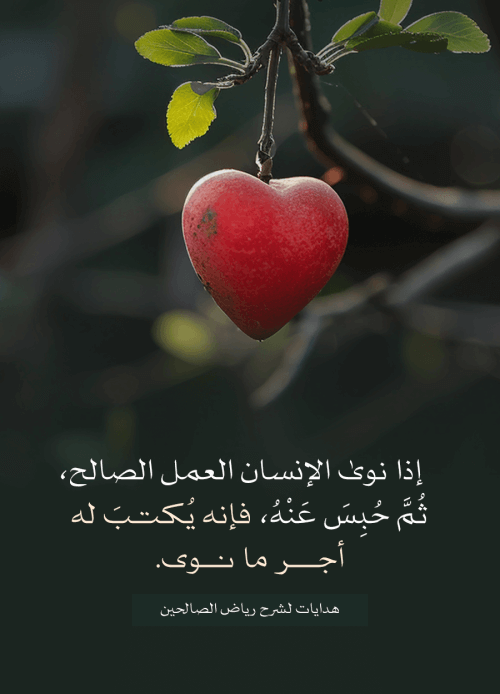
If someone intends to do a good deed but was prevented by a valid excuse, he shall gain the reward of his intention.
Riyadh Al-Salheen with explanation and benefits
Variation of reward for good deeds is based on sincerity and following of the Prophet’s guidance. The more a person is sincere to Allah, and the keener he is on following the Prophet (may Allah’s peace and blessings be upon him), the more perfect his worship will be, and consequently his reward will be bigger.
Riyadh Al-Salheen with explanation and benefits
People differ with regards to their acts of worship according to their intentions. The intentions of some people have reached the ultimate level of sincerity (to Allah) and keenness in following the Sunnah (of the Messenger of Allah) with regard to doing good and righteous deeds, while the intentions of others are below that.
Riyadh Al-Salheen with explanation and benefits
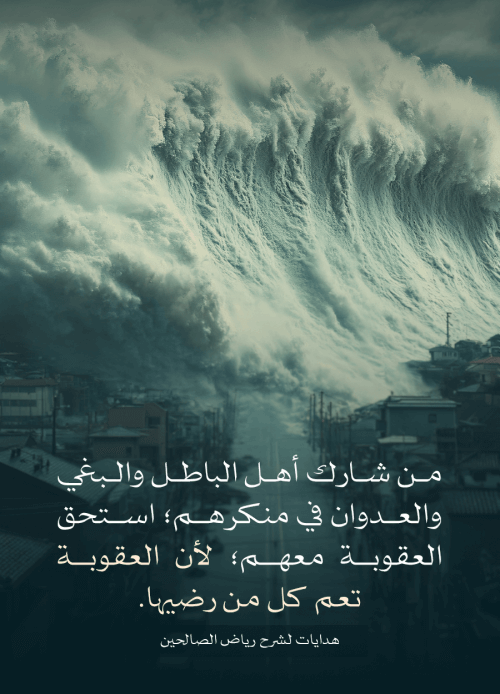
Anyone partaking a role with transgressors and wrongdoers will share their punishment because it is inclusive.
Riyadh Al-Salheen with explanation and benefits
If someone intends to do a good deed but was prevented by a valid excuse, he shall gain the reward of his intention.
Riyadh Al-Salheen with explanation and benefits
Actions are recompensed according to the intentions behind them, and the individual shall receive the reward of what he intended even if the outcome was contrary to his intention.
Riyadh Al-Salheen with explanation and benefits
There is not a single good deed intended sincerely to please Allah except that its doer will be raised in rank and status thereby, so that he would reap the full reward.
Riyadh Al-Salheen with explanation and benefits
Love and contentment is measured by good deeds and intentions because they are the criteria for Allah’s acceptance of the servant; perhaps a small deed reaps great reward because of the intention behind it and perhaps a big deed reaps little reward because of the intention behind it
Riyadh Al-Salheen with explanation and benefits
One of the proofs Allah supports the servant is the latter’s sincere endeavor to rectify his intention and purify his heart by good deeds.
هدايات لشرح رياض الصالحين