



Categories
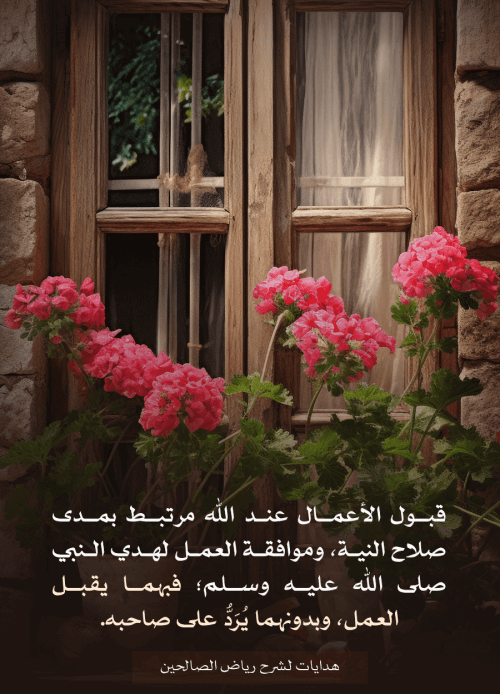
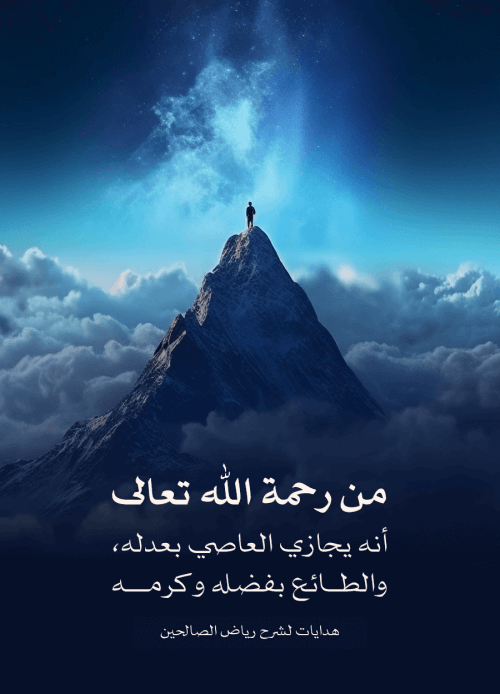
Discover our diverse collection of categories covering multiple topics to meet your various interestsDa\'wa cards that highlight great meanings of the verses of the Holy Quran and the noble prophetic hadiths in a simple style and attractive display that helps the Muslim to have a deeper understanding of his religion in an easy way
﴿ أَمۡ حَسِبۡتُمۡ أَن تَدۡخُلُواْ ٱلۡجَنَّةَ وَلَمَّا يَأۡتِكُم مَّثَلُ ٱلَّذِينَ خَلَوۡاْ مِن قَبۡلِكُمۖ مَّسَّتۡهُمُ ٱلۡبَأۡسَآءُ وَٱلضَّرَّآءُ وَزُلۡزِلُواْ حَتَّىٰ يَقُولَ ٱلرَّسُولُ وَٱلَّذِينَ ءَامَنُواْ مَعَهُۥ مَتَىٰ نَصۡرُ ٱللَّهِۗ أَلَآ إِنَّ نَصۡرَ ٱللَّهِ قَرِيبٞ ﴾
سورة البقرة
214. Or think you that you will enter Paradise without such (trials) as came to those who passed away before you? They were afflicted with severe poverty and ailments and were so shaken that even the Messenger and those who believed along with him said, "When (will come) the Help of Allâh?" Yes! Certainly, the Help of Allâh is near!

﴿ إِنَّمَآ أُمِرۡتُ أَنۡ أَعۡبُدَ رَبَّ هَٰذِهِ ٱلۡبَلۡدَةِ ٱلَّذِي حَرَّمَهَا وَلَهُۥ كُلُّ شَيۡءٖۖ وَأُمِرۡتُ أَنۡ أَكُونَ مِنَ ٱلۡمُسۡلِمِينَ ﴾
سورة النمل
[Say, O Muḥammad], "I have only been commanded to worship the Lord of this city,[1091] who made it sacred and to whom [belongs] all things. And I am commanded to be of the Muslims [i.e., those who submit to Allāh]
﴿ وَأَنۡ أَلۡقِ عَصَاكَۚ فَلَمَّا رَءَاهَا تَهۡتَزُّ كَأَنَّهَا جَآنّٞ وَلَّىٰ مُدۡبِرٗا وَلَمۡ يُعَقِّبۡۚ يَٰمُوسَىٰٓ أَقۡبِلۡ وَلَا تَخَفۡۖ إِنَّكَ مِنَ ٱلۡأٓمِنِينَ ﴾
سورة القصص
And [he was told], "Throw down your staff." But when he saw it writhing as if it was a snake, he turned in flight and did not return.[1101] [Allāh said], "O Moses, approach and fear not. Indeed, you are of the secure.
﴿ وَمَا يَأۡتِيهِم مِّن رَّسُولٍ إِلَّا كَانُواْ بِهِۦ يَسۡتَهۡزِءُونَ ﴾
سورة الحجر
No messenger came to them except that they ridiculed him.
﴿ ثُمَّ شَقَقۡنَا ٱلۡأَرۡضَ شَقّٗا ﴾
سورة عبس
26. And We split the earth in clefts.
﴿ وَلَقَدۡ نَادَىٰنَا نُوحٞ فَلَنِعۡمَ ٱلۡمُجِيبُونَ ﴾
سورة الصافات
Indeed, Noah called upon Us; how excellent are We at responding!
﴿ وَأَشۡرِكۡهُ فِيٓ أَمۡرِي ﴾
سورة طه
and let him share my task,
﴿ يُولِجُ ٱلَّيۡلَ فِي ٱلنَّهَارِ وَيُولِجُ ٱلنَّهَارَ فِي ٱلَّيۡلِۚ وَهُوَ عَلِيمُۢ بِذَاتِ ٱلصُّدُورِ ﴾
سورة الحديد
6. He merges night into day (i.e. the decrease in the hours of the night is added into the hours of the day), and merges day into night (i.e. the decrease in the hours of the day is added into the hours of the night), and He has full knowledge of whatsoever is in the breasts.
﴿ إِنَّ ٱلَّذِينَ لَا يُؤۡمِنُونَ بِـَٔايَٰتِ ٱللَّهِ لَا يَهۡدِيهِمُ ٱللَّهُ وَلَهُمۡ عَذَابٌ أَلِيمٌ ﴾
سورة النحل
104. Verily! Those who believe not in the Ayât (proofs, evidence, verses, lessons, signs, revelations, etc.) of Allâh, Allâh will not guide them and theirs will be a painful torment.
‘Abdur-Rahmān ibn Samurah (may Allah be pleased with him) reported: The Messenger of Allah (may Allah's peace and blessings be upon him) said: "Do not swear by Tawāghi (idols) nor by your fathers."
Narrated by Muslim
The Prophet (may Allah's peace and blessings be upon him) forbids us from swearing by Tawāghi, the plural of Tāghiyah, and these are the idols that the polytheists used to worship apart from Allah and they were the cause of their wrongdoing and Kufr (disbelief). He (may Allah's peace and blessings be upon him) also forbids us from swearing by our fathers. It was a common practice among the Arabs in Jāhiliyyah to swear by their fathers out of pride and exaltation.
Abu Hurayrah (may Allah be pleased with him) reported: We were sitting around the Messenger of Allah (may Allah's peace and blessings be upon him) and with us were Abu Bakr and ‘Umar (may Allah be pleased with both of them) and others. The Messenger of Allah (may Allah's peace and blessings be upon him) got up and left us. Because he was away for too long, we were worried that he was attacked. We were alerted, so we got up (to look for him). I was the first to be alerted, so I went out looking for the Messenger of Allah. I came upon an orchard that belonged to Banu al-Najjār from the Ansār. I went around it to find a gate but I could not. Then I noticed a streamlet flowing into the garden from a well outside the orchard. I dug the earth around the entrance and reached the Messenger of Allah. He said: "Is it you Abu Hurayrah?" I replied: "Yes, O Messenger of Allah." He said: "What is the matter with you?" I replied: "You were among us then you left and stayed away for too long, so we feared that you were attacked. We were alarmed and got up (to look for you). I was the first to get alarmed and move. When I came to this garden, I dug the earth like a fox, and people are there behind me." He said: "O Abu Hurayrah," and he gave me his sandals and added: "Take these sandals of mine, and anyone you meet outside this orchard testifying with full certainty that there is none worthy of worship but Allah, give him glad tidings that he will enter Paradise." Abu Hurayrah then reported the rest of the Hadīth.
Narrated by Muslim
The Prophet (may Allah's peace and blessings be upon him) was sitting with some of his companions including Abu Bakr and ‘Umar. He left them and stayed away for a long time. They feared that someone might have attacked or harmed him. In fact, the Prophet (may Allah's peace and blessings be upon him) was pursued by both the hypocrites and enemies of Islam. So, the Companions (may Allah be pleased with them) got up in alarm, and the first to get up was Abu Hurayrah (may Allah be pleased with him) who went to an orchard that belonged to Banu al-Najjār. Abu Hurayrah started moving around it in order to find an open door, but he did not find any. However, he found in the wall a small opening through which a stream of water passed. He shrank himself and made it through the hole. He found the Prophet (may Allah's peace and blessings be upon him) who said to him: “Is it you, Abu Hurayrah?” He said: 'Yes.' So, the Prophet (may Allah's peace and blessings be upon him) gave him his sandals as a testimony to his truthfulness. He said to him: “Take these sandals of mine, and anyone you meet outside this garden testifying with full certainty that there is none worthy of worship but Allah, give him glad tidings that he will enter Paradise.” The person who says this testimony of faith with full conviction in his heart shall abide by the commands of Allah and avoid His prohibitions. This testimony faith essentially means that there is none truly worthy of worship except Allah. This great meaning entails that one worships Allah alone without associating partners with Him. However, the person who says the testimony by his tongue without conviction in the heart, the testimony will not benefit him.
Abu Hurayrah (may Allah be pleased with him) reported that they (the Companions) asked the Messenger of Allah: "Will we see our Lord on the Day of Judgment?" He said: "Do you find any difficulty in seeing the sun at noon when there are no clouds?" They said: 'No.' He again said: "Do you find any difficulty in seeing the moon during the fourteenth night when there are no clouds?" They said: 'No.' Thereupon, he said: "By the One in Whose Hand my life is! You will not face any difficulty in seeing your Lord, only as much as you find difficulty in seeing one of them (the sun and moon). Then Allah will meet a slave (on the Day of Judgment) and say: 'O so-and-so, did I not honor you and give you authority and provide you with a spouse and subdue for you horses and camels and afford you an opportunity to rule over your subjects?' He will say: 'Yes.' Allah will say to him: 'Did you not think that you would meet Me?' And he will say: 'No.' Thereupon, He (Allah) will say: 'Well, We forget you as you had forgotten Me.' Then the second person will be brought to meet Allah, and He will say: 'O so-and-so, did I not honor you and give you authority and provide you with a spouse and subdue for you horses and camels and afford you an opportunity to rule over your subjects?' He will say: 'Yes, my Lord.' And He will say: 'Did you not think that you would be meeting Me?' And he will say: 'No.' And then He will say: 'Well, I forget you today as you had forgotten Me.' Then the third one will be brought, and He will say to him as He said before. And he (the third person) will say: 'O my Lord, I believed in You, Your Book, and Your Messenger, and I observed the prayer and fasted and gave charity.' He will speak in good terms like this as he will be able to do so. And He will say: 'Then stay in your place.' It will be said to him: 'Now We will send forth our witnesses to you.' The man will think 'who will bear witness against me?' Then his mouth will be sealed, and his thighs, flesh, and bones will be told to speak. So they will give account of his deeds. This will be done so that he should not be able to make any excuse for himself. That is the hypocrite, who will incur Allah's displeasure."
Narrated by Muslim
Some of the Companions (may Allah be pleased with them) asked the Messenger of Allah (may Allah's peace and blessings be upon him): "Will we see our Lord on the Day of Judgment?" He said: "Do you find any difficulty in seeing the sun at noon when there are no clouds?" In other words: do you crowd with each other to the extent that you might harm one another in order to see the sun when it is high in the horizon and spreading its light all over the world, with no clouds screening it from you? They answered in the negative. The Prophet (may Allah's peace and blessings be upon him) again asked: "Do you have any difficulty in seeing the full moon when there are no clouds?" That is: do you crowd or struggle with one another in a way that might cause you harm in your attempt to see a full moon that is clearly seen in the sky without any cloud screening it? They said: 'No.' The Prophet (may Allah's peace and blessings be upon him) said: "By Allah, in Whose Hand my life is, You will not face any difficulty in seeing your Lord, only as much as you find difficulty in seeing one of them (the sun and moon)." This means that they will see their Lord so clearly and evidently that it involves no argument or doubt; that none would disagree or belie the other, just as no one argues over seeing the sun or the moon. The similitude made here applies to the unquestionable clarity of sighting Allah, not to the manner in which it takes place or the nature of the One Whom is seen. Indeed, He, the Exalted, is far above being likened to creatures. Then the Prophet (may Allah's peace and blessings be upon him) informed about one of the events of the Day of Judgment. That is, one of Allah's servant will stand before Him, the Exalted, and He will remind him of the favors that He bestowed upon him, one after the other: like favoring him; making him a chief among his people; granting him a wife from his own kind and allowing him to enjoy her; fostering love, compassion, affection, and intimacy between the both of them; subjugating horses and camels to him; and making him the chief of his people, who is entitled to a quarter of the war booty, while in the pre-Islamic time, kings would take the whole booty to themselves. The servant will affirm all of these favors. The Lord will ask him: "Did not you know that you were going to meet Me?" The servant will say: "No," and Allah will say: "So I will forget you as you had forgotten Me." In other words, Allah will exclude him from His mercy just as he abandoned His obedience during his life. The word 'forget' here means to leave something knowingly and deliberately. This is explained by Allah's saying: {Indeed, We have [accordingly] forgotten you. And taste the punishment of eternity} [Sūrat al-Ahqāf: 14]. Once again, Allah will meet another servant, and a similar conversation will take place. Furthermore, Allah will meet a third servant, who will say to Him: "I affirmed my faith in You, Your Book, and in Your Messenger, and I observed the prayer and fasted and gave charity, and he will praise himself as much as he can. Thereupon, Allah, the Almighty, will say to Him: "Hence, (as you have praised yourself in such a way) remain in your place so that we bring our witnesses to your deeds." The servant will think of who that witness would be. Thereafter, Allah will make a seal on his mouth, and his thighs, flesh, and bones will be ordered to speak. They will tell all about his deeds, which will render his excuses unacceptable, due to his numerous sins and the testimony of his own limbs against himself. This third servant is the hypocrite, whom Allah is angry with.
Abu Hurayrah (may Allah be pleased with him) reported that the Messenger of Allah (may Allah's peace and blessings be upon him) said: “Allah has ninety-nine names – one hundred minus one – and no one memorizes them but that they will enter Paradise. He is One, and He loves odd numbers.”
Narrated by Bukhari & Muslim
Allah, the Almighty, has ninety-nine names, and no one memorizes them except that they will enter Paradise. To memorize them means to know them by heart. It is also said to mean believing in them, acting upon them, and showing obedience according to each name of them. This Hadīth establishes those names, yet it does not negate other, additional names. Rather, these names were specifically included because they are the most known and the clearest in meaning. This is similar to someone saying: “Zayd has one hundred dirhams which he has allocated for charity.” This does not mean that he has no other dirhams; rather, it denotes the amount of money that he has devoted to this purpose. This explanation is supported by a Hadīth which was reported by Ibn Mas‘ūd (may Allah be pleased with him) and in which the Prophet (may Allah's peace and blessings be upon him) said: “I ask You by every Name belonging to You which You have named Yourself with, revealed in Your Book, taught to any of Your creation, or preserved in the knowledge of the Unseen with You.” This Hadīth points out that Allah, the Almighty, has names that He did not reveal in His book and kept concealed from His creation. "He is One", meaning: Allah is One and has no partner. "And He loves odd numbers", meaning: He prefers odd numbers in many good deeds and acts of worship. For example, the obligatory prayers are five, the circumambulation of the Ka‘bah consists of seven rounds, the heavens are seven, the earths are seven, and many acts ought to be done three times.
Abu Sa‘īd al-Khudri (may Allah be pleased with him) reported that the Prophet (may Allah's peace and blessings be upon him) said: "All of the earth is a mosque (prayer place) except the graveyard and the bathroom."
Narrated by Ibn Majah - Narrated by At-Termedhy - Narrated by Abu Daoud - Narrated by Ahmad - Ad-Daarimi
All of the earth is a place (suitable) for prayer, except for the place where the dead are buried, and this includes all the area inside the fence of a cemetery; and the place where one bathes with hot water for treatment. An-Nawawi (may Allah have mercy upon him) said: "Prayer in the dwelling places of the devil is disliked by unanimous agreement, such as bars, nightclubs, places where excise taxes are levied, and similar places where sins are openly committed, as well as churches, synagogues, restrooms, etc."
Anas ibn Mālik (may Allah be pleased with him) reported that the Prophet (may Allah's peace and blessings be upon him) saw mucus in the prayer's direction. That was difficult for him to bear, and the feeling was even reflected in his face. Therefore, he stood up and scratched the mucus with his hand and said: "When one of you stands to pray, he is privately conversing with his Lord, or his Lord is between him and the prayer direction. So let no one of you spit in the direction of prayer, but only to his left or under his feet." Then he took a corner of his garment, spat into it, folded it up, and said: "Or he should do like this."
Narrated by Bukhari & Muslim
The Prophet (may Allah's peace and blessings be upon him) saw mucus on the wall of the mosque toward the prayer direction. This was difficult for him to bear and he got noticeably upset. So he stood up and scraped the mucus off with his noble hand. In doing so, he was teaching his community to be humble toward Allah and to respect His house. The Prophet noted that when someone stands to pray, he communicates with Allah, mentions His name, and recites His revelation. So the appropriate thing to do is to be humble and to fully concentrate. Also, one has to remember the greatness of Allah and avoid inappropriate manners, including spitting in the direction of the prayer. If one needs to do so, he may spit in a handkerchief or so. In the prayer, one should feel that he is meeting Allah, the Most High, so one has to turn to Allah with complete devotion. Even though Allah is in the heavens above His throne, He is in front of the person praying, because He encompasses everything: {There is nothing like unto Him, and He is the All-Hearing, the All-Seeing} [Sūrat Ash-Shūra: 11]. This does not mean that Allah mixes with people or that He is in the place where one prays. Allah is close to those who pray to Him and those who supplicate to Him. His nearness befits His majesty; no human assimilation is at all contemplated. To make this point relevant, the sun is above us, but is also in front of us when it rises and when it sets.
Abu Hurayrah (may Allah be pleased with him) reported that the Messenger of Allah (may Allah's peace and blessings be upon him) said: "Verily, Allah has ninety-nine names, one-hundred minus one. Whoever memorizes them all will enter Paradise."
Narrated by Bukhari & Muslim
This Hadīth states that Allah, the Almighty, has ninety-nine names, and that whoever memorizes them all, believes in their meanings, and acts according to their implications, in matters other than those reserved exclusively for Allah, the Almighty, will enter Paradise. Making an oath by any of these names is permissible and binding. Consequently, one must offer expiation if he broke an oath sworn by one of the names of Allah, the Most Merciful and the Ever Merciful, or by one of His attributes such as His Face, Greatness, Grandeur, and Might.
Zayd ibn Khālid al-Juhani (may Allah be pleased with him) reported: The Messenger of Allah (may Allah’s peace and blessings be upon him) led us in the Fajr prayer at Al-Hudaybiyah after rainfall during the night. At the conclusion of the prayer, he turned toward the people and said: "Do you know what your Lord has said?" They replied: "Allah and His Messenger know best." He said: "He has said: 'Some of My servants have entered the morning as believers in Me and some as disbelievers. He who says, 'We have had rainfall by the grace and mercy of Allah' believes in Me and disbelieves in the stars, and he who says, 'We have had rainfall by the rising of such and such star' disbelieves in Me and believes in the stars.'"
Narrated by Bukhari & Muslim
The Prophet (may Allah's peace and blessings be upon him) offered the Fajr prayer in Al-Hudaybiyah, a village close to Makkah, after rainfall at night. After he made taslīm and finished the prayer, he turned towards the people and asked them: Do you know what your Almighty Lord has said? They replied: Allah and His Messenger know best. He said: Allah Almighty clarified that people fall under two categories upon rainfall: believers in Allah Almighty and disbelievers in Him. Those who say, "We have had rainfall out of Allah's bounty and mercy," ascribing the rainfall to Allah, are believers in Allah, the Creator, and the Disposer of the affairs of the universe, and they disbelieve in the stars. And those who say, "We have had rainfall due to such and such star," are disbelievers in Allah and believers in the stars. But this is minor disbelief, as they attribute rainfall to a star, while Allah did not make it a cause of rainfall, neither in terms of the Shariah nor in terms of destiny. But as for those who ascribe rainfall and other earthly occurrences to the rise and decline of the stars, believing that they are the actual doer, they have fallen into major disbelief.
Abu Hurayrah (may Allah be pleased with him) reported: Some of the Prophet's Companions came to him and said: "We find within ourselves thoughts that one of us would find too grave to talk about." He said: "Have you experienced that?" They said: 'Yes'. He said: "That is the clear faith."
Narrated by Muslim
A group of the Prophet's Companions came and asked him about thoughts that came to their minds, and they found it too grave to utter them due to their ugliness and repulsiveness. Thereupon, the Prophet (may Allah's peace and blessings be upon him) said: This which you experienced is the clear faith and certitude that prompts you to stave off what Satan throws into your hearts and to refrain from uttering it because you consider it to be too serious. As such, Satan could not dominate your hearts, unlike others whose hearts have been overcome by Satan, and he faces no pushback and resistance from them.
A successful servant of Allah is he who chooses to do the most pious deeds bound to raise his rank on the Day of Judgment.
Riyadh Al-Salheen with explanation and benefits
Allah suffices anyone who relies on Him because He does not disappoint those hopeful of Him.
Riyadh Al-Salheen with explanation and benefits
Anyone doing good deeds will reap its fruits even if they were few; so, the individual should never look down upon any good deed.
Riyadh Al-Salheen with explanation and benefits
It shows that whoever is sincere in his worship, Allah Almighty will guide him to more of it.
Riyadh Al-Salheen with explanation and benefits
It shows that the prohibited lusts are doors to hellfire; and it means following one’s desires that violate the Sharia
Riyadh Al-Salheen with explanation and benefits
Arduous deeds lead to honor and admission to Paradise.
Riyadh Al-Salheen with explanation and benefits
Aging should inspire self-admonition because one becomes close to meeting Allah Almighty.
Riyadh Al-Salheen with explanation and benefits
Sincerity and honesty are the criteria for deeds that, once fulfilled, the doer will obtain the designated reward.
Riyadh Al-Salheen with explanation and benefits
The greater the benefit extending beyond limited individuals, the greater the reward and the effect.
Riyadh Al-Salheen with explanation and benefits