





Categories
Discover our diverse collection of categories covering multiple topics to meet your various interestsDa\'wa cards that highlight great meanings of the verses of the Holy Quran and the noble prophetic hadiths in a simple style and attractive display that helps the Muslim to have a deeper understanding of his religion in an easy way
﴿ فَوَيۡلٞ لِّلَّذِينَ يَكۡتُبُونَ ٱلۡكِتَٰبَ بِأَيۡدِيهِمۡ ثُمَّ يَقُولُونَ هَٰذَا مِنۡ عِندِ ٱللَّهِ لِيَشۡتَرُواْ بِهِۦ ثَمَنٗا قَلِيلٗاۖ فَوَيۡلٞ لَّهُم مِّمَّا كَتَبَتۡ أَيۡدِيهِمۡ وَوَيۡلٞ لَّهُم مِّمَّا يَكۡسِبُونَ ﴾
سورة البقرة
So woe[32] to those who write the "scripture" with their own hands, then say, "This is from Allāh," in order to exchange it for a small price. Woe to them for what their hands have written and woe to them for what they earn.

﴿ وَأَمَّا ٱلۡقَٰسِطُونَ فَكَانُواْ لِجَهَنَّمَ حَطَبٗا ﴾
سورة الجن
but those who are deviant, they will be fuel for Hell.’”
﴿ لَن يَنَالَ ٱللَّهَ لُحُومُهَا وَلَا دِمَآؤُهَا وَلَٰكِن يَنَالُهُ ٱلتَّقۡوَىٰ مِنكُمۡۚ كَذَٰلِكَ سَخَّرَهَا لَكُمۡ لِتُكَبِّرُواْ ٱللَّهَ عَلَىٰ مَا هَدَىٰكُمۡۗ وَبَشِّرِ ٱلۡمُحۡسِنِينَ ﴾
سورة الحج
It is neither their flesh nor their blood that reaches Allah, but it is your piety that reaches Him. This is how He has subjected them to you, so that you may proclaim Allah’s greatness for having guided you. And give glad tidings to those who do good.
﴿ فَلۡيَضۡحَكُواْ قَلِيلٗا وَلۡيَبۡكُواْ كَثِيرٗا جَزَآءَۢ بِمَا كَانُواْ يَكۡسِبُونَ ﴾
سورة التوبة
Let them laugh a little and weep a lot as a recompense for what they used to do.
﴿ فَبِأَيِّ ءَالَآءِ رَبِّكُمَا تُكَذِّبَانِ ﴾
سورة الرحمن
Then which of the favors of your Lord will you deny?
﴿ وَإِذۡ قُلۡتُمۡ يَٰمُوسَىٰ لَن نُّؤۡمِنَ لَكَ حَتَّىٰ نَرَى ٱللَّهَ جَهۡرَةٗ فَأَخَذَتۡكُمُ ٱلصَّٰعِقَةُ وَأَنتُمۡ تَنظُرُونَ ﴾
سورة البقرة
And [recall] when you said, "O Moses, we will never believe you until we see Allāh outright"; so the thunderbolt took you while you were looking on.
﴿ فَجَآءَتۡهُ إِحۡدَىٰهُمَا تَمۡشِي عَلَى ٱسۡتِحۡيَآءٖ قَالَتۡ إِنَّ أَبِي يَدۡعُوكَ لِيَجۡزِيَكَ أَجۡرَ مَا سَقَيۡتَ لَنَاۚ فَلَمَّا جَآءَهُۥ وَقَصَّ عَلَيۡهِ ٱلۡقَصَصَ قَالَ لَا تَخَفۡۖ نَجَوۡتَ مِنَ ٱلۡقَوۡمِ ٱلظَّٰلِمِينَ ﴾
سورة القصص
Then one of the two women came to him, walking modestly. She said, “My father[12] is inviting you so that he may reward you for watering [our flocks] for us.” When he came to him and told him the whole story, he said, “Have no fear. You are now safe from the wrongdoing people.”
﴿ ٱلۡيَوۡمَ أُحِلَّ لَكُمُ ٱلطَّيِّبَٰتُۖ وَطَعَامُ ٱلَّذِينَ أُوتُواْ ٱلۡكِتَٰبَ حِلّٞ لَّكُمۡ وَطَعَامُكُمۡ حِلّٞ لَّهُمۡۖ وَٱلۡمُحۡصَنَٰتُ مِنَ ٱلۡمُؤۡمِنَٰتِ وَٱلۡمُحۡصَنَٰتُ مِنَ ٱلَّذِينَ أُوتُواْ ٱلۡكِتَٰبَ مِن قَبۡلِكُمۡ إِذَآ ءَاتَيۡتُمُوهُنَّ أُجُورَهُنَّ مُحۡصِنِينَ غَيۡرَ مُسَٰفِحِينَ وَلَا مُتَّخِذِيٓ أَخۡدَانٖۗ وَمَن يَكۡفُرۡ بِٱلۡإِيمَٰنِ فَقَدۡ حَبِطَ عَمَلُهُۥ وَهُوَ فِي ٱلۡأٓخِرَةِ مِنَ ٱلۡخَٰسِرِينَ ﴾
سورة المائدة
This day [all] good foods have been made lawful, and the food of those who were given the Scripture is lawful for you and your food is lawful for them. And [lawful in marriage are] chaste women from among the believers and chaste women from among those who were given the Scripture before you, when you have given them their due compensation,[244] desiring chastity, not unlawful sexual intercourse or taking [secret] lovers. And whoever denies the faith - his work has become worthless, and he, in the Hereafter, will be among the losers.
﴿ إِنَّ ٱلۡمُتَّقِينَ فِي جَنَّٰتٖ وَنَهَرٖ ﴾
سورة القمر
Indeed, the righteous will be in gardens and rivers[22],
Abu Hurayrah (may Allah be pleased with him) reported that the Messenger of Allah (may Allah's peace and blessings be upon him) said: ''May Allah have mercy upon a man who wakes up at night and prays, and awakens his wife. If she refuses, he sprinkles water on her face. May Allah have mercy upon a woman who wakes up at night and prays, and awakens her husband. If he refuses, she sprinkles water on his face.''
Narrated by Ibn Majah - An-Nasaa’i - Narrated by Abu Daoud - Narrated by Ahmad
The Prophet (may Allah's peace and blessings be upon him) says a man or a woman deserves Allah's mercy when wakes up at night to pray and wakes up their spouse to pray as well. If one's spouse refuses to wake up because of heavy sleep or laziness, one might sprinkle little water on their face.
Umm Kulthūm bint ‘Uqbah ibn Abi Mu‘ayt (may Allah be pleased with her) reported that the Prophet (may Allah's peace and blessings be upon him) said: “The liar is not the one who seeks reconciliation between people, conveying good, or saying good things.” There is an addition in the narration of Muslim, saying: that I did not hear him giving permission of lying in anything except in three (things): the war, reconciliation between people, and what a man says to his wife and what a woman says to her husband.
Narrated by Bukhari & Muslim
The basic rule states that lying is unlawful, for the Prophet (may Allah's peace and blessings be upon him) said: “Beware of telling lies, for lying leads to wrongdoing and wrongdoing leads to hellfire. A man will keep telling lies and strive to tell lies until he is recorded with Allah as a liar” [Muslim]. However, there are three exceptions where lying is permissible: Lying for the sake of reconciliation between people; lying during war; and lying in what a man says to his wife. The Sunnah has made lying in these three cases permissible, for what it contains of benefits without resulting in any harm, as following: 1. Lying for the sake of reconciliation between two people or two tribes disputing with each other. Here, one conveys good words and narrates to one of the disputing parties that the other praised him and spoke well of him and mentioned him with good attributes. He in fact did not hear so, however, his aim is to bring them together and to remove the aversion and estrangement between them. This is permissible and there is no harm in it as long as one's aim is reconciliation and removing enmity and hatred from the hearts. 2. Lying during war: it is to display strength and say things to empower his companions, and to increase their morale, in order to defeat the enemies. It also includes saying that the Muslim army is big in number and has received strong back up, or saying: Look behind you! So-and-so has come from behind you to strike you! This is also permissible, due to what it contains of enormous benefit for Islam and the Muslims. 3. Lying between spouses: i.e. husband says to his wife "You are the most beloved person to me, and I desire only you” and similar words that induce harmony and love between them; and she says the same. This is permissible as well, due to what it contains of mutual benefits. It is noteworthy that lying between the spouses is limited to what will bring or increase harmony and love between them. It is not permissible in everything. An-Nawawi (may Allah have mercy upon him) said: “Regarding man's lying to his wife and vice versa, it is intended to be a means of displaying love and devotion to one another and similar things. However deception, for the sake of evading duties or taking what is not his or her right, this is unlawful according to the scholars' consensus” [Sharh Muslim by An-Nawawi]. Al-Hafizh Ibn Hajar (may Allah have mercy upon him) said: “They (scholars) agreed that the permissible lying between a wife and a husband is in those things which do not entail the negligence of the duties of any of them or the acquisition of rights that they are not entitled to.”
Anas ibn Mālik (may Allah be pleased with him) reported that the Prophet (may Allah's peace and blessings be upon him) said: “Support your brother whether he is an oppressor or oppressed.” A man said: "O Messenger of Allah, I should support him if he is oppressed, but how should I support him if he is an oppressor?" The Prophet (may Allah's peace and blessings be upon him) said: “Support him by preventing him from practicing oppression.”
Narrated by Bukhari
The Prophet (may Allah's peace and blessings be upon him) said that one should support his brother and never disappoint him, whether he was an oppressor or oppressed. A man, then, said that helping one’s oppressed brother is by defending him if oppressed, but in case he is the oppressor, how can I help him? The Prophet (may Allah's peace and blessings be upon him) replied that he should help him by preventing him from oppressing others, which in reality is a help to him.
‘Umar ibn al-Khattāb (may Allah be pleased with him) reported that the Prophet (may Allah's peace and blessings be upon him) said: "Indeed, silk is worn by him who has no share." According to the version of Al-Bukhāri: "... who has no share in the Hereafter."
Al-Bukhari and Muslim with its two versions
The Prophet (may Allah's peace and blessings be upon him) said that men who wear silk are those who will have no share (of good) in the Hereafter. This statement is a severe threat, because wearing silk is allowed for women only, and it is also the clothing of the people of Paradise. Only the people of arrogance, pride, and vanity wear silk in the worldly life. For this reason, the Prophet (may Allah's peace and blessings be upon him) prohibited men from wearing it. Although this prohibition is specific to natural silk, men should avoid wearing synthetic silk as well given its softness. But it is not prohibited to wear it according to a Fatwa by the Standing Committee (KSA).
‘Ali ibn Abi Tālib (may Allah be pleased with him) reported: The Messenger of Allah (may Allah's peace and blessings be upon him) took silk in his right hand and gold in his left hand and then lifted them with his hands and said: "Theseits women."
The Prophet (may Allah's peace and blessings be upon him) took a silk garment or a piece of it in his left hand and took gold, jewelry or something similar, in his right hand. Then, he said: Silk and gold are forbidden for men to wear. As for women, they are permissible for them.
Abu Mas‘ūd Al-Badri (may Allah be pleased with him) reported that a man invited the Prophet (may Allah's peace and blessings be upon him) to a meal that he prepared for him and four others. A man followed them, and when he arrived at the door, the Prophet (may Allah's peace and blessings be upon him) said (to the host): "This man followed us. If you wish, allow him to come in, and if you wish, he will go back." He (the host) said: "O Messenger of Allah, I admit him."
Narrated by Bukhari & Muslim
A man invited the Prophet (may Allah's peace and blessings be upon him) with four others to a meal. A man followed them, and thus they became six altogether. When the Prophet (may Allah's peace and blessings be upon him) arrived at the house of the host, he asked permission for the sixth man, saying: "This man followed us. If you wish, allow him to come in, and if you wish, he will go back." So the host allowed the man to join them in honor of the Messenger of Allah (may Allah's peace and blessings be upon him).
Ka‘b ibn Mālik (may Allah be pleased with him) reported: I saw the Messenger of Allah (may Allah's peace and blessings be upon him) eating with three fingers, and when he finished eating, he would lick them.
Narrated by Muslim
The Prophet (may Allah's peace and blessings be upon him) used to eat with three fingers, and he wouldn't use his other fingers, except when necessary. And, when he had finished eating, he would lick his fingers.
Umm Salāmah (may Allah be pleased with her) reported: I said: "O Messenger of Allah, would I be rewarded for Abu Salāmah's children that I spend on them so as not to leave them like this and like that, while they are my children?" He said: "Yes, you will be rewarded for what you spend on them."
Narrated by Bukhari & Muslim
Umm Salāmah (may Allah be pleased with her) asked the Prophet (may Allah's peace and blessings be upon him) if she would get a reward in the Hereafter for providing for her children from Abu Salāmah, thus not letting them spread in pursuit of sustenance, or she would not be rewarded because she does that out of compassion for her children. The Prophet (may Allah's peace and blessings be upon him) told her that she would be rewarded.
‘Abdullāh ibn ‘Umar (may Allah be pleased with him) reported that the Prophet (may Allah's peace and blessings be upon him) said: “The believer who mixes with people and patiently bears their annoyance is better than the believer who does not mix with people or patiently bear their annoyance.”
Narrated by Ibn Majah - Narrated by At-Termedhy - Narrated by Ahmad
This Hadīth proves the virtue of mixing with people and socializing with them. It also proves that the believer who mixes and socializes with people, and who patiently bears any harm he may suffer as a result of offering them advice and guidance is better than the one who does not mix or socialize with people preferring to live alone. That is because the latter does not bear the people’s annoyance or harm.
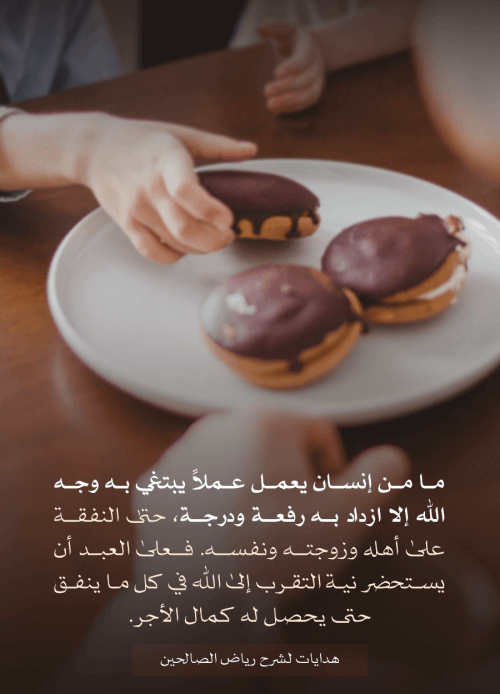
A successful servant of Allah is he who chooses to do the most pious deeds bound to raise his rank on the Day of Judgment.
Riyadh Al-Salheen with explanation and benefits
Allah suffices anyone who relies on Him because He does not disappoint those hopeful of Him.
Riyadh Al-Salheen with explanation and benefits
Anyone doing good deeds will reap its fruits even if they were few; so, the individual should never look down upon any good deed.
Riyadh Al-Salheen with explanation and benefits
It shows that whoever is sincere in his worship, Allah Almighty will guide him to more of it.
Riyadh Al-Salheen with explanation and benefits
It shows that the prohibited lusts are doors to hellfire; and it means following one’s desires that violate the Sharia
Riyadh Al-Salheen with explanation and benefits
Arduous deeds lead to honor and admission to Paradise.
Riyadh Al-Salheen with explanation and benefits
Aging should inspire self-admonition because one becomes close to meeting Allah Almighty.
Riyadh Al-Salheen with explanation and benefits
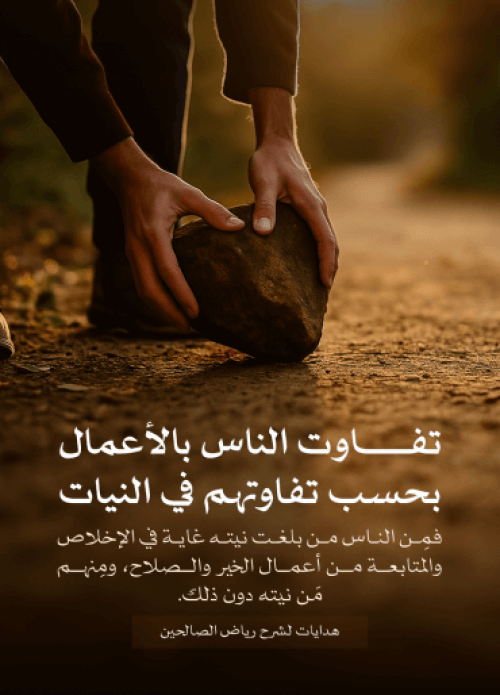
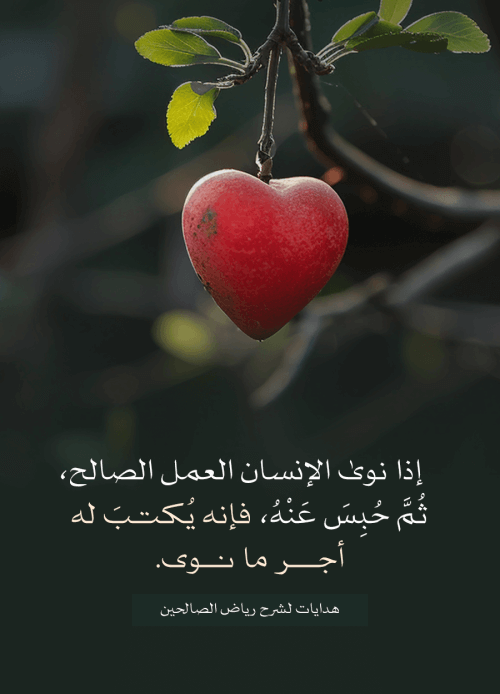
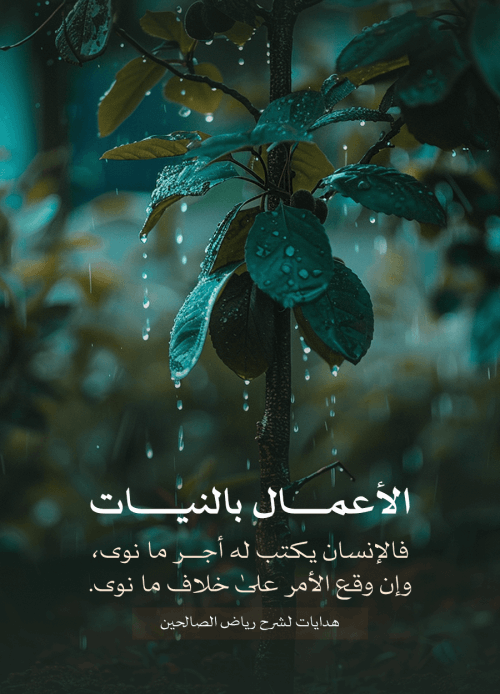
Sincerity and honesty are the criteria for deeds that, once fulfilled, the doer will obtain the designated reward.
Riyadh Al-Salheen with explanation and benefits
The greater the benefit extending beyond limited individuals, the greater the reward and the effect.
Riyadh Al-Salheen with explanation and benefits