








Categories
Discover our diverse collection of categories covering multiple topics to meet your various interestsDa\'wa cards that highlight great meanings of the verses of the Holy Quran and the noble prophetic hadiths in a simple style and attractive display that helps the Muslim to have a deeper understanding of his religion in an easy way
﴿ كَذَٰلِكَۖ وَأَوۡرَثۡنَٰهَا بَنِيٓ إِسۡرَٰٓءِيلَ ﴾
سورة الشعراء
So it was, and We made the Children of Israel to inherit them.

﴿ فَكَذَّبُوهُ فَنَجَّيۡنَٰهُ وَمَن مَّعَهُۥ فِي ٱلۡفُلۡكِ وَجَعَلۡنَٰهُمۡ خَلَٰٓئِفَ وَأَغۡرَقۡنَا ٱلَّذِينَ كَذَّبُواْ بِـَٔايَٰتِنَاۖ فَٱنظُرۡ كَيۡفَ كَانَ عَٰقِبَةُ ٱلۡمُنذَرِينَ ﴾
سورة يونس
73. They denied him, but We delivered him, and those with him in the ship, and We made them generations replacing one after another, while We drowned those who belied Our Ayât (proofs, evidence, lessons, signs, revelations, etc.). Then see what was the end of those who were warned.
﴿ وَدَخَلَ جَنَّتَهُۥ وَهُوَ ظَالِمٞ لِّنَفۡسِهِۦ قَالَ مَآ أَظُنُّ أَن تَبِيدَ هَٰذِهِۦٓ أَبَدٗا ﴾
سورة الكهف
And he entered his garden while he was unjust to himself.[788] He said, "I do not think that this will perish - ever.
﴿ قَالَ رَبِّي يَعۡلَمُ ٱلۡقَوۡلَ فِي ٱلسَّمَآءِ وَٱلۡأَرۡضِۖ وَهُوَ ٱلسَّمِيعُ ٱلۡعَلِيمُ ﴾
سورة الأنبياء
4. He (Muhammad صلى الله عليه وسلم) said: "My Lord knows (every) word (spoken) in the heavens and on earth. And He is the All-Hearer, the All-Knower."
﴿ ثُمَّ قَسَتۡ قُلُوبُكُم مِّنۢ بَعۡدِ ذَٰلِكَ فَهِيَ كَٱلۡحِجَارَةِ أَوۡ أَشَدُّ قَسۡوَةٗۚ وَإِنَّ مِنَ ٱلۡحِجَارَةِ لَمَا يَتَفَجَّرُ مِنۡهُ ٱلۡأَنۡهَٰرُۚ وَإِنَّ مِنۡهَا لَمَا يَشَّقَّقُ فَيَخۡرُجُ مِنۡهُ ٱلۡمَآءُۚ وَإِنَّ مِنۡهَا لَمَا يَهۡبِطُ مِنۡ خَشۡيَةِ ٱللَّهِۗ وَمَا ٱللَّهُ بِغَٰفِلٍ عَمَّا تَعۡمَلُونَ ﴾
سورة البقرة
Then your hearts became hardened after that, being like stones or even harder. For indeed, there are stones from which rivers burst forth, and there are some of them that split open and water comes out, and there are some of them that fall down for fear of Allāh. And Allāh is not unaware of what you do.
﴿ ۞ وَقَالَ ٱرۡكَبُواْ فِيهَا بِسۡمِ ٱللَّهِ مَجۡر۪ىٰهَا وَمُرۡسَىٰهَآۚ إِنَّ رَبِّي لَغَفُورٞ رَّحِيمٞ ﴾
سورة هود
41. And he [Nûh (Noah) عليه السلام] said: "Embark therein: in the Name of Allâh will be its (moving) course and its (resting) anchorage. Surely, my Lord is Oft-Forgiving, Most Merciful." (Tafsir At-Tabarî)
﴿ يَٰٓأَيُّهَا ٱلَّذِينَ ءَامَنُواْ قَٰتِلُواْ ٱلَّذِينَ يَلُونَكُم مِّنَ ٱلۡكُفَّارِ وَلۡيَجِدُواْ فِيكُمۡ غِلۡظَةٗۚ وَٱعۡلَمُوٓاْ أَنَّ ٱللَّهَ مَعَ ٱلۡمُتَّقِينَ ﴾
سورة التوبة
O you who believe, fight those disbelievers who are around you[89], and let them find harshness in you; and know that Allah is with those who fear Him.
﴿ أَسۡمِعۡ بِهِمۡ وَأَبۡصِرۡ يَوۡمَ يَأۡتُونَنَا لَٰكِنِ ٱلظَّٰلِمُونَ ٱلۡيَوۡمَ فِي ضَلَٰلٖ مُّبِينٖ ﴾
سورة مريم
How sharp they will hear and see on the Day they come to Us! But today the wrongdoers are clearly misguided.
﴿ بَلۡ يُرِيدُ كُلُّ ٱمۡرِيٕٖ مِّنۡهُمۡ أَن يُؤۡتَىٰ صُحُفٗا مُّنَشَّرَةٗ ﴾
سورة المدثر
In fact, each one of them desires that open [divine] letters be sent to each of them[11].
‘Abdullāh ibn ‘Amr ibn al-‘ās (may Allah be pleased with him) reported that the Prophet (may Allah's peace and blessings be upon him) said: "He does not belong to us who does not show mercy to our young and honor our old."
Narrated by At-Termedhy - Narrated by Abu Daoud - Narrated by Ahmad
A Muslim is not compliant with the Sunnah of the Prophet (may Allah's peace and blessings be upon him) if he is not merciful to the younger members of the community by treating them with compassion and jolliness. The same is true if he does not treat the older members of the community with due respect and veneration. The expression "he does not belong to us" is intended as a warning and threat, not that such conduct actually takes the person out of the fold of Islam.
Abu Hurayrah (may Allah be pleased with him) reported that the Messenger of Allah (may Allah's peace and blessings be upon him) said: "A man set out to visit a brother (in faith) in another town, so Allah sent an angel to wait for him on his way. When he met the angel, the latter said: 'Where are you going?' He said: 'I am going to visit my brother in this town.' The angel said: 'Are you returning a favor?' He said: 'No, only that I love him for the sake of Allah, the Exalted.' Thereupon the angel said: 'I am a messenger from Allah to you to tell you that Allah loves you as you love him for His sake.'"
Narrated by Muslim
The Prophet (may Allah's peace and blessings be upon him) recounts that a man from the past nations set out to visit a brother in faith in another town. Allah, the Exalted, sent an angel to watch over him and protect him on the way. The angel asked him where he was going. The man said that he was going to visit a brother in religion in that town. So the angel asked if that was his slave, son, dependent, or someone whom he benefits from or whom he owes a favor. The man replied in the negative, saying that he only loved that person for the sake of Allah and wished to gain the pleasure of Allah by visiting him. Thereupon, the angel told him that he was a messenger from Allah to tell him that Allah loves him just as he loves his brother for the sake of Allah.
Abu Hurayra (may Allah be pleased with him) reported: The Messenger of Allah (may Allah’s peace and blessings be upon him) said: "The needy is not the one who can be turned away with a date-fruit or two, or a morsel or two. But, the needy is the one who abstains from begging."
Narrated by Bukhari & Muslim
This Hadīth clarifies the true meaning of poverty and informs that a praiseworthy needy who deserves charity more, is the one who abstains from begging. The Prophet (may Allah's peace and blessings be upon him) did not consider the one who goes around and begs a real needy, because he takes what suffices him and may receive Zakah, ending his poverty. However, the need of someone who does not beg continues because he does not receive things through begging and asking people.
Ibn ‘Abbās and ‘Imrān ibn al-Husayn (may Allah be pleased with both of them) reported that the Messenger of Allah (may Allah's peace and blessings be upon him) said: "I looked into Paradise and found that the majority of its people are the poor, and I looked into the Fire and found that the majority of its people are women.”
Narrated by Bukhari & Muslim
The Prophet (may Allah's peace and blessings be upon him) relates that he had a look into Paradise and found that the majority of its people are the poor, because they do not have the means to commit transgression, so they are submissive and humble. One thoughtful and deep look into the verses of the Qur'an would reveal that those who deny the messengers are the prestigious and wealthy people, as opposed to the weak who follow the messengers, and hence they constituted the majority of the people of Paradise. The Hadīth by no means implies that each single poor individual is better than each single wealthy person. It rather denotes that the poor, in general, are more in Paradise than the wealthy. It is not poverty that caused them to enter Paradise, despite the fact that it made their reckoning easier. Instead, it was their righteousness along with poverty. The poor is not at all better than the wealthy if he is not righteous in the first place. Furthermore, the Prophet (may Allah's peace and blessings be upon him) relates that he also saw Hellfire and found that the majority of its inhabitants are women, because they have some bad habits that dominate their demeanor like being ungrateful to their husbands besides the fact that they curse a lot. Therefore, it is imperative that they preserve their religion to be saved from Hellfire.
Abu Mūsa al-Ash‘ari (may Allah be pleased with him) reported that the Prophet (may Allah's peace and blessings be upon him) said: "The similitude of guidance and knowledge that Allah has sent me with is like heavy rain that fell on a land. Some spots had good soil; they absorbed the water and brought forth much grass and herbs. Other spots were solid; they held the water. Allah thus made them useful to people: they drank, watered, and grew plantation. Some of the rain, however, fell on plane spots that retained no water and produced no herbage. Such is the likeness of the one who understood the religion of Allah and benefited from what Allah has sent me with; he learned and taught others. It is also the likeness of the one who did not raise his head to it (meaning that he was too arrogant to learn and benefit) and thus did not accept Allah's guidance with which I was sent."
Narrated by Bukhari & Muslim
The Prophet (may Allah's peace and blessings be upon him) likens the divine guidance and knowledge that were revealed to him to heavy rain that fell on land. The land was of three kinds. Some spots were good enough to absorb water and grow plants, so the people made use of them; other spots did not grow plants but served as containers of water, so the people made use of the water by drinking, watering their animals, and irrigating their plants; and further spots neither held water nor produced plants. Likewise, people receive what Allah sent the Prophet (may Allah's peace and blessings be upon him) with of knowledge and guidance in different ways. Some of them understand the religion, so they learn and teach others. These are useful to themselves and to others. Other people carry knowledge without having insight into it, so they benefit others but do not profit themselves. And yet other people do not pay any heed to what the Prophet (may Allah's peace and blessings be upon him) came with of knowledge and guidance, and they turn away from it and disregard it. So they neither profit from what the Prophet (may Allah's peace and blessings be upon him) came with nor benefit others.
Abu Umāmah al-Bāhili (may Allah be pleased with him) reported: The Prophet (may Allah's peace and blessings be upon him) said: "The superiority of the scholar over the worshiper is like my superiority over the lowest among you." Then, the Messenger of Allah (may Allah’s peace and blessings be upon him) said: "Indeed, Allah, His angels, the inhabitants of the heavens and the earth, even the ant in its hole, and even the fish, invoke blessings upon those who teach people goodness."
Narrated by At-Termedhy
This Hadīth is meant to show the superiority of knowledge and religious scholars, along with performing the obligatory acts of worship and as much voluntary acts as one can easily do, over the worshiper, i.e. the one who is completely devoted to worship. “Like my superiority over the lowest among you”, meaning: the scholar’s honor compared to that of the worshiper is like the Prophet’s honor compared to the lowest among the Companions in honor and status. In fact, this Prophetic statement was addressed to the noble Companions (may Allah be pleased with them). Thereafter, the Messenger of Allah (may Allah's peace and blessings be upon him) said: “Indeed, Allah, His angels, the inhabitants of the heavens and the earth”, meaning: all those who inhabit the earth, including the human beings, Jinn, and all species of animals. "Even the ant in its hole", meaning: the hole where it resides. “And even the fish, invoke blessings upon those who teach people goodness.” Goodness here refers to religious knowledge that leads to salvation in the worldly life and the Hereafter. When Allah, the Almighty, invokes blessings upon His slave, this means He praises him among His close angels. Invocation of blessings by the angels, on the other hand, means asking for forgiveness. Indeed, there is no rank higher than the one occupied by a person for whom the angels and all created beings engage in supplication and forgiveness-seeking until the Day of Judgment. Hence, his reward does not stop with his demise.
Abu Ad-Dardā’ (may Allah be pleased with him) reported: The Messenger of Allah (may Allah's peace and blessings be upon him) said: "Whoever follows a path in pursuit of knowledge, Allah will facilitate for him a path to Paradise. Indeed, the angels lower their wings for the seeker of knowledge, out of pleasure at what he does. Verily, the inhabitants of the heavens and the earth, even the fish in the water, ask forgiveness from Allah for the knowledgeable. The superiority of a scholar over a devout worshiper is like the superiority of the moon over the rest of the stars. Indeed, the scholars are the inheritors of the prophets, who bequeath neither dinar nor dirham, only knowledge. So whoever acquires it has actually taken abundant wealth."
Narrated by Ibn Majah - Narrated by At-Termedhy - Narrated by Abu Daoud - Narrated by Ahmad - Ad-Daarimi
The Hadīth sheds light on some merits of the pursuit of knowledge, as follows: 1. If a person treads a path in pursuit of knowledge or even if he seeks knowledge while at home, Allah, the Almighty, will reward him by facilitating a path leading him to Paradise. The pursuit of knowledge includes a tangible path, where a man actually walks (to gain knowledge), and an intangible one, like attending the classes of scholars and reading books. Thus, he is considered to be following a path of knowledge, even though he is actually sitting. 2. The inhabitants of the heavens and the earth, even the fish and animals, invoke the forgiveness of Allah, the Almighty, for the scholars. 3. The angels, honored by Allah, the Almighty, lay down their wings for the seeker of knowledge out of pleasure at what he does and in humility and reverence towards knowledge and the knowledgeable. 4. The scholars are the inheritors of the prophets. They take knowledge, application, the call to Allah, the Almighty, and guiding people to His religion from them. 5. The superiority of a scholar over a devout worshiper is like the superiority of the moon over the rest of the stars. Indeed, the light and virtue of worship are limited to the worshiper; it does not reach others, just like the light of the stars. By contrast, the light and virtue of knowledge transcend the scholar and reach others, enlightening them. The Prophet (may Allah's peace and blessings be upon him) highlighted that the prophets did not bequeath worldly fortunes, but the best legacy they leave behind is knowledge. Whoever acquires it has indeed taken a great fortune. In fact, this is the true beneficial inheritance. Let no one think that a scholar does not engage in worship or that a worshiper lacks knowledge. But, the knowledge of the former prevails over his deeds, whereas the deeds of the latter override his knowledge. Hence, the scholars are considered as the inheritors of the prophets, who gained both merits – knowledge and action – and were marked by perfection and the pursuit of improvement. This is the course to be taken by those who truly know their Lord and walk in the path leading to Him.
Abu Hurayrah (may Allah be pleased with him) reported: The Messenger of Allah (may Allah's peace and blessings be upon him) said: "People are precious metals, like the metals gold and silver. The best of them in the pre-Islamic period are the best of them in Islam, if they understand. Souls are conscripted soldiers, whichever of them come together, they unite and whichever of them disregard each other, they diverge." Abu Hurayrah (may Allah be pleased with him) reported: The Messenger of Allah (may Allah's peace and blessings be upon him) said: ''You find people like metal; the best of them in the pre-Islamic era are the best of them in Islam, if they understand. And you find the best of people in this matter are those who detest it most. And you find the most evil of people are the two-faced; the ones who come to these with one face and to those with another.''
Al-Bukhari and Muslim with its two versions
The Messenger of Allah (may Allah's peace and blessings be upon him) likened people to metal, thereby indicating many things. He implied that people are different in character, morals, and mental qualities. This is understood from his reference to the differences between metals. He also indicates that people are different in accepting reform. Some of them are easy, some need patience, and some are impervious to it. Furthermore, the reference to metal shows that people are different in respect to being noble and ignoble, just as metals differ in quality. Some are expensive like gold and silver; others are cheap like iron and tin. Likewise, the reference to metal indicates endurance. The metals of the Arabs are their origin and lineage. The Prophet (may Allah's peace and blessings be upon him) says: “The best of them in the pre-Islamic period are the best of them in Islam, if they understand.'' This means that the noblest of people, in terms of their origin, lineage, and essence were the best in the pre-Islamic period, as long as they understood. For example, the Banu Hāshim were the best of the Quraysh before Islam, as far as their origins and lineage were concerned, and this is stated in an authentic Hadīth. The same Banu Hāshim were the best in Islam if they learned and understood the religion of Allah. If they did not do so, even though they had the best Arabic backgrounds, they were not the noblest in the sight of Allah nor were they the best of humans. This is proof that a person's lineage is a source of honor for him, as long as he understands the religion. There is no doubt that lineage has an effective role here; therefore, the Banu Hāshim were the best and the noblest of people. Consequently, the Messenger of Allah (may Allah's peace and blessings be upon him) was the noblest of all human beings: {Allah is most knowing of where [i.e., with whom] He places His message} [Sūrat al-An‘ām: 124]. If this tribe had not been the noblest of all humans, the Prophet (may Allah's peace and blessings be upon him) would not have been sent from them. The first Hadīth concludes with the Prophet's saying: “Souls are conscripted soldiers, whichever of them come together, they unite and whichever of them disregard each other, they diverge.'' This could be referring to the concept of uniting in good and evil, as a good person inclines to his like and an evil person inclines to his equivalent. Therefore, souls unite in response to their innate motives, good or evil. If they unite, they recognize each other, if they diverge, they overlook each other. This could also be a reference to the beginning of creation in the unseen world. It is reported that the souls were created before the bodies, so they would meet and unite. When the souls reside in their bodies, they recognize each other because of their primordial uniting. So their uniting and divergence is attuned to this primeval correspondence and, as such, the good ones incline to the good ones and the evil ones to the evil ones. Ibn ‘Abd As-Salām says: ''The recognition and denial here mean uniting and diverging on attributes. For if a person has different attributes to you, you disavow him. In regard to the unknown, one denies it, due to lack of knowledge. So the simile is used metaphorically to indicate the unknown as deniable and the concordant as recognized.'' The second Hadīth concludes with the Prophet's saying: “And you find the best of people in this matter are those who detest it most. And you find the most evil of people are the two-faced; the ones who come to these with one face and to those with another.'' Here, the best people in dealing with rulings are those who are not eager for leadership. Therefore, if they are in a position of authority, they will be guided, as opposed to those who long for it. Finally, the most evil of people are those who are two-faced. They approach some people with one face and others with another, as the hypocrites do: {And when they meet those who believe, they say, "We have believed"; but when they are alone with one another, they say, "Do you talk to them about what Allah has revealed to you so they can argue with you about it before your Lord?" Then will you not reason?} [Sūrat al-Baqarah: 67] Unfortunately, this is a rampant attitude; it is a type of hypocrisy. A two-faced person would flatter you with praise and might even exaggerate, but behind your back he insults, defames, and slanders you. This is a major sin that is typical of the most evil of people.
Usayr ibn ‘Amr (another said Ibn Jābir) reported: Whenever reinforcements from the people of Yemen came to ‘Umar ibn al-Khattāb (may Allah be pleased with him) he would ask them: "Is Uways ibn ‘Āmir amongst you?" This continued till he met Uways (may Allah be pleased with him) and said to him: "Are you Uways ibn ‘Āmir?" He said: ‘Yes.’ ‘Umar asked: "Are you from the Qarn branch of the tribe of Murād?" He said: ‘Yes.’ He further asked: "Did you suffer from leprosy and then you were cured but for the spot of a dirham?" He said: ‘Yes.’ Then, he asked: "Is your mother still alive?" He said: ‘Yes.’ ‘Umar said: "I heard the Messenger of Allah (may Allah’s peace and blessings be upon him) say: 'There would come to you Uways ibn ‘Āmir with reinforcements from the people of Yemen. He would be from Qarn, of Murād. He had been suffering from leprosy from which he was cured but for the spot of a dirham. He has a mother to whom he is dutiful. If he were to take an oath in the name of Allah, Allah would fulfill his oath. If it is possible for you, ask him to ask forgiveness for you.' So, ask forgiveness for me." He asked forgiveness for him. ‘Umar asked: "Where do you intend to go?" He said: "To Kufah." He said: "Shall I write a letter for you to its governor." Uways said: "It is dearer to me to live amongst the poor people." The following year, a person from among the elite (of Kufah) performed Hajj and met ‘Umar, who asked him about Uways. The man replied: "I left him in an old house and with little means of sustenance." Thereupon, ‘Umar said: "I heard the Messenger of Allah (may Allah’s peace and blessings be upon him) say: 'There would come to you Uways ibn ‘Āmir with reinforcements from the people of Yemen. He would be from Qarn, of Murād. He had been suffering from leprosy from which he was cured but for the spot of a dirham. He has a mother to whom he is dutiful. If he were to take an oath in the name of Allah, Allah would fulfill his oath. If it is possible for you, ask him to ask forgiveness for you.'" So, the man went to Uways and asked him to ask forgiveness for him. Uways said to him: "You have just returned from a blessed journey; so, it is you who should ask forgiveness for me." Then, he asked: "Did you meet ‘Umar?" The man said: ‘Yes.’ Uways asked forgiveness for him. Hence, the people recognized the status of Uways, and so he quickly went away from that place. In another narration also reported by Usayr ibn Jābir: "A delegation from Kufah came to ‘Umar (may Allah be pleased with him). Among them was a man who used to mock Uways. ‘Umar asked: 'Is there anyone among you who is from Qarn?' This man stepped forward. Then, ‘Umar said: "The Messenger of Allah (may Allah’s peace and blessings be upon him) said: 'A man will come to you from Yemen named Uways. He will be leaving in Yemen none but his mother. He was suffering from leucoderma and supplicated Allah, the Exalted, Who cured him from it except for a space the size of a dinar or dirham. Whoever of you meets him should ask him to ask forgiveness for you.'" Another narration reported by him reads: "‘Umar (may Allah be pleased with him) said: 'I heard the Messenger of Allah (may Allah’s peace and blessings be upon him) say: 'The best one among the Tābi‘is is a man called Uways. He has a mother and was suffering from leucoderma. So, ask him to ask forgiveness for you.'"
Narrated by Muslim
Whenever the groups of fighters from the people of Yemen came to ‘Umar ibn al-Khattāb as reinforcements to the Muslim armies in their battles, he would ask them: “Is there amongst you Uways ibn ‘Āmir.” He continued to do so till Uways (may Allah have mercy upon him) came to him. ‘Umar asked him: “Are you Uways ibn ‘Āmir?” He replied in the affirmative. ‘Umar further asked: “Are you from Qarn, of the Murād tribe?” Uways said: 'Yes.' ‘Umar asked: “Did you suffer from leprosy and were cured from it except for the spot of a dirham?” He replied in the affirmative. ‘Umar asked: “Is your mother still alive?” Uways replied: 'Yes.' Thereupon, ‘Umar said: “I heard the Messenger of Allah (may Allah’s peace and blessings be upon him) say: ‘There would come to you Uways ibn ‘Āmir along with the groups of fighters from the people of Yemen, from the Qarn branch of the Murād tribe. He was suffering from leprosy and Allah cured him except for the size of a dirham. He has a mother to whom he is dutiful. If he were to take an oath in the name of Allah that something should happen, Allah would fulfill his oath and make this thing happen. If it is possible for you, O ‘Umar, to make him ask forgiveness for you, do so.’” This should not, however, be understood to denote the superiority of Uways over ‘Umar, or that ‘Umar’s sins were not forgiven. Rather, there is a consensus that ‘Umar was superior to Uways, for the former is a Companion and the latter is a Tābi‘i. However, the Hadīth informs that Uways was a person whose supplication was readily answered by Allah, the Exalted, and that ‘Umar was instructed to seek more good and benefit from the supplication of those to whom it is hoped Allah will respond. This is similar to the Prophet’s command to us to supplicate for him, invoke the blessings of Allah upon him, and ask Allah to grant him the rank of Al-Wasīlah, even though the Prophet is the best among all the children of Adam. Then, ‘Umar asked him to seek forgiveness for him, which Uways did. After that, ‘Umar asked: “Where will you go?” Uways replied: “Kufa.” ‘Umar said: “Shall I write a letter for you to its governor ordering him to give you money from the Muslim treasury that will be sufficient for you?” Thereupon, Uways said: “It is dearer to me to be one of the ordinary and poor people.” The following year, a man from the elite people of Kufa made the journey of Hajj and met ‘Umar, who asked him about Uways. The man replied: “I left him living in a modest house and having little furniture.” Upon that, ‘Umar said: “I heard the Messenger of Allah (may Allah’s peace and blessings be upon him) say: ‘There would come to you Uways ibn ‘Āmir along with the groups of fighters from the people of Yemen, from the Qarn branch of the Murād tribe. He was suffering from leprosy and Allah cured him except for the size of a dirham. He has a mother to whom he is dutiful. If he were to take an oath in the name of Allah that something should happen, Allah would fulfill his oath and make this thing happen. If it is possible for you, O ‘Umar, to make him ask forgiveness for you, do so.’” This man went to Uways and said to him: “Ask forgiveness for me.” Uways said: “You have just returned back from a blessed journey. So, you ask forgiveness for me.” Then, Uways thought he might have met ‘Umar. So, he asked him: “Did you meet ‘Umar?” The man replied in the affirmative. Uways asked forgiveness for him. Consequently, people recognized his merit and took an interest in him. Therefore, he left Kufa and went to another place where no one knew him.
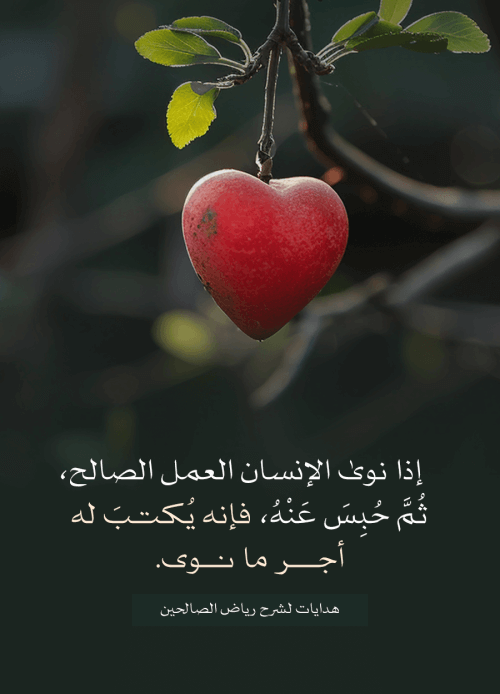
If someone intends to do a good deed but was prevented by a valid excuse, he shall gain the reward of his intention.
Riyadh Al-Salheen with explanation and benefits
Variation of reward for good deeds is based on sincerity and following of the Prophet’s guidance. The more a person is sincere to Allah, and the keener he is on following the Prophet (may Allah’s peace and blessings be upon him), the more perfect his worship will be, and consequently his reward will be bigger.
Riyadh Al-Salheen with explanation and benefits
People differ with regards to their acts of worship according to their intentions. The intentions of some people have reached the ultimate level of sincerity (to Allah) and keenness in following the Sunnah (of the Messenger of Allah) with regard to doing good and righteous deeds, while the intentions of others are below that.
Riyadh Al-Salheen with explanation and benefits
Anyone partaking a role with transgressors and wrongdoers will share their punishment because it is inclusive.
Riyadh Al-Salheen with explanation and benefits
If someone intends to do a good deed but was prevented by a valid excuse, he shall gain the reward of his intention.
Riyadh Al-Salheen with explanation and benefits
Actions are recompensed according to the intentions behind them, and the individual shall receive the reward of what he intended even if the outcome was contrary to his intention.
Riyadh Al-Salheen with explanation and benefits
There is not a single good deed intended sincerely to please Allah except that its doer will be raised in rank and status thereby, so that he would reap the full reward.
Riyadh Al-Salheen with explanation and benefits
Love and contentment is measured by good deeds and intentions because they are the criteria for Allah’s acceptance of the servant; perhaps a small deed reaps great reward because of the intention behind it and perhaps a big deed reaps little reward because of the intention behind it
Riyadh Al-Salheen with explanation and benefits
One of the proofs Allah supports the servant is the latter’s sincere endeavor to rectify his intention and purify his heart by good deeds.
هدايات لشرح رياض الصالحين