






Categories
Discover our diverse collection of categories covering multiple topics to meet your various interestsDa\'wa cards that highlight great meanings of the verses of the Holy Quran and the noble prophetic hadiths in a simple style and attractive display that helps the Muslim to have a deeper understanding of his religion in an easy way
﴿ وَأَمَّا ٱلۡغُلَٰمُ فَكَانَ أَبَوَاهُ مُؤۡمِنَيۡنِ فَخَشِينَآ أَن يُرۡهِقَهُمَا طُغۡيَٰنٗا وَكُفۡرٗا ﴾
سورة الكهف
“As for the boy, his parents were believers, and we feared that he would overburden them with his rebellion and disbelief[38].

﴿ ۞ وَلَقَدۡ أَخَذَ ٱللَّهُ مِيثَٰقَ بَنِيٓ إِسۡرَٰٓءِيلَ وَبَعَثۡنَا مِنۡهُمُ ٱثۡنَيۡ عَشَرَ نَقِيبٗاۖ وَقَالَ ٱللَّهُ إِنِّي مَعَكُمۡۖ لَئِنۡ أَقَمۡتُمُ ٱلصَّلَوٰةَ وَءَاتَيۡتُمُ ٱلزَّكَوٰةَ وَءَامَنتُم بِرُسُلِي وَعَزَّرۡتُمُوهُمۡ وَأَقۡرَضۡتُمُ ٱللَّهَ قَرۡضًا حَسَنٗا لَّأُكَفِّرَنَّ عَنكُمۡ سَيِّـَٔاتِكُمۡ وَلَأُدۡخِلَنَّكُمۡ جَنَّٰتٖ تَجۡرِي مِن تَحۡتِهَا ٱلۡأَنۡهَٰرُۚ فَمَن كَفَرَ بَعۡدَ ذَٰلِكَ مِنكُمۡ فَقَدۡ ضَلَّ سَوَآءَ ٱلسَّبِيلِ ﴾
سورة المائدة
And Allāh had already taken a covenant from the Children of Israel, and We delegated from among them twelve leaders. And Allāh said, "I am with you. If you establish prayer and give zakāh and believe in My messengers and support them and loan Allāh a goodly loan,[247] I will surely remove from you your misdeeds and admit you to gardens beneath which rivers flow. But whoever of you disbelieves after that has certainly strayed from the soundness of the way."
﴿ وَإِذۡ قَالَ إِبۡرَٰهِـۧمُ رَبِّ أَرِنِي كَيۡفَ تُحۡيِ ٱلۡمَوۡتَىٰۖ قَالَ أَوَلَمۡ تُؤۡمِنۖ قَالَ بَلَىٰ وَلَٰكِن لِّيَطۡمَئِنَّ قَلۡبِيۖ قَالَ فَخُذۡ أَرۡبَعَةٗ مِّنَ ٱلطَّيۡرِ فَصُرۡهُنَّ إِلَيۡكَ ثُمَّ ٱجۡعَلۡ عَلَىٰ كُلِّ جَبَلٖ مِّنۡهُنَّ جُزۡءٗا ثُمَّ ٱدۡعُهُنَّ يَأۡتِينَكَ سَعۡيٗاۚ وَٱعۡلَمۡ أَنَّ ٱللَّهَ عَزِيزٌ حَكِيمٞ ﴾
سورة البقرة
And [remember] when Abraham said: “My Lord, show me how You give life to the dead.” He said: “Do you not believe?’’ He said: “I do believe, but just to reassure my heart[158].’’ Allah said: “Then take four birds and cut them into pieces, then put a piece of each of them on each mountain, then call them; they will come swiftly to you. And know that Allah is All-Mighty, All-Wise.”
﴿ وَقَالُواْ ٱلۡحَمۡدُ لِلَّهِ ٱلَّذِي صَدَقَنَا وَعۡدَهُۥ وَأَوۡرَثَنَا ٱلۡأَرۡضَ نَتَبَوَّأُ مِنَ ٱلۡجَنَّةِ حَيۡثُ نَشَآءُۖ فَنِعۡمَ أَجۡرُ ٱلۡعَٰمِلِينَ ﴾
سورة الزمر
And they will say, "Praise to Allāh, who has fulfilled for us His promise and made us inherit the earth [so] we may settle in Paradise wherever we will. And excellent is the reward of [righteous] workers."
﴿ قَالَ قَآئِلٞ مِّنۡهُمۡ لَا تَقۡتُلُواْ يُوسُفَ وَأَلۡقُوهُ فِي غَيَٰبَتِ ٱلۡجُبِّ يَلۡتَقِطۡهُ بَعۡضُ ٱلسَّيَّارَةِ إِن كُنتُمۡ فَٰعِلِينَ ﴾
سورة يوسف
One of them said, “Do not kill Joseph; but if you must do something, then throw him into the bottom of the well, so that some travelers may pick him up.”
﴿ وَإِذَا سَمِعُواْ مَآ أُنزِلَ إِلَى ٱلرَّسُولِ تَرَىٰٓ أَعۡيُنَهُمۡ تَفِيضُ مِنَ ٱلدَّمۡعِ مِمَّا عَرَفُواْ مِنَ ٱلۡحَقِّۖ يَقُولُونَ رَبَّنَآ ءَامَنَّا فَٱكۡتُبۡنَا مَعَ ٱلشَّٰهِدِينَ ﴾
سورة المائدة
When they hear what has been sent down to the Messenger, you see their eyes overflowing with tears because of recognizing the truth. They say, “Our Lord, we believe, so record us among those who testify [to the truth].
﴿ وَإِن يَمۡسَسۡكَ ٱللَّهُ بِضُرّٖ فَلَا كَاشِفَ لَهُۥٓ إِلَّا هُوَۖ وَإِن يَمۡسَسۡكَ بِخَيۡرٖ فَهُوَ عَلَىٰ كُلِّ شَيۡءٖ قَدِيرٞ ﴾
سورة الأنعام
17. And if Allâh touches you with harm, none can remove it but He, and if He touches you with good, then He is Able to do all things.
﴿ وَإِن يُكَذِّبُوكَ فَقَدۡ كَذَّبَ ٱلَّذِينَ مِن قَبۡلِهِمۡ جَآءَتۡهُمۡ رُسُلُهُم بِٱلۡبَيِّنَٰتِ وَبِٱلزُّبُرِ وَبِٱلۡكِتَٰبِ ٱلۡمُنِيرِ ﴾
سورة فاطر
25. And if they belie you, those before them also belied. Their Messengers came to them with clear signs, and with the Scriptures, and the book giving light.
﴿ وَكُنتُمۡ أَزۡوَٰجٗا ثَلَٰثَةٗ ﴾
سورة الواقعة
And you become [of] three kinds:
Abu Hurayrah (may Allah be pleased with him) reported: The Messenger of Allah (may Allah's peace and blessings be upon him) said: "Cursed is the one who has anal intercourse with his wife."
Narrated by Abu Daoud & Ahmad & An-Nasa'i in Major Sunan
The Prophet (may Allah's peace and blessings be upon him) warns that the husband who has anal intercourse with his wife is cursed and expelled from Allah's mercy and that this is from the major sins.
Mu‘āwiyah al-Qushayri (may Allah be pleased with him) reported: I said: O Messenger of Allah, what is the right of the wife of any of us over him? He said: "To feed her when you eat, clothe her when you clothe yourself, or when you earn money, do not strike on the face, do not revile, and do not forsake except inside the house."
Narrated by Abu Daoud & Ibn Majah & Ahmad
The Prophet (may Allah's peace and blessings be upon him) was asked about the wife's right over her husband, so he mentioned several things including the following: First: Do not favor yourself with food over her; rather, you should feed her whenever you eat. Second: Do not favor yourself with clothing; rather, clothe her when you clothe yourself and when you earn money and have the ability. Third: A wife should not be beaten except for a valid reason and necessity, and if there is a need to discipline her, such as neglecting some of her obligations, the striking must be light and not harmful. Furthermore, the face must never be struck, as it is the most honored and prominent part of the body, containing delicate and noble features. Fourth: Do not insult or say: "May Allah disgrace your face," or attribute it or anything of her body to ugliness, which is the opposite of beauty. This is because Allah Almighty is the One Who shaped the human face and body, and He has perfected everything He created. Criticizing the creation indirectly leads to criticizing the Creator, and we seek refuge in Allah from such an act. Fifth: Do not abandon her except in the bed, and do not physically leave her or move her to another house. This applies to typical instances of abandonment that may occur between spouses.
Abu Hurayrah (may Allah be pleased with him) reported that the Messenger of Allah (may Allah's peace and blessings be upon him) said: "If a man invites his wife to his bed and she refuses, and so he spends the night angry with her, the angels will curse her until the morning."
Narrated by Bukhari & Muslim
This Hadīth indicates that a woman should answer her husband's request of having sexual intercourse with her, or else she exposes herself to the angels' curse. This is restricted, however, by the husband's anger, as in Al-Bukhāri's narration. If he does not object to her refusal, there is no problem. This also applies if the wife has a legitimate excuse, such as being too sick to have sex or having another excuse that prevents her from coming to the husband's bed. Other than that, she has to respond to him. On the other side, the husband has to fulfill the sexual needs of his wife, if he notices that she wants to have sexual intercourse or asks him to do so. Allah says: {And live with them in kindness.} [Sūrat An-Nisā': 19]
‘Abdullāh ibn ‘Amr (may Allah be pleased with him) reported: The Messenger of Allah (may Allah’s peace and blessings be upon him) cursed the woman who fixes hair extensions (to another) and the woman who has them fixed for her, and the woman who does tattoos and the woman who has them done for her.
Narrated by Bukhari & Muslim
This Hadīth proves that fixing hair extensions is prohibited for women, as well as making tattoos for the sake of beauty and adornment. These acts are major sins for the following reasons: 1. Adding hair extensions involves cheating and imitation of the Jews, who were the first to add hair extensions. 2. Making tattoos constitutes change of the creation of Allah, the Almighty. Hence, both the one who does such acts and the one who has them done for her are cursed.
Abu Hurayrah (may Allah be pleased with him) reported that the Prophet (may Allah's peace and blessings be upon him) said: "Whoever has two wives and is inclined to one of them will come on the Day of Judgment with his side inclined."
The Prophet (may Allah's peace and blessings be upon him) informs that whoever has more than one wife and does not maintain justice between them as much as possible, by providing equal treatment in terms of financial support, housing, clothing, and overnight stay, half of his body will be hanging down as a punishment for him on the Day of Judgment. Such inclination is a punishment for his injustice, reflecting his unfair treatment.
Abu Hurayrah (may Allah be pleased with him) reported: The Prophet (may Allah's peace and blessings be upon him) said: "Allah has forgiven my Ummah for the thoughts that come to their minds, unless they act upon them or utter them."
Narrated by Bukhari & Muslim
The Prophet (may Allah's peace and blessings be upon him) informs that a Muslim will not be held accountable for evil thoughts he has in his mind before he acts upon them or speaks about them, as Allah has lifted the restriction and pardoned. He does not hold the Ummah of Muhammad (may Allah's peace and blessings be upon him) accountable for what comes to their minds and wavers in their souls, without being settled therein. If it settles in a person's heart, like arrogance, conceit, or hypocrisy, or he acts upon it with his limbs or says it with his tongue, then he will be held accountable for that.
Jābir (may Allah be pleased with him) reported that the Messenger of Allah (may Allah's peace and blessings be upon him) said: "Let no man stay the night in the place of a previously married woman unless he is her husband or her Mahram."
Narrated by Muslim
The Prophet (may Allah's peace and blessings be upon him) forbids staying the night at the place of a woman whom one is not married to, especially that of a woman who has been previously married, for she is often accessible. Virgins, however, avoid men. If men are forbidden access to non-virgins, who are usually accessible, then they are even more so forbidden access to virgins. The exception here applies to one's wife and one's blood relatives, such as his mother; daughter; sister; relatives through fostering, such the suckling mother; and relatives through marriage, such as one's mother-in-law. "Staying the night" does not mean that a man is allowed to stay in seclusion with a non-Mahram woman during the daytime. According to Sahīh Al-Bukhāri, the interdiction is general and not restricted to the night time. If a Mahram, however, is not trustworthy, a non-Mahram woman must be accompanied by other women.
Ibn ‘Abbās (may Allah be pleased with him) reported: The Messenger of Allah (may Allah's peace and blessings be upon him) slaughtered a ram for Al-Hasan and a ram for Al-Husayn for their ‘Aqīqah.
Narrated by Abu Daoud
Ibn ‘Abbās (may Allah be pleased with him) says that the Prophet (may Allah's peace and blessings be upon him) slaughtered two rams for Al-Hasan and Al-Husayn when they were born, for each one. This indicates that it is legally permissible to have an ‘Aqeedah for newborns.
‘Ā'ishah (may Allah be pleased with her) reported that the Messenger of Allah (may Allah’s peace and blessings be upon him) commanded them to slaughter two similar sheep for a boy and one sheep for a girl (at their birth).
Narrated by At-Termedhy - Narrated by Ahmad
In this Hadīth, ‘Ā'ishah (may Allah be pleased with her) reported that the Messenger of Allah (may Allah’s peace and blessings be upon him) commanded them to slaughter for the ‘Aqīqah of a baby boy two sheep that are similar in age, size, and quality, and to slaughter for the ‘Aqīqah of a baby girl one sheep. ‘Aqīqah is the sacrificial animal slaughtered at the occasion of a baby's birth. It also refers to the banquet where this animal is served.
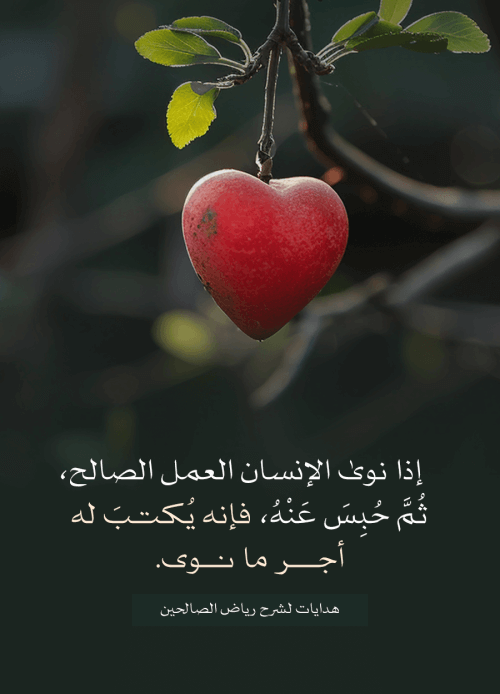
If someone intends to do a good deed but was prevented by a valid excuse, he shall gain the reward of his intention.
Riyadh Al-Salheen with explanation and benefits
Variation of reward for good deeds is based on sincerity and following of the Prophet’s guidance. The more a person is sincere to Allah, and the keener he is on following the Prophet (may Allah’s peace and blessings be upon him), the more perfect his worship will be, and consequently his reward will be bigger.
Riyadh Al-Salheen with explanation and benefits
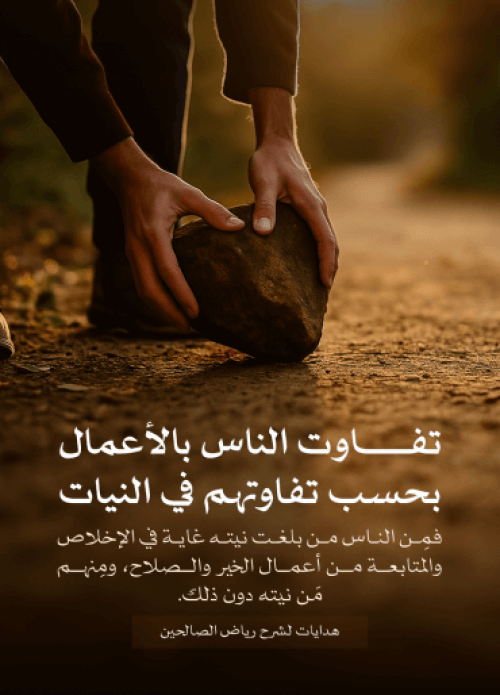
People differ with regards to their acts of worship according to their intentions. The intentions of some people have reached the ultimate level of sincerity (to Allah) and keenness in following the Sunnah (of the Messenger of Allah) with regard to doing good and righteous deeds, while the intentions of others are below that.
Riyadh Al-Salheen with explanation and benefits
Anyone partaking a role with transgressors and wrongdoers will share their punishment because it is inclusive.
Riyadh Al-Salheen with explanation and benefits
If someone intends to do a good deed but was prevented by a valid excuse, he shall gain the reward of his intention.
Riyadh Al-Salheen with explanation and benefits
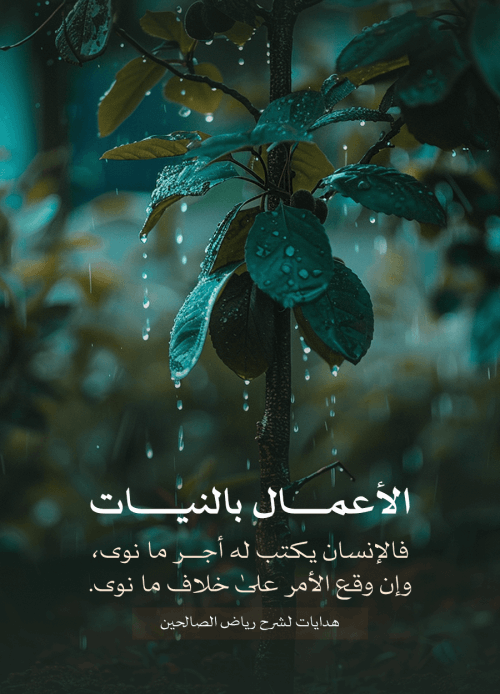
Actions are recompensed according to the intentions behind them, and the individual shall receive the reward of what he intended even if the outcome was contrary to his intention.
Riyadh Al-Salheen with explanation and benefits
There is not a single good deed intended sincerely to please Allah except that its doer will be raised in rank and status thereby, so that he would reap the full reward.
Riyadh Al-Salheen with explanation and benefits
Love and contentment is measured by good deeds and intentions because they are the criteria for Allah’s acceptance of the servant; perhaps a small deed reaps great reward because of the intention behind it and perhaps a big deed reaps little reward because of the intention behind it
Riyadh Al-Salheen with explanation and benefits
One of the proofs Allah supports the servant is the latter’s sincere endeavor to rectify his intention and purify his heart by good deeds.
هدايات لشرح رياض الصالحين