







Categories
Discover our diverse collection of categories covering multiple topics to meet your various interestsDa\'wa cards that highlight great meanings of the verses of the Holy Quran and the noble prophetic hadiths in a simple style and attractive display that helps the Muslim to have a deeper understanding of his religion in an easy way
﴿ أَمۡ لَكُمۡ كِتَٰبٞ فِيهِ تَدۡرُسُونَ ﴾
سورة القلم
Or do you have a scripture in which you learn

﴿ ۞ قَٰلَ أَوَلَوۡ جِئۡتُكُم بِأَهۡدَىٰ مِمَّا وَجَدتُّمۡ عَلَيۡهِ ءَابَآءَكُمۡۖ قَالُوٓاْ إِنَّا بِمَآ أُرۡسِلۡتُم بِهِۦ كَٰفِرُونَ ﴾
سورة الزخرف
[Each warner] said, "Even if I brought you better guidance than that [religion] upon which you found your fathers?" They said, "Indeed we, in that with which you were sent, are disbelievers."
﴿ وَٱلسَّٰبِقُونَ ٱلۡأَوَّلُونَ مِنَ ٱلۡمُهَٰجِرِينَ وَٱلۡأَنصَارِ وَٱلَّذِينَ ٱتَّبَعُوهُم بِإِحۡسَٰنٖ رَّضِيَ ٱللَّهُ عَنۡهُمۡ وَرَضُواْ عَنۡهُ وَأَعَدَّ لَهُمۡ جَنَّٰتٖ تَجۡرِي تَحۡتَهَا ٱلۡأَنۡهَٰرُ خَٰلِدِينَ فِيهَآ أَبَدٗاۚ ذَٰلِكَ ٱلۡفَوۡزُ ٱلۡعَظِيمُ ﴾
سورة التوبة
As for the first forerunners of the Emigrants[74] and the Helpers[75], and those who followed them in righteous deeds, Allah is pleased with them and they are pleased with Him. He has prepared for them gardens under which rivers flow, abiding therein forever. That is the supreme triumph.
﴿ لِّلَّذِينَ يُؤۡلُونَ مِن نِّسَآئِهِمۡ تَرَبُّصُ أَرۡبَعَةِ أَشۡهُرٖۖ فَإِن فَآءُو فَإِنَّ ٱللَّهَ غَفُورٞ رَّحِيمٞ ﴾
سورة البقرة
226. Those who take an oath[59] not to have sexual relation with their wives must wait for four months, then if they return (change their idea in this period), verily, Allâh is Oft-Forgiving, Most Merciful.
﴿ فَأَسۡرِ بِأَهۡلِكَ بِقِطۡعٖ مِّنَ ٱلَّيۡلِ وَٱتَّبِعۡ أَدۡبَٰرَهُمۡ وَلَا يَلۡتَفِتۡ مِنكُمۡ أَحَدٞ وَٱمۡضُواْ حَيۡثُ تُؤۡمَرُونَ ﴾
سورة الحجر
So set out with your family during a portion of the night and follow behind them and let not anyone among you look back and continue on to where you are commanded."
﴿ إِنَّ هَٰذَا ٱلۡقُرۡءَانَ يَهۡدِي لِلَّتِي هِيَ أَقۡوَمُ وَيُبَشِّرُ ٱلۡمُؤۡمِنِينَ ٱلَّذِينَ يَعۡمَلُونَ ٱلصَّٰلِحَٰتِ أَنَّ لَهُمۡ أَجۡرٗا كَبِيرٗا ﴾
سورة الإسراء
Indeed, this Qur’an guides to what is most upright and gives glad tidings to the believers who do righteous deeds that they will have a great reward.
﴿ لَهُم مَّا يَشَآءُونَ عِندَ رَبِّهِمۡۚ ذَٰلِكَ جَزَآءُ ٱلۡمُحۡسِنِينَ ﴾
سورة الزمر
They will have whatever they desire with their Lord. That is the reward of the doers of good -
﴿ وَمَنۡ أَظۡلَمُ مِمَّن مَّنَعَ مَسَٰجِدَ ٱللَّهِ أَن يُذۡكَرَ فِيهَا ٱسۡمُهُۥ وَسَعَىٰ فِي خَرَابِهَآۚ أُوْلَٰٓئِكَ مَا كَانَ لَهُمۡ أَن يَدۡخُلُوهَآ إِلَّا خَآئِفِينَۚ لَهُمۡ فِي ٱلدُّنۡيَا خِزۡيٞ وَلَهُمۡ فِي ٱلۡأٓخِرَةِ عَذَابٌ عَظِيمٞ ﴾
سورة البقرة
114. And who are more unjust than those who forbid that Allâh’s Name be glorified and mentioned much (i.e. prayers and invocations, etc.) in Allâh’s Mosques and strive for their ruin? It was not fitting that such should themselves enter them (Allâh’s Mosques) except in fear. For them there is disgrace in this world, and they will have a great torment in the Hereafter.
﴿ وَضَلَّ عَنۡهُم مَّا كَانُواْ يَدۡعُونَ مِن قَبۡلُۖ وَظَنُّواْ مَا لَهُم مِّن مَّحِيصٖ ﴾
سورة فصلت
Whatever they used to supplicate before will vanish from them, and they will realize that they have no escape.
‘Abdullāh ibn Waqdān As-Sa‘di (may Allah be pleased with him) reported: I was with a delegation that went to the Messenger of Allah (may Allah's peace and blessings be upon him) each of us with something to ask of him. I was the last of them to enter upon him, and I said: "O Messenger of Allah, I have left people behind me claiming that Hijrah has ceased." He said: "Hijrah will not cease so long as the disbelievers are being fought."
An-Nasaa’i
This noble Companion went to the Prophet (may Allah's peace and blessings be upon him) with a group of his people to ask him for things. He was the last one to enter upon the Messenger of Allah. One of his questions was that some people that he had left behind were saying that Hijrah had come to an end. So the Prophet (may Allah's peace and blessings be upon him) told him that Hijrah from the land of disbelief to the land of Islam would not cease so long as the Muslims are in fight with the disbelievers. However, Hijrah from Makkah to Madīnah had ceased based on the Hadīth: ''There is no Hijrah after the Conquest (of Makkah).'' [Al-Bukhāri and Muslim]
Abu Sa‘īd al-Khudri (may Allah be pleased with him) reported: ‘Ali ibn Abi Tālib (may Allah be pleased with him) sent to the Messenger of Allah (may Allah's peace and blessings be upon him) some gold alloyed with clay in a leather bag dyed in the leaves of Mimosa flava from Yemen. He distributed it among four men; ‘Uyayna ibn Badr, Aqra‘ ibn Hābis, Zayd al-Khayl, and the fourth one was either ‘Alqamah or ‘Āmir ibn At-Tufayl. A person from among the Prophet's Companions said: 'We had a better claim to this (wealth) than these (persons).' This remark reached the Messenger of Allah (may Allah's peace and blessings be upon him) to which he said: 'Do you not trust me, whereas I am a trustee of the One Who is in the heaven? Revelation comes to me from the heavens morning and evening.' Then, a man with deep sunken eyes, prominent cheek bones, an elevated forehead, a thick beard, a shaven head, and his loincloth tucked up stood up and said: 'O Messenger of Allah, fear Allah.' The Prophet (may Allah's peace and blessings be upon him) said: 'Woe to you. Am I not the worthiest to fear Allah among all the people upon the face of this earth?' Then the man left. Khālid ibn al-Walīd then said: 'O Messenger of Allah, should I not strike his neck?' The Prophet (may Allah's peace and blessings be upon him) said: 'No, perhaps he observes the prayer.' Khālid said: 'How many are those people who pray and profess with their tongue what is not in their heart?' Upon this, the Messenger of Allah (may Allah's peace and blessings be upon him) said: 'I have not been commanded to pierce through the hearts of people, nor to split their bellies (insides).' He again looked at him as he was going away and said: 'A people who recite the Qur’an beautifully will emerge from the progeny of this (man), but it will not go beyond their throats. They will go out of the religion just as the arrow goes out of the game.' I believe that he said: 'If I find them, I will kill them as the people of Thamood were killed.'"
Narrated by Bukhari & Muslim
The Prophet (may Allah's peace and blessings be upon him) sent ‘Ali ibn Abi Tālib to Yemen to call the people to Islam, to collect Zakah from those who had to pay it, and to judge between disputing parties. This was before the Farewell Hajj. Then ‘Ali returned from Yemen and met the Messenger of Allah (may Allah's peace and blessings be upon him) in Makkah during the farewell Hajj. He had sent some pieces of gold that were mixed with dust. It was not pure gold, because it was mixed with dust. So the Prophet (may Allah's peace and blessings be upon him) distributed it between those four people mentioned in the Hadīth, hoping that they would accept Islam. They were the leaders of their tribes, and if they accepted Islam, the rest of their tribes would follow them. For this reason, the Prophet (may Allah's peace and blessings be upon him) gave them the gold to attract them to Islam and make their hearts content with Islam. Whoever was Muslim from among them, then he was given that in order to make his faith stronger and keep his faith firm. These pieces of gold were part of the Khumus (one fifth of the war booty allocated to certain parties specified by the Shariah). The scholars held that it was unlikely that the gold belonged to the origin of the booty, and perhaps it was from the money collected from Zakah. So when the Prophet (may Allah's peace and blessings be upon him) gave those four men, a man from among the Muslims stood up and said: "We are more deserving to receive that gold than those four?" When the Prophet (may Allah's peace and blessings be upon him) heard about this, he said: "Do you not trust me, while I am entrusted with the revelation from the heavens, I receive revelation from the heavens throughout the day and the night", meaning: Allah trusts me with His message that He sent me with, and you do not trust me, O you who object? And those who are similar to you who have gone astray from the straight path; you do not trust me to distribute the wealth of this worldly life in its rightful place, in accordance with Allah’s commandments. His statement: "The One Who is in the heavens", this is proof of Allah’s elevation over His creation, it means: Allah is above the heavens as the Arabs sometimes use the article "fi" (in) to mean "‘ala" (on/over). Similarly, his statement "In the heavens", means above His throne, above the heavens. This Hadīth is like Allah’s statement (which means): {Do you feel secure that He Who [holds authority] in the heaven would not cause the earth to swallow you and suddenly it would sway? Or do you feel secure that He Who [holds authority] in the heaven would not send against you a storm of stones?} [Sūrat al-Mulk: 16-17] While they were in that state, a man with deep sunken eyes, prominent cheek bones, an elevated forehead, a thick beard, a shaven head, and his loincloth tucked up stood up and said to the Prophet (may Allah’s peace and blessings be upon him): "Fear Allah!" So the Prophet (may Allah's peace and blessings be upon him) responded: "Woe to you, am I not the worthiest one of fearing Allah the most on the face of this earth?" Meaning: he is the most deserving one to be obedient to Allah, the Almighty, and have fear of Him. It is an aspect of manifest error that someone perceives obedience to be sin. This man who objected to the Prophet (may Allah's peace and blessings be upon him) thought that what the Messenger of Allah (may Allah's peace and blessings be upon him) did was a sin and oppression. So he set himself in the position of someone who commands piety and fearing Allah. He said to the Messenger of Allah (may Allah's peace and blessings be upon him): "Fear Allah!" even though the action of the Prophet was obedience to Allah and one of the best acts of obedience; he was giving that money for the sake of Allah and to support His religion and guide His servants. When the man left, Khālid ibn al-Walīd said: "O Messenger of Allah, let me kill him?" The Messenger of Allah (may Allah's peace and blessings be upon him) said: "No, for perhaps he observes the prayer." Thereupon, Khālid said: "How many are those people who pray and they say with their tongues what is not in their hearts." So the Messenger of Allah (may Allah's peace and blessings be upon him) responded: "I have not been commanded to investigate or open people’s hearts and stomachs", meaning: I deal with people according to what I see from their apparent actions, and I leave their hidden affairs to Allah, Who knows them and will hold them accountable for them. Another narration mentions that ‘Umar ibn al-Khattāb was the one who said this. Then the Prophet (may Allah's peace and blessings be upon him) looked at that man as he was walking away and said: "A people who recite the Qur’an beautifully will emerge from the progeny of this (man), but it will not go beyond their throats. They will go out of the religion just as the arrow goes out of the game. If I find them, I will kill them as the people of Thamūd were killed." The intended meaning here is to inform that there will be a group of people who will emerge from the progeny of that misguided man. They will follow his way and methodology, they recite the Qur’an easily given their frequent recitation and memorization of it. However, it does not reach their hearts. They do not understand the Qur’an properly, rather they use the Qur’an in places and situations which are not correct because they are misguided and ignorant. Therefore, they leave Islam quickly and easily, without being affected by it, as if they never entered it. This indicates that although they have entered Islam, faith never settled in their hearts, nor did they understand it correctly. Among their characteristics is that they kill the Muslims and leave the disbelievers and the idol worshipers alone. For this reason, the Prophet (may Allah's peace and blessings be upon him) said: "If I find them, I will kill them as the people of Thamūd were killed." Meaning: I will fight them and kill them vehemently, so that none of them will remain.
Masrūq reported: I was reclining in the house of ‘Ā’ishah when she said: "O Abu ‘Ā’ishah, there are three things, whoever speaks of one of them has fabricated a tremendous lie against Allah; whoever claims that Muhammad (may Allah's peace and blessings be upon him) saw his Lord, then he has fabricated a tremendous lie against Allah." I was reclining, so I sat up an said: "O Mother of the Believers, give me enough time and do not be hasty! Did not Allah, Glorified and Exalted, say: {And truly he saw him on the clear horizon} [Sūrat At-Takwīr: 23] and: {He saw Him in another descent.} [Sūrat An-Najm: 13]?" She said: "I am the first of this Ummah who asked the Messenger of Allah (may Allah's peace and blessings be upon him) about it; and he said: ‘Verily it is Jibrīl. I have never seen him in his original form in which he was created except on those two occasions (to which these verses refer); I saw him descending from the heaven and filling (the space) from the sky to the earth with the greatness of his bodily structure.’ Have you not heard that Allah says: {Eyes comprehend Him not, but He comprehends (all) vision. and He is Subtle, and All-Aware} [Sūrat al-An‘ām: 103]? Have you not heard that Allah says: {And it is not for any human being that Allah should speak to him except by revelation or from behind a partition or that He sends a messenger to reveal, by His permission, what He wills. Indeed, He is Most High and Wise.} [Sūrat Ash-Shūra: 51]. The one who presumes that the Messenger of Allah (may Allah's peace be upon him) concealed anything from the Book of Allah has fabricated the greatest lie against Allah. Allah says: {O Messenger, announce that which has been revealed to you from your Lord, and if you do not, then you have not conveyed His message} [Sūrat al-Mā’idah: 67]. The one who presumes that he would foretell what will happen tomorrow has fabricated the greatest lie against Allah. Allah, the Almighty says: {Say: None in the heavens and earth knows the unseen except Allah.} [Sūrat An-Naml: 65]"
Narrated by Bukhari & Muslim
The venerated Tābi‘i Masrūq was reclining in the house of the Mother of the Believers ‘Ā’ishah (may Allah be pleased with her). She told him: "There are three things, and the one who speaks of one of them has fabricated a tremendous lie against Allah." He asked her: "What are they?" She answered: 1. Whoever claims that Muhammad (may Allah's peace and blessings be upon him) saw his Lord has fabricated a tremendous lie. Masrūq was reclining, but then he sat upright an wondered: "How can you say that while Allah, the Exalted, said: {And truly he saw him on the clear horizon} [Sūrat At-Takwīr: 23] and: {He saw Him in another descent...} [Sūrat An-Najm: 13]?" She told him that she was the first ever to ask the Messenger of Allah (may Allah's peace and blessings be upon him) specifically about these two verses. he told her that it was Jibrīl (peace be upon him) whom he saw and that he has not seen him in his original form upon which Allah, the Exalted, created him except in those two instants; once on earth towards the direction of the sunrise, where everything appears in its most vivid form, and once in Paradise. He saw him descending from the heavens, filling the space between the heaven and the earth with his magnificent body. Then she cited two Qur’anic verses proving that the Prophet (may Allah's peace and blessings be upon him) has not seen his Lord. Allah says: {Eyes comprehend Him not, but He comprehends (all) vision, and He is Subtle and All-Aware.} [Sūrat al-An‘ām: 103]? And His saying: {And it is not for any human being that Allah should speak to him except by revelation or from behind a partition or that He sends a messenger to reveal, by His permission, what He wills. Indeed, He is Most High and Wise.} [Sūrat Ash-Shūra: 51] 2. Whoever claims that the Messenger of Allah (may Allah's peace and blessings be upon him) concealed anything from the Book of Allah has fabricated a tremendous lie against Allah. Allah said: {O Messenger, announce that which has been revealed to you from your Lord, and if you do not, then you have not conveyed His message.} [Sūrat al-Mā’idah: 67] 3. Whoever claims that the Messenger of Allah (may Allah's peace and blessings be upon him) could foretell the future on his own without revelation from Allah, the Exalted, has fabricated a tremendous lie against Allah. Allah says: {Say: None in the heavens and earth knows the unseen except Allah.} [Sūrat An-Naml: 65]
Mu‘āwiyah ibn al-Hakam As-Sulami (may Allah be pleased with him) reported: While I was praying with the Messenger of Allah (may Allah's peace and blessings be upon him) a man sneezed, so I said: "May Allah have mercy upon you." People looked at me disapprovingly, so I said: "May my mother lose me, why do you stare at me?" They began to strike their thighs with their hands, and when I saw them urging me to be silent I said nothing. When the Messenger of Allah (may Allah's peace and blessings be upon him) finished the prayer – and may my father and mother be sacrificed for him! I have never seen a mentor before him nor after him who gave better instruction than him. By Allah, he neither scolded me, nor beat me, nor insulted me, rather he said: ‘In prayer, nothing of people's ordinary speech is allowed. Only Tasbīh, Takbīr, and recitation of the Qur'an are allowed." Or he said something similar to that. Then I said: "O Messenger of Allah, I have recently abandoned the beliefs of the pre-Islamic era, and Allah has brought Islam to us, and there are men among us who go to diviners." He said: "Do not go to them." I said: "There are men who believe in omens." He said: "That is something which they find in their hearts, but let it not prevent them (from doing whatever they intend to do) (Ibn As-Sabbāh said: let it not prevent you)." I said: "Among us are men who draw lines." He said: "There was a prophet who used to draw lines, so if their lines are as his, then that will be good." He (Mu‘āwiyah) added: "I had a bondmaid who tended sheep for me by the side of Uhud and Al-Jawwāniyyah. One day, I happened to pass that way and found that a wolf had snatched a ewe from her flock. As a normal human being, I got angry and gave her a slap. Then I came to the Messenger of Allah (may Allah's peace and blessings be upon him) who considered my act of slapping her grievous, so I said: 'O Messenger of Allah, should I emancipate her?' He said: 'Bring her to me.' So I brought her to him, and he said to her: 'Where is Allah?' She said: 'He is in the heaven.' He said: 'Who am I?' She said: 'You are the Messenger of Allah.' He said: 'Set her free, for she is a believing woman.'"
Narrated by Muslim
Mu‘āwiyah ibn al-Hakam As-Sulami (may Allah be pleased with him) relates what happened when he was praying with the Prophet (may Allah's peace and blessings be upon him) in one of the congregational prayers. He heard a man sneeze and say: "Praise is due to Allah," so he responded immediately by saying: "May Allah have mercy upon you," based on the statement of the Prophet (may Allah's peace and blessings be upon him): "When anyone of you sneezes, he should say 'Praise be to Allah,' and his brother or companion should say 'May Allah have mercy upon you.'" Mu‘āwiyah (may Allah be pleased with him) was unaware that responding to the one who sneezes by saying "May Allah have mercy upon you” is recommended outside the prayer. "People looked at me disapprovingly," i.e. they gave him a critical look without speaking. He did not know the reason for their disapproval, so he said: "May my mother lose me," i.e. I am doomed. "Why do you stare at me?" i.e. what makes you look at me with such anger? "They began to strike their thighs with their hands," i.e. expressing more disapproval. He understood that they wanted him to be silent and stop talking, so he said nothing. He was wondering about the ugliness of what he had done, and their exaggerated disapproval of his action. He wanted to argue with them, but he said nothing out of compliance, because they were more knowledgeable than him. So, he did not act on his anger or ask them about the reason for their disapproval. When the Messenger of Allah (may Allah's peace and blessings be upon him) finished the prayer, he was not harsh with him, nor did he reproach him. Rather, he explained to him the Shariah ruling in a way that made it more likely to be accepted and obeyed. "By Allah, he neither scolded me, nor beat me, nor insulted me", rather he gently explained the Shariah ruling, saying: "In prayer, nothing of people's ordinary speech is allowed. Only Tasbīh, Takbīr, and recitation of the Qur'an are allowed", i.e. it is unlawful for people to converse with one another in prayer, it was permissible in the early days of Islam but was later on abrogated. What is permissible during the prayer is: glorifying Allah, declaring His greatness, and recitation of the Qur'an. He told the Messenger of Allah (may Allah's peace and blessings be upon him) that he had recently abandoned the pre-Islamic beliefs and reverted to Islam, hence, he was not aware of all the rulings of religion. He then mentioned that some of his companions go to diviners, and ask them about matters of the unseen that will occur in the future. The Prophet (may Allah's peace and blessings be upon him) forbade him from going to diviners because they speak about matters of the unseen, and some of their predictions may coincide with reality, and this could be misleading. There are many corroborating authentic Hadīths that demonstrate the prohibition of going to diviners, and believing what they say, as well as paying their fees. Mu‘āwiyah then mentioned the belief in omens, i.e. feeling pessimistic based on something seen or heard, or based on a certain time or place. The Arabs were known for their belief in evil omens, to the point that if one of them intended to do something good, and then he saw birds fly to the right or left – depending on what was known among them – he would delay what he wanted to do. Also, among them were those who would hear a sound or see a person and take it as an evil omen, or those who would be pessimistic about getting married in the month of Shawwāl, or those who would be pessimistic about Wednesday, or the month of Safar. All of this was invalidated by the divine legislation, due to its negative effect on one's mind, thinking, and attitude. Paying no attention to such things represents reliance on Allah. The Prophet (may Allah's peace and blessings be upon him) commented on that saying that pessimism is an involuntary feeling, and there is no blame on one in this regard. However, one should not let such pessimism prevent him from managing his affairs, which is something he can control, and one is thus held accountable for. The Prophet (may Allah's peace and blessings be upon him) forbade them from acting on omens, and letting such belief in evil omens prevent them from managing their affairs. There are authentic Hadīths that collectively demonstrate the prohibition of believing in omens, which here refers to acting upon them, not to what one feels about them without his actions being affected. "I said: 'Among us are men who draw lines'": According to the Arabs, drawing lines meant that a person would bring a diviner and in front of him would be a boy whom he would order to draw several lines on the sand. Then he would order him to erase them two at a time, then he would look at what finally remained of those lines. If an even number remained, then this would be a proof of happiness and prosperity. If an odd number remained, then this would be a proof of disappointment and hopelessness. The Prophet (may Allah's peace and blessings be upon him) said that there was a Prophet who used to draw lines, like the lines drawn in the sand, and would know about matters through perspicacity by the position of those lines. This prophet was either Idrīs (Enoch) or Danyāl (Daniel) (peace be upon them). So if their lines were as the lines of that Prophet (may Allah's peace and blessings be upon him) that would be permissible. However, there is no way for us to know for certain that it is done in the same manner of that prophet, so it is not permissible. This statement denotes the prohibition of such a practice, because it is not permissible except with certainty that it is the same as that done by that prophet, and we are not certain. One possibility is that this practice was abrogated in our divine legislation. Another possibility is that the permissibility of drawing lines was a sign on the prophet-hood of that prophet, and it has ceased; so we have been prohibited from practicing it. In sum, the Hadīth indicates the unlawfulness of practicing geomancy, not its permissibility. Furthermore, it indicates the invalidity of the manner in which people practice it, because practicing it in the same way as that prophet requires knowledge of it, and knowledge comes through one of the following ways: 1. A clear, authentic text that clarifies the manner of this science. 2. An uninterrupted transmission concerning this matter from the time of that prophet to the time of the Prophet (may Allah's peace and blessings be upon him). Both ways do not exist. It is worth mentioning in this context that prophets do not claim knowledge of the unseen, and they never inform people that they know the unseen. Whatever they informed people of unseen matters was only learnt through revelation from Allah, and they never attributed it to themselves. Allah, the Almighty, says (what means): {The All-Knower of the unseen, and He reveals to none His unseen. Except to a messenger whom He has chosen, and then He makes a band of watching guards to march before him and behind him} [Sūrat al-Jinn: 26-27]. That is because the unseen is part of that knowledge which is exclusive to Allah, and no one claims it for himself except a person who claims to share with Allah some of the characteristics of Lordship. That is exactly what the masters of this craft do. Hence, the fraud of these people appears in their claim that this prophet is their teacher. Mu‘āwiyah then mentioned that he had a bondmaid who tended his sheep in a place close to Mount Uhud. One day he happened to pass that way and found out that a wolf had killed one of the sheep that belonged to him. He became angry and wanted to beat her severely for that, but he only gave her a slap. Then he went to the Messenger of Allah (may Allah's peace and blessings be upon him) who considered what he had done grievous. Mu‘āwiyah ibn al-Hakam As-Sulami (may Allah be pleased with him) asked if he should emancipate her, and the Prophet (may Allah's peace and blessings be upon him) ordered him to bring her to him. When he brought her, the Prophet (may Allah's peace and blessings be upon him) said to her: "Where is Allah?" i.e. where is the deity worthy of worship and characterized by traits of perfection? By this question, he wanted to make sure that she believed in the oneness of Allah, so he spoke to her by what would make his purpose understood, as the sign of those who believe in monotheism is their belief that Allah is in the heaven. She replied that Allah is in Heaven, meaning that He is above everything and above His Throne which is the canopy of the creation. He asked her about himself, and she replied that he was the Messenger of Allah. Thereupon, he ordered Mu‘āwiyah to set her free, for being a believing woman. Her replies were a clear proof of her faith and the soundness of her beliefs.
‘Ā’ishah (may Allah be pleased with her) reported that, during his terminal illness, the Messenger of Allah (may Allah's peace and blessings be upon him) said: "May Allah curse the Jews and the Christians, they took the graves of their prophets as places of worship." She added: "Had it not been for that, his grave would have been made prominent, but it was feared that it might be taken as a place of worship."
Narrated by Bukhari & Muslim
Allah sent the Messengers to fulfill monotheism, and the best among them, the Prophet (may Allah's peace and blessings be upon him) was very keen to fulfill that and to eliminate all the means which can lead to polytheism. ‘Ā’ishah (may Allah be pleased with her) was the one looking after the Prophet (may Allah's peace and blessings be upon him) during his terminal illness, and she was there when his noble soul was taken. She mentioned that during that sickness, which he did not recover from, the Prophet (may Allah's peace and blessings be upon him) was worried that his grave would be taken as a place of worship, and this would lead people to worship him instead of Allah, the Almighty. So he said: "May Allah curse the Jews and the Christians, they took the graves of their prophets as places of worship." He was either supplicating against them, or he was informing that Allah has cursed them. This clarifies the fact that it occurred during the last moments of his life and that it was not abrogated. He was warning against their actions, and the Companions understood his intention, so they placed him inside ‘Ā’ishah's room. It has never been transmitted from them, nor from anyone else of the righteous predecessors, that his noble grave was visited with the intention of praying and supplicating there. When the Sunnah was replaced with heretic innovations and people started to set out on journeys to visit graves, Allah protected His Prophet from what he disliked to be done at his grave, so He protected him with three strong veils which no heretic innovator can ever penetrate.
‘Abdullāh ibn ‘Abbās (may Allah be pleased with him) reported that the Messenger of Allah (may Allah's peace and blessings be upon him) said to Ashajj ‘Abd al-Qays: "Indeed you possess two traits that Allah loves: Prudence and deliberation."
Narrated by Muslim
The Prophet (may Allah's peace and blessings be upon him) said to Al-Ashajj, who belonged to the tribe of Banu ‘Abd Qays, that he possessed two traits that are beloved to Allah and His Messenger: Prudence and deliberation. Al-Ashajj showed deliberation when he did not rush to accompany his tribe; rather, he tended to his interests first. As to his prudence, it was reflected in the way he addressed the Prophet (may Allah's peace and blessings be upon him). His words indicated his strong intellect and his good foresight of consequences.
Abu Mūsa al-Ash‘ari (may Allah be pleased with him) reported: We were on a journey with the Prophet (may Allah's peace and blessings be upon him) and whenever we ascended from a valley we would say "there is no god but Allah" and "Allah is the Greatest" and we would raise our voices. So the Prophet (may Allah's peace and blessings be upon him) said: "O people, do not trouble yourselves too much. He Whom you are calling is not deaf or absent. Verily, He is with you, He is All-Hearing and Ever Near."
Al-Bukhari and Muslim. This is the wording of Al-Bukhari
The Hadīth of Abu Mūsa al-Ash‘ari (may Allah be pleased with him) states that they were with the Prophet (may Allah's peace and blessings be upon him) on a journey. They would say "there is no god but Allah" and "Allah is the Greatest" in a loud voice." So, the Prophet (may Allah's peace and blessings be upon him) said: "O people, do not trouble yourselves too much", meaning take it easy and do not burden yourselves with raising your voices, because the One you are calling is not deaf or absent. You are calling Allah, the Almighty, Who is All-Hearing, Answering your call, and Near to all. He has no need seeing you burdening yourselves with raising your voices when glorifying, praising, or exalting Him. This is because Allah, the Exalted, hears and sees everything. He is Near and encompasses everything in spite of the fact that He is above the heavens. The Prophet (may Allah's peace and blessings be upon him) highlights that Allah, the Almighty, is completely Hearing, Seeing, and Near as He possesses the highest level of all perfect attributes. The very hidden movement never escapes His hearing. He hears the crawling of the ant on the black rock in the darkness of night, and even what is quieter than that. Similarly, no screen covers anything from His sight. He hears your tones, the sounds of your breath, and any word you utter. Allah sees your movements. He is with you and Near to those who call Him. He is also with all of His creatures in a away that He knows and encompasses them. The whole creation is in His grasp. Yet, He is above His throne and high above all of His creation. No secrets of the creation are hidden from Him, whatever it may be. Hearing and Seeing are two attributes affirmed to Allah, the Exalted, in a way that befits His Majesty without asking how, resembling Allah to any of His creation, or distorting the wording or the meaning.
‘Abdullāh ibn ‘Umar (may Allah be pleased with him) reported that the Messenger of Allah (may Allah's peace and blessings be upon him) said: “When Allah wants to punish a people, the punishment befalls whoever is among them, then they will be resurrected according to their deeds.”
Narrated by Bukhari & Muslim
The Prophet (may Allah's peace and blessings be upon him) tells that when Allah wants to inflict punishment upon people as a penalty for their bad deeds, the punishment befalls whoever is among them even those among them who are not like them (do not commit the same sins). It means that Allah, the Almighty, destroys all people when evil becomes rampant and sins are committed openly. On the day of Judgment, each of them will be resurrected according to his own deeds. If the deeds are righteous, then the outcome shall be good; otherwise, it shall be bad. Such punishment serves as a means of purification for the righteous people and a means of revenge against the evil ones. Resurrecting the righteous according to their deeds is an act of justice, because they will be rewarded for these good deeds in the Hereafter. In this life, however, whatever befalls them of affliction is expiation for any bad deed they have done. Thus, the punishment sent upon the sinners in the worldly life encompasses those who were with them but did not disapprove of their sins, as a consequence of the adulation they showed to the sinners. Then, on the Day of Judgment, each of them will be recompensed according to his deeds.
Mu‘ādh ibn Jabal (may Allah be pleased with him) reported: One morning, the Messenger of Allah (may Allah's peace and blessings be upon him) stayed home and did not come out to offer the Fajr prayer until the sun almost rose. Then he came out in a hurry and led us in the prayer, which he performed quicker than at his usual pace. After the prayer was over, he asked us to remain in our places, and then he said to us: "I will tell you what caused me to be late. I got up at night to pray. I made ablution and then prayed as much as Allah willed me to pray. I dozed off while praying and fell into a deep sleep, whereupon I saw My Lord, Glorified and Exalted, in the best appearance. He said to me: 'O Muhammad.' I said: 'Here I am, my Lord.' He said: 'Do you know what the higher assembly (of angels) argue about?' I said: 'My Lord, I do not know.' He asked me three times, and then I saw Him put His Palm between my shoulders until I felt the coolness of His fingertips between my breasts. Consequently, everything became clear to me and I had knowledge. He asked me: 'O Muhammad.' I said: 'Here I am, my Lord.' He said: 'Do you know what the higher assembly (of angels) argue about?' I said: 'About acts of expiation (for sins).' He said: 'What are they?' I said: 'Walking to join congregational prayers, sitting in the mosques after prayers, and performing ablution properly when it is difficult (to do so).' He asked me: 'Then about what else?' I said: 'Feeding people, lenient speech, and offering prayer at night while the people are asleep.' He said: 'Ask Me anything.' I said: 'O Allah, I ask You to help me do good deeds and abstain from evil ones, to grant me the love of the poor and needy, and to forgive me and have mercy on me. And if it is Your Will that You put some people to trial (regarding their faith), then make me die without being put to that trial. I ask You to grant me Your Love, the love of those who love You, and the love of deeds that bring me closer to Your Love." The Messenger of Allah (may Allah's peace and blessings be upon him) then said: "These words are true, so study them and then learn them."
Narrated by At-Termedhy - Narrated by Ahmad
Mu‘ādh ibn Jabal (may Allah be pleased with him) reported that the Prophet (may Allah's peace and blessings be upon him) was late one morning in coming out to lead them in the Fajr prayer, until it was almost time for sunrise. Then he came out hurriedly, ordered them to make the Iqāmah, and led them in a relatively quick prayer. When he finished the prayer, he ordered them to remain in their places in the rows. Then he told them about the reason for his coming late to the Fajr prayer. He said that he got up at night, made ablution, prayed as much voluntary prayer as Allah willed him to pray, and then fell asleep during his prayer. In his sleep, he had a vision of His Lord, the Exalted, in the best appearance, and He asked him: “What do the close angels talk about?” He said: “I do not know.” This question and answer occurred three times. Then the Exalted Lord put His palm between the Prophet’s shoulders until the Prophet felt the coolness of Allah’s Fingers in his chest. The Prophet’s description of his Lord, the Almighty, is truthful. It is obligatory to believe in it just as Allah described Himself, without drawing any similarities between Him and His creation. Whoever has difficulty in understanding this, then let him say what those who are firmly grounded in knowledge have said: as Allah says about them in the Qur’an: {We believe in it, all of it is from our Lord}, and he should not burden himself with trying to interpret what he has no knowledge of, lest it leads him to ruin. Any time the believers hear speech which is similar to this, they should say: this is what Allah and His Messenger told us, and Allah and His Messenger have said the truth. This only increases their faith and submission to their Lord. When the Lord placed His hand between the Prophet’s shoulders, everything was revealed to him and he knew the answer to the question, so he said: “They are talking and discussing and arguing the traits that expiate sins.” Their arguing is that they compete in recording those deeds and taking them up to the heavens, or their discussing the virtue and nobility of those deeds. These deeds are: walking to the congregational prayer, sitting in the mosque after the prayer to recite Qur’an and Dhikr, listening to knowledge and teaching it to others, and performing a perfect ablution when it is difficult to do so, as in the case of extremely cold weather. Then the Lord said to him: “And then what are the close angels arguing about?” The Prophet answered: “Feeding people, speaking to people with good kind words, and praying at night (voluntary night prayer) while the people are asleep.” Then the Lord said to him: “Ask me whatever you want.” So the Prophet asked Allah to grant him success in doing good deeds and shunning evil deeds; to make him love the poor and less fortunate; to forgive him and have mercy upon him; and that if Allah willed to put a people through a trial that might lead them astray, he would take his life without being put to that trial or being led astray by it. He also asked Him to grant him love of Him, and love of those who love Allah, and love of everything that gets one closer to Allah. Finally, the Prophet (may Allah's peace and blessings be upon him) told his Companions that this vision was true and ordered them to study it and learn the meanings and rulings that it implies.
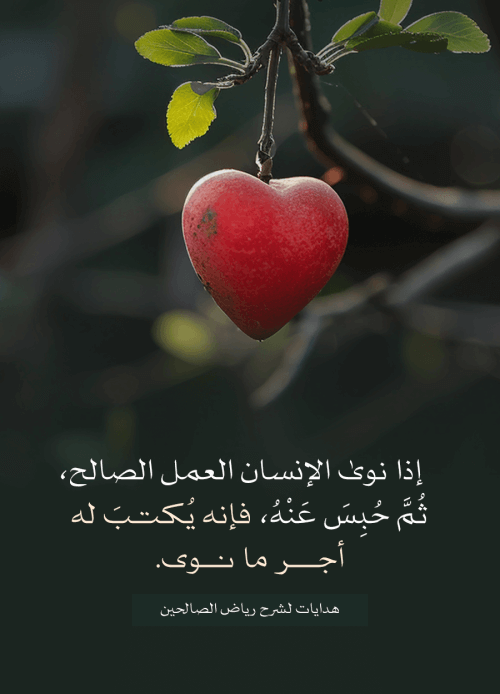
If someone intends to do a good deed but was prevented by a valid excuse, he shall gain the reward of his intention.
Riyadh Al-Salheen with explanation and benefits
Variation of reward for good deeds is based on sincerity and following of the Prophet’s guidance. The more a person is sincere to Allah, and the keener he is on following the Prophet (may Allah’s peace and blessings be upon him), the more perfect his worship will be, and consequently his reward will be bigger.
Riyadh Al-Salheen with explanation and benefits
People differ with regards to their acts of worship according to their intentions. The intentions of some people have reached the ultimate level of sincerity (to Allah) and keenness in following the Sunnah (of the Messenger of Allah) with regard to doing good and righteous deeds, while the intentions of others are below that.
Riyadh Al-Salheen with explanation and benefits
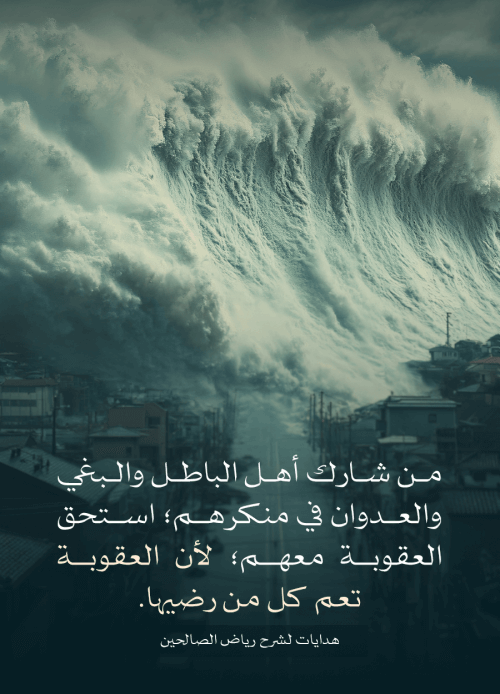
Anyone partaking a role with transgressors and wrongdoers will share their punishment because it is inclusive.
Riyadh Al-Salheen with explanation and benefits
If someone intends to do a good deed but was prevented by a valid excuse, he shall gain the reward of his intention.
Riyadh Al-Salheen with explanation and benefits
Actions are recompensed according to the intentions behind them, and the individual shall receive the reward of what he intended even if the outcome was contrary to his intention.
Riyadh Al-Salheen with explanation and benefits
There is not a single good deed intended sincerely to please Allah except that its doer will be raised in rank and status thereby, so that he would reap the full reward.
Riyadh Al-Salheen with explanation and benefits
Love and contentment is measured by good deeds and intentions because they are the criteria for Allah’s acceptance of the servant; perhaps a small deed reaps great reward because of the intention behind it and perhaps a big deed reaps little reward because of the intention behind it
Riyadh Al-Salheen with explanation and benefits
One of the proofs Allah supports the servant is the latter’s sincere endeavor to rectify his intention and purify his heart by good deeds.
هدايات لشرح رياض الصالحين