


Categories
Discover our diverse collection of categories covering multiple topics to meet your various interestsDa\'wa cards that highlight great meanings of the verses of the Holy Quran and the noble prophetic hadiths in a simple style and attractive display that helps the Muslim to have a deeper understanding of his religion in an easy way
﴿ وَيَزِيدُ ٱللَّهُ ٱلَّذِينَ ٱهۡتَدَوۡاْ هُدٗىۗ وَٱلۡبَٰقِيَٰتُ ٱلصَّٰلِحَٰتُ خَيۡرٌ عِندَ رَبِّكَ ثَوَابٗا وَخَيۡرٞ مَّرَدًّا ﴾
سورة مريم
Allah increases in guidance those who are guided, and the righteous deeds of lasting merit are better with your Lord in reward and better in return.

﴿ وَمَا ذَرَأَ لَكُمۡ فِي ٱلۡأَرۡضِ مُخۡتَلِفًا أَلۡوَٰنُهُۥٓۚ إِنَّ فِي ذَٰلِكَ لَأٓيَةٗ لِّقَوۡمٖ يَذَّكَّرُونَ ﴾
سورة النحل
And He has created for you various kinds of things on earth[8]. Indeed, there are signs in this for people who take heed.
﴿ وَمِنَ ٱلۡأَعۡرَابِ مَن يُؤۡمِنُ بِٱللَّهِ وَٱلۡيَوۡمِ ٱلۡأٓخِرِ وَيَتَّخِذُ مَا يُنفِقُ قُرُبَٰتٍ عِندَ ٱللَّهِ وَصَلَوَٰتِ ٱلرَّسُولِۚ أَلَآ إِنَّهَا قُرۡبَةٞ لَّهُمۡۚ سَيُدۡخِلُهُمُ ٱللَّهُ فِي رَحۡمَتِهِۦٓۚ إِنَّ ٱللَّهَ غَفُورٞ رَّحِيمٞ ﴾
سورة التوبة
99. And of the bedouins there are some who believe in Allâh and the Last Day, and look upon what they spend in Allâh’s Cause as means of nearness to Allâh, and a cause of receiving the Messenger’s invocations. Indeed these (spendings in Allâh’s Cause) are a means of nearness for them. Allâh will admit them to His Mercy. Certainly Allâh is Oft-Forgiving, Most Merciful.
﴿ وَلَقَدۡ أَخَذۡنَٰهُم بِٱلۡعَذَابِ فَمَا ٱسۡتَكَانُواْ لِرَبِّهِمۡ وَمَا يَتَضَرَّعُونَ ﴾
سورة المؤمنون
76. And indeed We seized them with punishment, but they humbled not themselves to their Lord, nor did they invoke (Allâh) with submission to Him.
﴿ قُلۡ سِيرُواْ فِي ٱلۡأَرۡضِ ثُمَّ ٱنظُرُواْ كَيۡفَ كَانَ عَٰقِبَةُ ٱلۡمُكَذِّبِينَ ﴾
سورة الأنعام
Say, “Travel through the land, then see how was the end of the deniers.”
﴿ تَنزِيلُ ٱلۡكِتَٰبِ مِنَ ٱللَّهِ ٱلۡعَزِيزِ ٱلۡحَكِيمِ ﴾
سورة الجاثية
The revelation of this Book is from Allah, the All-Mighty, the All-Wise.
﴿ لَوۡ خَرَجُواْ فِيكُم مَّا زَادُوكُمۡ إِلَّا خَبَالٗا وَلَأَوۡضَعُواْ خِلَٰلَكُمۡ يَبۡغُونَكُمُ ٱلۡفِتۡنَةَ وَفِيكُمۡ سَمَّٰعُونَ لَهُمۡۗ وَٱللَّهُ عَلِيمُۢ بِٱلظَّٰلِمِينَ ﴾
سورة التوبة
47. Had they marched out with you, they would have added to you nothing except disorder, and they would have hurried about in your midst (spreading corruption) and sowing sedition among you - and there are some among you who would have listened to them. And Allâh is the All-Knower of the Zâlimûn (polytheists and wrong-doers).
﴿ يُصۡلِحۡ لَكُمۡ أَعۡمَٰلَكُمۡ وَيَغۡفِرۡ لَكُمۡ ذُنُوبَكُمۡۗ وَمَن يُطِعِ ٱللَّهَ وَرَسُولَهُۥ فَقَدۡ فَازَ فَوۡزًا عَظِيمًا ﴾
سورة الأحزاب
71. He will direct you to do righteous good deeds and will forgive you your sins. And whosoever obeys Allâh and His Messenger (صلى الله عليه وسلم), he has indeed achieved a great achievement (i.e. he will be saved from the Hell-fire and will be admitted to Paradise).
﴿ وَلَمۡ نَكُ نُطۡعِمُ ٱلۡمِسۡكِينَ ﴾
سورة المدثر
44. "Nor we used to feed Al-Miskîn (the poor);
Abu Hurayrah (may Allah be pleased with him) reported: The Messenger of Allah (may Allah's peace and blessings be upon him) used to say the following supplication: "Allāuhumma inni a‘ūdhu bika min ‘adhāb al-qabr, wa min ‘adhāb an-nār, wa min fitnat al-mahya wa al-mamāt, wa min fitnat al-masīh ad-dajjāl (O Allah, I seek refuge with You from the punishment of the grave, the punishment of the Fire, the trials of life and death, and the trial of the Dajjāl (Antichrist)." A wording of Muslim reads: "When any of you completes the last Tashahhud, let him seek refuge with Allah from four things: the punishment of Hellfire, the punishment of the grave, the trials of life and death, and the evil of the Antichrist."
Narrated by Bukhari & Muslim
The Prophet (may Allah's peace and blessings be upon him) used to seek refuge with Allah from four things after reciting the last Tashahhud and before ending the prayer, and he commanded us to do the same. First: from the punishment of the grave. Second: from the punishment of Hellfire on the Day of Judgment. Third: from the trials of life, including its forbidden desires and its misleading doubts, and from the trials of death, i.e., the time of dying, including deviation from Islam or from the Sunnah, or the trial of the grave like the questioning of the two angels. Fourth: from the trial of the Antichrist who will come at the end of time as an affliction from Allah to test His slaves. The Antichrist was mentioned in particular because of the gravity of his trial and misguidance.
Abu Hurayrah (may Allah be pleased with him) reported: When the Messenger of Allah (may Allah's peace and blessings be upon him) made Takbīr in the prayer, he would remain silent a while before reciting. I said: O Messenger of Allah, may my father and mother ransom you! Have you seen your silence between Takbīr and the recitation? What is it that you say? He said: "I say: Allāhumma bā‘id bayni wa bayna khatāyāy kama bā‘dta bayna al-mashriqi wa al-maghrib. Allāhumma naqqini min khatāyāy kama yunaqqa ath-thawbu al-abyadu min ad-danas. Allāhumma ighsilni min khatāyāy bith-thalji wa al-mā’i wa al-barad (O Allah, distance me from my sins as You have distanced the east from the west. O Allah, purify me from my sins as a white garment is purified from dirt. O Allah, wash out my sins with water, snow, and hail)."
Narrated by Bukhari & Muslim
On making Takbīr to commence the prayer, the Prophet (may Allah's peace and blessings be upon him) would take a brief pause before reciting Surat al-Fātihah. During this pause, he would start his prayer by reciting some supplications. Among the supplications reported in this regard is his saying: "Allāhumma bā‘id bayni wa bayna khatāyāy kama bā‘dta bayna al-mashriqi wa al-maghrib*. Allāhumma naqqini min khatāyāy kama yunaqqa ath-thawbu al-abyadu min ad-danas. Allāhumma ighsilni min khatāyāy bith-thalji wa al-mā’i wa al-barad (O Allah, distance me from my sins as You have distanced the east from the west. O Allah, purify me from my sins as a white garment is purified from dirt. O Allah, wash out my sins with water, snow, and hail)." He supplicates Allah Almighty to keep him far from sins, by helping him not to commit them, in such a way that makes it impossible for them to meet, just as the East and the West can never meet; and to purify him and remove such sins if he commits them, as filth is removed from the white garment; and to wash him from his sins and cool off its flames and heat with such cold purifiers: water, snow, and hail.
Anas ibn Mālik (may Allah be pleased with him) reported that the Prophet (may Allah's peace and blessings be upon him) said: "Be moderate in prostration, and let none of you spread his forearms on the ground like a dog."
Narrated by Bukhari & Muslim
The Prophet (may Allah's peace and blessings be upon him) ordered that moderation should be observed in prostration, in such a way that the one praying adopts a good posture in prostration, with his hands on the ground and his forearms lifted and kept away from his sides. This is because such a posture indicates the energy and eagerness required in prayer, and also because this good posture allows all the prostrating organs to have their share in worship. He forbade spreading the forearms in prostration because it is evidence of laziness and boredom, and it also constitutes imitating the dog, which is an improper imitation.
Maslamah Sa‘īd ibn Yazīd reported: I asked Anas ibn Mālik: "Did the Prophet (may Allah's peace and blessings be upon him) use to pray with his shoes on?" He said: ‘Yes!'
Narrated by Bukhari
Opposing the People of the Book as well as eliminating difficulty and hardship are from the objectives of Shariah. Sa‘īd ibn Yazīd (a trustworthy Tābi‘i) asked Anas ibn Mālik if the Prophet (may Allah's peace and blessings be upon him) used to pray with his shoes on, so that he would follow his example. It is also possible that he thought this to be unlikely because of the filth and dirt that shoes normally have. Anas replied in the affirmative, i.e. the Prophet (may Allah's peace and blessings be upon him) used to pray while wearing his shoes and this practice is from his authentic Sunnah. It is not specific to a certain place or certain time.
Abu Hurayrah (may Allah be pleased with him) reported: The Messenger of Allah (may Allah's peace and blessings be upon him) said: "When a dog drinks from the vessel of any of you, let him wash it seven times."
Narrated by Bukhari & Muslim
The Prophet (may Allah's peace and blessings be upon him) ordered that a vessel be washed seven times if a dog puts its tongue into it. The first of these times should be accompanied by dirt, followed by water, so that it is completely clean from its impurity and harm.
Anas (may Allah be pleased with him) reported: The Prophet (may Allah's peace and blessings be upon him) used to say before entering the bathroom: "Allāhumma inni a‘ūdhu bika min al-khubuth wa al-khabā’ith (O Allah, I seek refuge in You from the male and female devils)."
Narrated by Bukhari & Muslim
Whenever the Prophet (may Allah's peace and blessings be upon him) wanted to enter the place where he would relieve himself, either urinating or defecating, he would seek refuge with Allah and resort to Him to protect him from the evil of the male and female devils. The "Khubuth" and "Khabā’ith" were also said to mean evil and impurities.
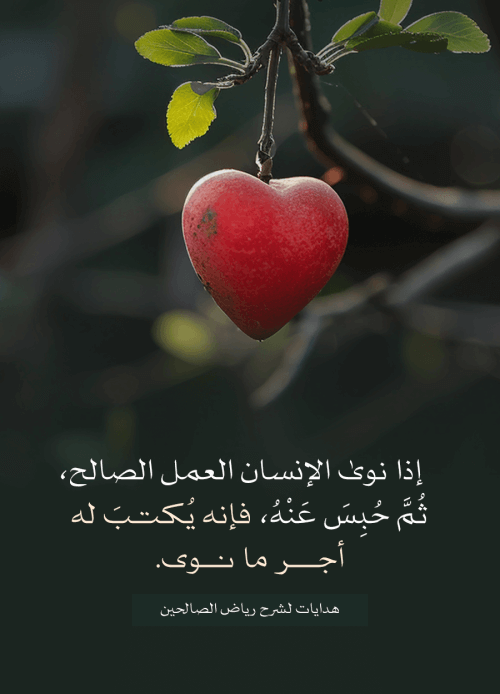
Sahl ibn Hunayf (may Allah be pleased with him) reported: The Prophet (may Allah's peace and blessings be upon him) said: "Whoever sincerely asks Allah for martyrdom, Allah will make him reach the status of martyrs even if he dies on his bed."
Narrated by Muslim
The Prophet (may Allah's peace and blessings be upon him) informs that whoever seeks martyrdom and death in the cause of Allah and is sincere and faithful in his intention to Allah Almighty, Allah will give him the ranks of martyrs by his sincere intention, even if he dies in bed, not in Jihad.
‘Abdullāh ibn ‘Abbās (may Allah be pleased with him) reported: People were commanded to make (Tawāf around) the Ka‘bah the last thing they do, but an exception was made for the menstruating woman.
Narrated by Bukhari & Muslim
The Ka‘bah is a revered noble House; it is a symbol of worshiping Allah and humbly submitting before Him. It has special awe, sublimity, attachment, and love in the hearts. That is why the Prophet (may Allah's peace and blessings be upon him) commanded pilgrims to make Tawāf around the Ka‘bah the last ritual they perform before they leave Makkah. This is called the Farewell Tawāf. The menstruating woman, however, is exempted from this rite, since she might soil the mosque when she enters it. She is not required to offer expiation (slaughter a sacrificial animal) for that. This text refers only to Hajj, so it does not apply to ‘Umrah.
Maymūnah, Mother of the believers, (may Allah be pleased with her) reported: I placed water for the Prophet (may Allah's peace and blessings be upon him) to make Ghusl, and I screened him with a garment. He poured over his hands and washed them. Then he poured with his right hand over his left one and washed his private parts, and he struck the ground with his hand and wiped it, then washed it, rinsed his mouth, sniffed water, washed his face and arms, then poured over his head and his whole body. Then he moved aside and washed his feet. I gave him a garment, but he did not take it, and he moved ahead, shaking off his hands.
Narrated by Bukhari & Muslim
Maymūnah, Mother of the believers, (may Allah be pleased with her) informed about the way the Prophet (may Allah's peace and blessings be upon him) performed Ghusl from Janābah, as she put water for him to use in his bath and screened him with a screen. The Prophet (may Allah's peace and blessings be upon him), then, did the following: First: He poured water over his hands and washed them before putting them inside the vessel. Second: He poured water with his right hand over his left hand and washed his private parts to clean them from the traces of Janābah. Third: He struck the ground with his hand and wiped it, then washed it to remove any impurity. Fourth: He rinsed his mouth by taking water into his mouth, moving it around, and then spitting it out; he sniffed water by letting the water into his nose, inhaling it, and then blew it out to clean it. Fifth: He washed his face and arms. Sixth: He poured water over his head. Seventh: He poured water over the rest of his body. Eighth: He moved aside and washed his feet, which he had not washed before, in another place. Then, she brought him a piece of cloth to dry himself, but he did not take it, and he started wiping the water and shaking it off his body with his hands.
A successful servant of Allah is he who chooses to do the most pious deeds bound to raise his rank on the Day of Judgment.
Riyadh Al-Salheen with explanation and benefits
Allah suffices anyone who relies on Him because He does not disappoint those hopeful of Him.
Riyadh Al-Salheen with explanation and benefits
Anyone doing good deeds will reap its fruits even if they were few; so, the individual should never look down upon any good deed.
Riyadh Al-Salheen with explanation and benefits
It shows that whoever is sincere in his worship, Allah Almighty will guide him to more of it.
Riyadh Al-Salheen with explanation and benefits
It shows that the prohibited lusts are doors to hellfire; and it means following one’s desires that violate the Sharia
Riyadh Al-Salheen with explanation and benefits
Arduous deeds lead to honor and admission to Paradise.
Riyadh Al-Salheen with explanation and benefits
Aging should inspire self-admonition because one becomes close to meeting Allah Almighty.
Riyadh Al-Salheen with explanation and benefits
Sincerity and honesty are the criteria for deeds that, once fulfilled, the doer will obtain the designated reward.
Riyadh Al-Salheen with explanation and benefits
The greater the benefit extending beyond limited individuals, the greater the reward and the effect.
Riyadh Al-Salheen with explanation and benefits