




Categories
Discover our diverse collection of categories covering multiple topics to meet your various interestsDa\'wa cards that highlight great meanings of the verses of the Holy Quran and the noble prophetic hadiths in a simple style and attractive display that helps the Muslim to have a deeper understanding of his religion in an easy way
﴿ فِيهِمَا فَٰكِهَةٞ وَنَخۡلٞ وَرُمَّانٞ ﴾
سورة الرحمن
In both of them are fruit and palm trees and pomegranates.

﴿ يَٰٓأَيُّهَا ٱلَّذِينَ ءَامَنُواْ لِمَ تَقُولُونَ مَا لَا تَفۡعَلُونَ ﴾
سورة الصف
O you who believe, why do you say what you do not do?
﴿ وَقَالَ ٱلۡمَلِكُ ٱئۡتُونِي بِهِۦٓ أَسۡتَخۡلِصۡهُ لِنَفۡسِيۖ فَلَمَّا كَلَّمَهُۥ قَالَ إِنَّكَ ٱلۡيَوۡمَ لَدَيۡنَا مَكِينٌ أَمِينٞ ﴾
سورة يوسف
And the king said, "Bring him to me; I will appoint him exclusively for myself." And when he spoke to him, he said, "Indeed, you are today established [in position] and trusted."
﴿ إِنَّ شَرَّ ٱلدَّوَآبِّ عِندَ ٱللَّهِ ٱلَّذِينَ كَفَرُواْ فَهُمۡ لَا يُؤۡمِنُونَ ﴾
سورة الأنفال
55. Verily, The worst of moving (living) creatures before Allâh are those who disbelieve[6], - so they shall not believe.
﴿ أُوْلَٰٓئِكَ عَلَيۡهِمۡ صَلَوَٰتٞ مِّن رَّبِّهِمۡ وَرَحۡمَةٞۖ وَأُوْلَٰٓئِكَ هُمُ ٱلۡمُهۡتَدُونَ ﴾
سورة البقرة
157. They are those on whom are the Salawât (i.e. who are blessed and will be forgiven) from their Lord, and (they are those who) receive His Mercy, and it is they who are the guided ones.
﴿ ثُمَّ إِنَّكُمۡ يَوۡمَ ٱلۡقِيَٰمَةِ تُبۡعَثُونَ ﴾
سورة المؤمنون
then on the Day of Resurrection, you will surely be resurrected.
﴿ فَأَمَّا مَن ثَقُلَتۡ مَوَٰزِينُهُۥ ﴾
سورة القارعة
Then as for one whose scales are heavy [with good deeds],
﴿ لَقَدۡ وُعِدۡنَا هَٰذَا نَحۡنُ وَءَابَآؤُنَا مِن قَبۡلُ إِنۡ هَٰذَآ إِلَّآ أَسَٰطِيرُ ٱلۡأَوَّلِينَ ﴾
سورة النمل
68. "Indeed we were promised this - we and our forefathers before (us), verily, these are nothing but tales of ancients."
﴿ ثُمَّ نُكِسُواْ عَلَىٰ رُءُوسِهِمۡ لَقَدۡ عَلِمۡتَ مَا هَٰٓؤُلَآءِ يَنطِقُونَ ﴾
سورة الأنبياء
Then they turned to their obstinacy[24], [saying], “You already know that they cannot speak.”
‘Ā’ishah (may Allah be pleased with her) reported: The Messenger of Allah (may Allah's peace and blessings be upon him) said: "The tooth-stick purifies the mouth and pleases the Lord."
Narrated by An-Nasa'i & Ahmad
The Prophet (may Allah's peace and blessings be upon him) informs us that cleaning our teeth with a stick from the Arak tree and the like purifies the mouth from dirt and foul smells. Also, it is one of the means for winning Allah's pleasure, for its use constitutes obedience to Allah and observance of His command, and it brings about cleanliness which Allah Almighty likes.
Abu Hurayrah (may Allah be pleased with him) reported: The Messenger of Allah (may Allah’s peace and blessings be upon him) said: "The five (daily) prayers, Friday prayer to the next Friday prayer, and Ramadan to the next Ramadan are expiation of the sins committed between them, so long as major sins are avoided."
Narrated by Muslim
The Prophet (may Allah's peace and blessings be upon him) informs us that the five prayers prescribed to be performed during the day and night, the Friday prayer every week, and the fasting of the month of Ramadan every year expiate minor sins committed between them, provided that major sins are avoided. As for major sins like adultery and alcoholic drinking, these can only be expiated by repentance.
‘Abdullāh ibn ‘Amr (may Allah be pleased with him) reported: The Prophet (may Allah’s peace and blessings be upon him) said: "The one who maintains ties of kinship is not the one who recompenses the good done to him by his relatives; rather, he is the one who keeps good relations with those relatives who severs the bond of kinship with him."
Narrated by Bukhari
The Prophet (may Allah's peace and blessings be upon him) mentions that the one who perfectly maintains the ties of kinship and shows kindness to his relatives is not that person who repays kindness with kindness, but the one who truly and perfectly upholds kinship ties is the one with whom if the ties of kinship are severed, he maintains them; and if they do wrong to him, he responds to them with goodness.
Abu Hurayrah (may Allah be pleased with him) reported: The Messenger of Allah (may Allah's peace and blessings be upon him) said: "Whoever fasts Ramadan, out of faith and in pursuit of reward, his past sins will be forgiven."
Narrated by Bukhari & Muslim
The Prophet (may Allah's peace and blessings be upon him) informs that if a person fasts the month of Ramadan out of faith in Allah and out of belief in the obligation of fasting and the abundant reward Allah Almighty has prepared for those who observe fast, seeking thereby Allah's pleasure, without show-off or pursuit of reputation among people, his past sins will be forgiven.
Abu Hurayrah (may Allah be pleased with him) reported: The Messenger of Allah (may Allah's peace and blessings be upon him) said: "Whoever performs Qiyām (night prayer) in the Night of Decree, out of faith and in pursuit of reward, his past sins will be forgiven."
Narrated by Bukhari & Muslim
The Prophet (may Allah's peace and blessings be upon him) tells about the merit of Qiyām al-Layl in the Night of Decree, which lies in the last ten days of Ramadan; that whoever engages in a lot of prayer, supplication, Qur'an recitation, and dhikr in this night, believing in it and its reported merit, seeking Allah's reward by his deed, without show-off or pursuit of reputation among people, his previous sins will be forgiven.
An-Nu'mān ibn Bashīr (may Allah be pleased with him) reported: I heard the Messenger of Allah (may Allah's peace and blessings be upon him) say, as An-Nu'mān dropped his two fingers to his ears: "Verily, the lawful is clear, and the unlawful is clear, and between them are doubtful matters many people do not know. Whoever avoids doubtful matters clears his liability regarding his religion and his honor, and whoever falls into doubtful matters will fall into the unlawful, just like the shepherd who grazes his animals in the vicinity of a prohibited pasture and is thus likely to graze therein. Verily, every king has a protected area, and the protected area of Allah is His prohibitions. Verily, in the body, there is a piece of flesh; if it is sound, the entire body will be sound, and if it is corrupt, the entire body will be corrupt; verily, that is the heart."
Narrated by Bukhari & Muslim
The Prophet (may Allah's peace and blessings be upon him) explains a general rule in matters and that they fall under three categories in the Shariah: clearly lawful matters, clearly unlawful matters, and doubtful matters with the rulings on whether they are illegal or lawful being unclear and unknown to many people. So, whoever abandons those suspicious matters keeps his religion safe by avoiding falling into the unlawful and keeps his honor safe from people's criticism of him for engaging in such doubtful things. Whoever does not avoid doubtful matters risks falling into the unlawful or being maligned by people. The Messenger (may Allah's peace and blessings be upon him) provided a parable to demonstrate the condition of a person who engages in doubtful matters, saying that he is like a shepherd who grazes his cattle close to a piece of land protected by its owner; so, his cattle are likely to pasture in this protected land, given its proximity. Likewise, he who engages in a suspicious matter draws near to the unlawful and is likely to fall into it. Then, the Prophet (may Allah's peace and blessings be upon him) informed that there is a piece of flesh in the body, namely the heart, and when it is sound, the whole body is sound, and if it is corrupt, the entire body becomes corrupt.
Abu Sa‘īd al-Khudri (may Allah be pleased with him) reported: The Messenger of Allah (may Allah's peace and blessings be upon him) said: "There should be no harm or reciprocal harm. Whoever causes harm, Allah harms him, and whoever makes things difficult, Allah makes things difficult for him."
Narrated by Ad-Daraqutny
The Prophet (may Allah's peace and blessings be upon him) pointed out that we should avert harm from ourselves and others in all its kinds and manifestations. It is equally impermissible for anyone to harm himself or harm others. It is also not permissible to respond to harm with harm, for harm will not be removed with harm, except by way of legal retribution, without transgression. Then, the Prophet (may Allah's peace and blessings be upon him) warned that whoever harms people will be harmed, and whoever makes things hard for people will find hardship.
Abu Hurayrah (may Allah be pleased with him) reported that the Prophet (may Allah's peace and blessings be upon him) said: "Avoid what I have forbidden you from; and do as much as you can, of what I have ordered you. Indeed, those before you were ruined because of their excessive questioning and disagreeing with their prophets."
Narrated by Bukhari & Muslim
The Messenger of Allah (may Allah's peace and blessings be upon him) informed us that if he forbade us from something, we must avoid it without exception, and if he ordered us to do something, we have to do it as much as we can. He then warned us against being like some of the previous nations, who asked their prophets excessive questions and disagreed with them, so Allah punished them with different types of destruction and ruin. We should therefore avoid being like them, so we will not be destroyed in the ways that they were.
Ibn ‘Umar (may Allah be pleased with him) reported: The Messenger of Allah (may Allah’s peace and blessings be upon him) said: "Jibrīl kept enjoining me regarding the good treatment of the neighbor to the extent that I thought he would inherit him."
Narrated by Bukhari & Muslim
The Prophet (may Allah's peace and blessings be upon him) informs that Jibrīl continued to instruct him that the neighbor, who lives next to one's house, be he a Muslim or a disbeliever, should be taken care of, not hurt, and treated kindly, his rights should be observed, and harm from them should be endured, to the extent that the Prophet (may Allah's peace and blessings be upon him) thought, due to the great attention given to the neighbor's rights and Jibrīl's repeated instruction about this, that there will come down revelation that gives his neighbor part of his inheritance after his death.
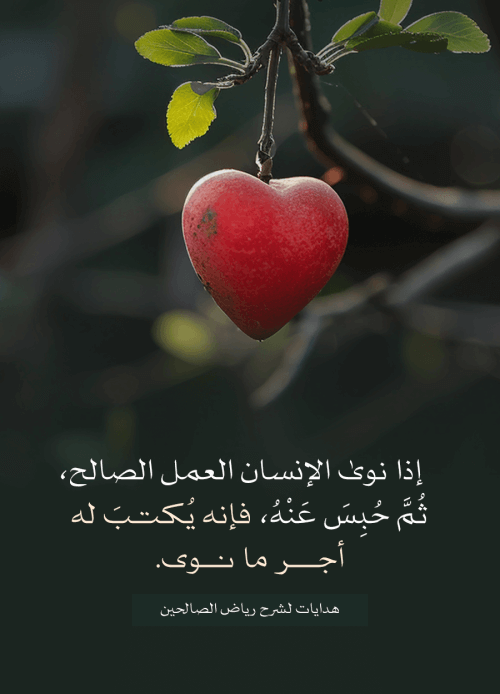
If someone intends to do a good deed but was prevented by a valid excuse, he shall gain the reward of his intention.
Riyadh Al-Salheen with explanation and benefits
Variation of reward for good deeds is based on sincerity and following of the Prophet’s guidance. The more a person is sincere to Allah, and the keener he is on following the Prophet (may Allah’s peace and blessings be upon him), the more perfect his worship will be, and consequently his reward will be bigger.
Riyadh Al-Salheen with explanation and benefits
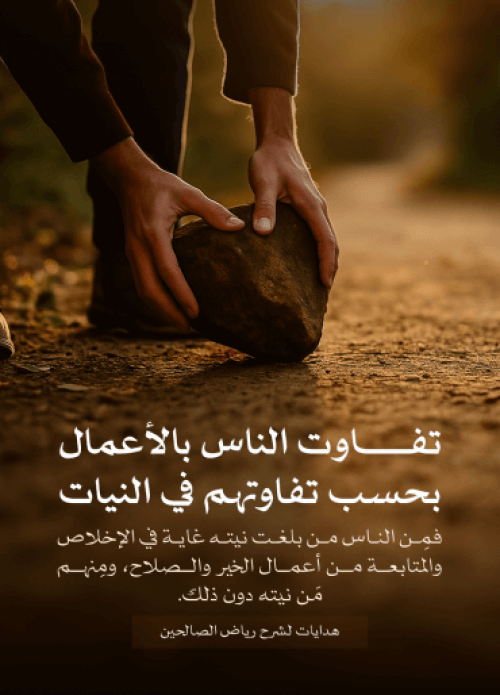
People differ with regards to their acts of worship according to their intentions. The intentions of some people have reached the ultimate level of sincerity (to Allah) and keenness in following the Sunnah (of the Messenger of Allah) with regard to doing good and righteous deeds, while the intentions of others are below that.
Riyadh Al-Salheen with explanation and benefits
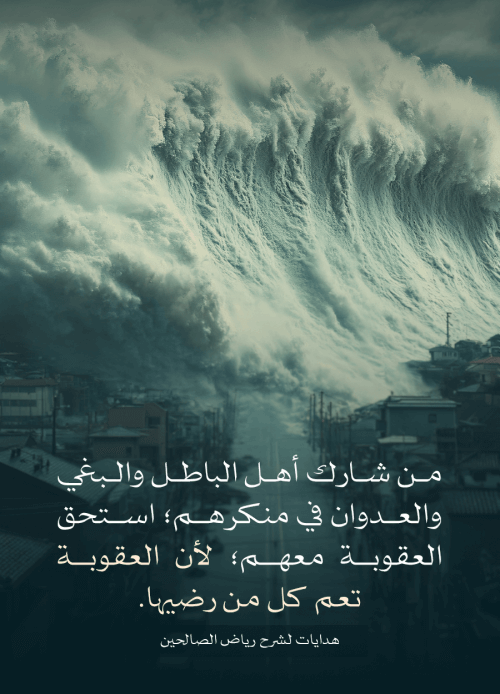
Anyone partaking a role with transgressors and wrongdoers will share their punishment because it is inclusive.
Riyadh Al-Salheen with explanation and benefits
If someone intends to do a good deed but was prevented by a valid excuse, he shall gain the reward of his intention.
Riyadh Al-Salheen with explanation and benefits
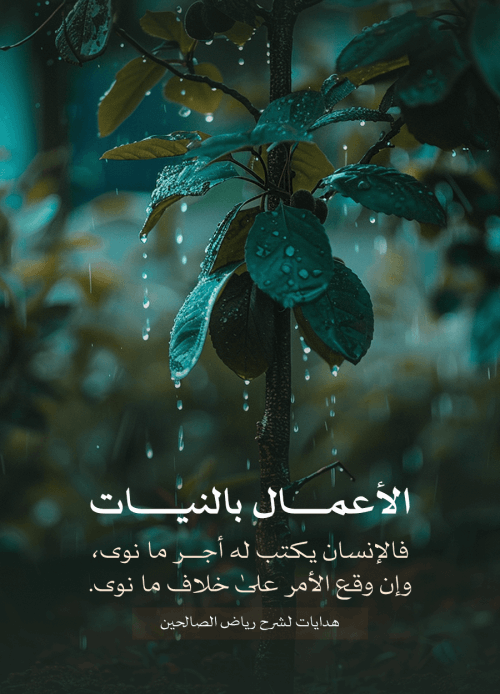
Actions are recompensed according to the intentions behind them, and the individual shall receive the reward of what he intended even if the outcome was contrary to his intention.
Riyadh Al-Salheen with explanation and benefits
There is not a single good deed intended sincerely to please Allah except that its doer will be raised in rank and status thereby, so that he would reap the full reward.
Riyadh Al-Salheen with explanation and benefits
Love and contentment is measured by good deeds and intentions because they are the criteria for Allah’s acceptance of the servant; perhaps a small deed reaps great reward because of the intention behind it and perhaps a big deed reaps little reward because of the intention behind it
Riyadh Al-Salheen with explanation and benefits
One of the proofs Allah supports the servant is the latter’s sincere endeavor to rectify his intention and purify his heart by good deeds.
هدايات لشرح رياض الصالحين