


Categories
Discover our diverse collection of categories covering multiple topics to meet your various interestsDa\'wa cards that highlight great meanings of the verses of the Holy Quran and the noble prophetic hadiths in a simple style and attractive display that helps the Muslim to have a deeper understanding of his religion in an easy way
﴿ فَمَا لَنَا مِن شَٰفِعِينَ ﴾
سورة الشعراء
Now we neither have any intercessors,

﴿ قُطُوفُهَا دَانِيَةٞ ﴾
سورة الحاقة
23. The fruits in bunches whereof will be low and near at hand.
﴿ وَإِذَا بُشِّرَ أَحَدُهُم بِٱلۡأُنثَىٰ ظَلَّ وَجۡهُهُۥ مُسۡوَدّٗا وَهُوَ كَظِيمٞ ﴾
سورة النحل
And when one of them is informed of [the birth of] a female, his face becomes dark, and he suppresses grief.
﴿ قَالَ هَلۡ ءَامَنُكُمۡ عَلَيۡهِ إِلَّا كَمَآ أَمِنتُكُمۡ عَلَىٰٓ أَخِيهِ مِن قَبۡلُ فَٱللَّهُ خَيۡرٌ حَٰفِظٗاۖ وَهُوَ أَرۡحَمُ ٱلرَّٰحِمِينَ ﴾
سورة يوسف
64. He said: "Can I entrust him to you except as I entrusted his brother [Yûsuf (Joseph)] to you aforetime? But Allâh is the Best to guard, and He is the Most Merciful of those who show mercy."
﴿ ۞ ضَرَبَ ٱللَّهُ مَثَلًا عَبۡدٗا مَّمۡلُوكٗا لَّا يَقۡدِرُ عَلَىٰ شَيۡءٖ وَمَن رَّزَقۡنَٰهُ مِنَّا رِزۡقًا حَسَنٗا فَهُوَ يُنفِقُ مِنۡهُ سِرّٗا وَجَهۡرًاۖ هَلۡ يَسۡتَوُۥنَۚ ٱلۡحَمۡدُ لِلَّهِۚ بَلۡ أَكۡثَرُهُمۡ لَا يَعۡلَمُونَ ﴾
سورة النحل
Allāh presents an example: a slave [who is] owned and unable to do a thing and he to whom We have provided from Us good provision, so he spends from it secretly and publicly. Can they be equal? Praise to Allāh! But most of them do not know.
﴿ وَكَذَٰلِكَ أَوۡحَيۡنَآ إِلَيۡكَ قُرۡءَانًا عَرَبِيّٗا لِّتُنذِرَ أُمَّ ٱلۡقُرَىٰ وَمَنۡ حَوۡلَهَا وَتُنذِرَ يَوۡمَ ٱلۡجَمۡعِ لَا رَيۡبَ فِيهِۚ فَرِيقٞ فِي ٱلۡجَنَّةِ وَفَرِيقٞ فِي ٱلسَّعِيرِ ﴾
سورة الشورى
7. And thus We have revealed to you (O Muhammad صلى الله عليه و سلم) a Qur’ân in Arabic that you may warn the Mother of the Towns (Makkah) and all around it, and warn (them) of the Day of Assembling of which there is no doubt: when a party will be in Paradise (those who believed in Allâh and followed what Allâh’s Messenger صلى الله عليه و سلم brought them) and a party in the blazing Fire (Hell) (those who disbelieved in Allâh and followed not what Allâh’s Messenger صلى الله عليه و سلم brought them).[2]
﴿ وَكَأَيِّن مِّن قَرۡيَةٍ أَمۡلَيۡتُ لَهَا وَهِيَ ظَالِمَةٞ ثُمَّ أَخَذۡتُهَا وَإِلَيَّ ٱلۡمَصِيرُ ﴾
سورة الحج
How many towns did I give respite when they were wrongdoers, and then I seized them. And to Me is the final return.
﴿ وَٱلَّذِينَ كَفَرُواْ فَتَعۡسٗا لَّهُمۡ وَأَضَلَّ أَعۡمَٰلَهُمۡ ﴾
سورة محمد
8. But those who disbelieve (in the Oneness of Allâh - Islâmic Monotheism), for them is destruction, and (Allâh) will make their deeds vain.
﴿ فَأَتَتۡ بِهِۦ قَوۡمَهَا تَحۡمِلُهُۥۖ قَالُواْ يَٰمَرۡيَمُ لَقَدۡ جِئۡتِ شَيۡـٔٗا فَرِيّٗا ﴾
سورة مريم
27. Then she brought him (the baby) to her people, carrying him. They said: "O Mary! Indeed you have brought a thing Fariyy (a mighty thing). [Tafsir Al-Tabari]
‘Abdullāh ibn Mas‘ūd (may Allah be pleased with him) reported: I heard the Messenger of Allah (may Allah's peace and blessings be upon him) say: "Incantations, amulets, and love-potions are Shirk (polytheism)."
Narrated by Abu Daoud & Ibn Majah & Ahmad
The Prophet (may Allah's peace and blessings be upon him) pointed out that doing certain things constitutes polytheism, including: First: Incantation: The words that involve polytheism, which the people of jāhiliyyah would recite for treatment. Second: Amulets made of beads and the like: They are hung on children, animals, and other things to protect against the evil eye. Third: Love potions: They are made to endear one of the two spouses to the other. These things fall under polytheism, for they turn certain objects as causes, whereas they are neither Shar‘i causes established by proofs nor material causes proved by experiment. As for the Shar'i causes, like the recitation of the Qur'an, or the material ones, like the medicines proved by experiment, they are permissible, provided that we should believe that they are mere means. In contrast, benefit and harm are in Allah's Hands.
‘Ā’ishah (may Allah be pleased with her) reported: The Prophet (may Allah’s peace and blessings be upon him) said: "Do not curse the dead, for they have reached the result of what they have done."
Narrated by Bukhari
The Prophet (may Allah's peace and blessings be upon him) points out the prohibition of cursing the dead and speaking ill of their honor, and that this is considered among the bad manners. This is because they have reached the result of what they have done, be it righteous or evil. Moreover, cursing the dead does not reach them, but it only hurts the living ones.
Jundub ibn ‘Abdullāh al-Qasri (may Allah be pleased with him) reported: The Messenger of Allah (may Allah's peace and blessings be upon him) said: "Whoever performs the Fajr prayer is under the protection of Allah; so, do not infringe upon Allah's protection in any respect, for whoever infringes upon Allah's protection in any respect, He will seize him and throw him on his face in Hellfire."
Narrated by Muslim
The Prophet (may Allah's peace and blessings be upon him) informs that whoever offers the Fajr prayer is preserved, guarded, and protected by Allah, defending and supporting him. Then, he warns that whoever violates and revokes this covenant, either by failing to perform the Fajr prayer or by harming or attacking one who has performed it, has infringed upon this protection and is therefore worthy of the stern warning that Allah will seize him, due to his failure to observe Allah's right. He will throw him on his face in Hellfire.
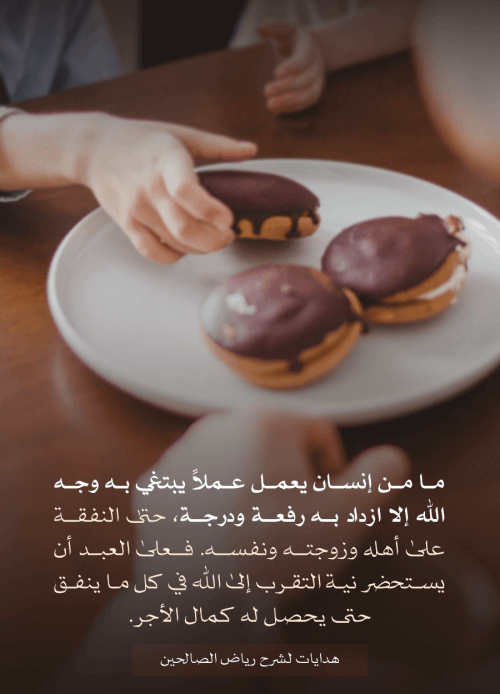
Abu Hurayrah (may Allah be pleased with him) reported: The Messenger of Allah (may Allah's peace and blessings be upon him) said: "Charity does not diminish wealth, and Allah does not increase a servant, on account of his forgiveness, except in honor, and no one humbles himself seeking the pleasure of Allah except that Allah will elevate him."
Narrated by Muslim
The Prophet (may Allah's peace and blessings be upon him) points out that charity does not decrease wealth. Rather, it protects it from misfortunes and brings great compensation from Allah for its doner. So, it constitutes an increase, not a decrease. And Allah does not increase a person who forgives others, while he has the ability to take revenge or inflict punishment, except in power and honor. And that whoever humbles himself for the sake of Allah, not out of fear from anyone or a desire to flatter him or seek some benefit from him, Allah will reward him by elevation and honor.
Abu Hurayrah (may Allah be pleased with him) reported: The Messenger of Allah (may Allah’s peace and blessings be upon him) said: "The most perfect believer in terms of his faith is the one who has the most excellent manners, and the best of you are those who are best to their womenfolk."
Narrated by Abu Daoud & At-Termedhy & Ahmad
The Prophet (may Allah's peace and blessings be upon him) informs that the most perfect people in terms of their faith are those who possess excellent manners, have cheerful faces, do good, speak kind words, and refrain from hurting others. And that the best believers are those who are kindest to their womenfolk - their wives, daughters, sisters, and other female relatives - for they are among the worthiest of good treatment.
‘Abdullāh ibn ‘Amr (may Allah be pleased with him) reported: The Messenger of Allah (may Allah's peace and blessings be upon him) said: "The world is but an enjoyment and the best of worldly enjoyments is a righteous woman."
Narrated by Muslim
The Prophet (may Allah's peace and blessings be upon him) informs that worldly life and what it contains is but a thing enjoyed for a while and then comes to an end and that the best worldly enjoyment is the righteous wife: when her husband looks at her, she pleases him; if he asks her for something, she obeys him; and when he is away from her, she safeguards him regarding herself and his wealth.
Abu Hurayrah (may Allah be pleased with him) reported: The Messenger of Allah (may Allah's peace and blessings be upon him) said: "Allah said: 'O son of Adam, spend, and I will spend on you.'"
Narrated by Bukhari & Muslim
The Prophet (may Allah's peace and blessings be upon him) informs that Allah Almighty said: O son of Adam, spend - the obligatory and recommended spending - and I will increase your sustenance and give you compensation for that and bless it for you.
‘Uqbah ibn ‘Āmir (may Allah be pleased with him) reported: The Messenger of Allah (may Allah’s peace and blessings be upon him) said: "The worthiest stipulations to be fulfilled are those which make sexual intercourse lawful for you."
Narrated by Bukhari & Muslim
The Prophet (may Allah's peace and blessings be upon him) points out that the most worthy stipulations to be fulfilled are those which make it lawful to enjoy a woman sexually. These are the permissible stipulations a woman asks for in the marriage contract.
Abu az-Zubayr reported: Ibn az-Zubayr (may Allah be pleased with him) used to say after every prayer after making taslīm: “Lā ilāha illa Allah wahdahu lā sharīka lahu, lahu al-mulk wa lahu al-hamd wa huwa ‘ala kolli shay‘in qadīr; lā hawla wa lā quwwata illa billāh, lā ilāha illa Allah, wa lā na‘budu illa iyyāh, lahu an-ni‘mah wa al-fadl, wa lahu ath-thanā’ al-hasan; lā ilāha illa Allah, mukhlisīn lahu ad-dīn wa law kariha al-kāfirūn (There is no god but Allah, alone, with no partner. To Him belongs the dominion, and praise is due to Him, and He has power over all things. There is no power or strength except through Allah. There is no god but Allah, and we worship none but Him. To Him belongs the blessing, to Him belongs the grace, and to Him belongs all excellent praise. There is no god but Allah; we are sincerely devoted to Him, even if the disbelievers may dislike it)." And he said: "The Messenger of Allah (may Allah's peace and blessings be upon him) used to celebrate Allah’s oneness with these words after every prayer."
Narrated by Muslim
The Messenger of Allah (may Allah's peace and blessings be upon him) used to celebrate Allah's oneness after making taslīm at the end of every obligatory prayer with this great dhikr, which means: "There is no god but Allah" means: None is truly worthy of worship except Allah. "Alone, with no partner" means: There is no partner with Him in His divinity, lordship, names, and attributes. "To Him belongs the dominion" means: The absolute, general, inclusive, and all-encompassing dominion, the dominion of the heavens and the earth and what is between them belongs to Him. "And praise is due to Him" means: The absolute perfection belongs to Him, and He is the One praised for His perfection out of love and exaltation in all conditions, good or bad. "And He has power over all things" means His power is complete and absolute in every aspect, and nothing escapes His power or can resist His Will. "There is no power or strength except through Allah" means There cannot be any shift from one condition to another and from disobedience to Allah to obedience to Him, and there is no power except through Allah; He is the One Who gives help and should be relied upon. "There is no god but Allah, and we worship none but Him": It affirms the meaning of divinity and the negation of polytheism and that none but Him deserves to be worshiped. "To Him belongs the favor, to Him belongs the grace": He is the One Who creates the blessings and possesses them and He bestows them, as a favor from Him, upon whomever of His servants He wishes. "And to Him belongs all excellent praise": For His essence, attributes, actions, and blessings, and for every condition. "There is no god but Allah; we are sincerely devoted to Him" means that we are believers in His Oneness, without showing off or pursuing a good reputation among people for our obedience to Allah. "Even if the disbelievers may dislike it" means: We firmly adhere to the belief in Allah's Oneness, even if the disbelievers detest it.
A successful servant of Allah is he who chooses to do the most pious deeds bound to raise his rank on the Day of Judgment.
Riyadh Al-Salheen with explanation and benefits
Allah suffices anyone who relies on Him because He does not disappoint those hopeful of Him.
Riyadh Al-Salheen with explanation and benefits
Anyone doing good deeds will reap its fruits even if they were few; so, the individual should never look down upon any good deed.
Riyadh Al-Salheen with explanation and benefits
It shows that whoever is sincere in his worship, Allah Almighty will guide him to more of it.
Riyadh Al-Salheen with explanation and benefits
It shows that the prohibited lusts are doors to hellfire; and it means following one’s desires that violate the Sharia
Riyadh Al-Salheen with explanation and benefits
Arduous deeds lead to honor and admission to Paradise.
Riyadh Al-Salheen with explanation and benefits
Aging should inspire self-admonition because one becomes close to meeting Allah Almighty.
Riyadh Al-Salheen with explanation and benefits
Sincerity and honesty are the criteria for deeds that, once fulfilled, the doer will obtain the designated reward.
Riyadh Al-Salheen with explanation and benefits
The greater the benefit extending beyond limited individuals, the greater the reward and the effect.
Riyadh Al-Salheen with explanation and benefits