







Categories
Discover our diverse collection of categories covering multiple topics to meet your various interestsDa\'wa cards that highlight great meanings of the verses of the Holy Quran and the noble prophetic hadiths in a simple style and attractive display that helps the Muslim to have a deeper understanding of his religion in an easy way
﴿ فِيهِمَا عَيۡنَانِ نَضَّاخَتَانِ ﴾
سورة الرحمن
In each there are two gushing springs.

﴿ أَوَلَمۡ يَرَوۡاْ أَنَّ ٱللَّهَ ٱلَّذِي خَلَقَ ٱلسَّمَٰوَٰتِ وَٱلۡأَرۡضَ وَلَمۡ يَعۡيَ بِخَلۡقِهِنَّ بِقَٰدِرٍ عَلَىٰٓ أَن يُحۡـِۧيَ ٱلۡمَوۡتَىٰۚ بَلَىٰٓۚ إِنَّهُۥ عَلَىٰ كُلِّ شَيۡءٖ قَدِيرٞ ﴾
سورة الأحقاف
33. Do they not see that Allâh, Who created the heavens and the earth, and was not wearied by their creation, is Able to give life to the dead? Yes, He surely is Able to do all things.
﴿ يَخَافُونَ رَبَّهُم مِّن فَوۡقِهِمۡ وَيَفۡعَلُونَ مَا يُؤۡمَرُونَ۩ ﴾
سورة النحل
They fear their Lord above them, and they do what they are commanded.
﴿ وَفِي ٱلۡأَرۡضِ ءَايَٰتٞ لِّلۡمُوقِنِينَ ﴾
سورة الذاريات
On earth there are signs for those who are certain in faith,
﴿ إِنۡ هُوَ إِلَّا ذِكۡرٞ لِّلۡعَٰلَمِينَ ﴾
سورة التكوير
It is but a reminder to the worlds,
﴿ يَسۡـَٔلُونَكَ عَنِ ٱلسَّاعَةِ أَيَّانَ مُرۡسَىٰهَاۖ قُلۡ إِنَّمَا عِلۡمُهَا عِندَ رَبِّيۖ لَا يُجَلِّيهَا لِوَقۡتِهَآ إِلَّا هُوَۚ ثَقُلَتۡ فِي ٱلسَّمَٰوَٰتِ وَٱلۡأَرۡضِۚ لَا تَأۡتِيكُمۡ إِلَّا بَغۡتَةٗۗ يَسۡـَٔلُونَكَ كَأَنَّكَ حَفِيٌّ عَنۡهَاۖ قُلۡ إِنَّمَا عِلۡمُهَا عِندَ ٱللَّهِ وَلَٰكِنَّ أَكۡثَرَ ٱلنَّاسِ لَا يَعۡلَمُونَ ﴾
سورة الأعراف
187. They ask you about the Hour (Day of Resurrection): "When will be its appointed time?" Say: "The knowledge thereof is with my Lord (Alone). None can reveal its time but He. Heavy is its burden through the heavens and the earth. It shall not come upon you except all of a sudden." They ask you as if you have a good knowledge of it. Say: "The knowledge thereof is with Allâh (Alone), but most of mankind know not."[15]
﴿ جَزَآءٗ وِفَاقًا ﴾
سورة النبأ
a fitting recompense[5].
﴿ وَتِلۡكَ ٱلۡأَمۡثَٰلُ نَضۡرِبُهَا لِلنَّاسِۖ وَمَا يَعۡقِلُهَآ إِلَّا ٱلۡعَٰلِمُونَ ﴾
سورة العنكبوت
And these examples We present to the people, but none will understand them except those of knowledge.
﴿ إِنَّهُۥ لَقُرۡءَانٞ كَرِيمٞ ﴾
سورة الواقعة
that this is indeed a noble Qur’an,
Abu Hurayrah (may Allah be pleased with him) reported: A man came to the Prophet (may Allah's peace and blessings be upon him) and said: "Advise me." He said: "Do not get angry." He repeated that several times, and every time, he would say: "Do not get angry."
Narrated by Bukhari
One of the Companions (may Allah be pleased with them) asked the Prophet (may Allah's peace and blessings be upon him) to direct him to something that would benefit him. He instructed him not to get angry. This means he should avoid the things that would make him angry and should restrain himself in case he becomes angry, not going to excess in his anger by killing, beating, cursing, and so on. The man repeated his request for advice several times, and the Prophet (may Allah's peace and blessings be upon him) said no more in his advice than "Do not get angry".
‘Umar ibn al-Khattāb (may Allah be pleased with him) reported: I heard the Prophet of Allah (may Allah's peace and blessings be upon him) say: "If only you rely upon Allah the way you should, He will provide for you as He provides for birds: They set out hungry in the morning and return with full bellies in the evening."
Narrated by At-Termedhy & Ibn Majah & Ahmad
The Prophet (may Allah's peace and blessings be upon him) urges us to rely upon Allah Almighty in bringing about benefits and warding off evils in terms of worldly and religious affairs, for indeed, no one gives or withholds and causes harm or brings benefit except He, Exalted be He. And that we should pursue the proper means to achieve the benefits and avert the evils while relying on Allah. Once we do this, Allah will provide for us as He provides for birds, who go hungry in the morning and return in the evening with full bellies. This practice of the birds falls under the pursuit of the proper means of seeking sustenance without lethargy and passive reliance.
Abu Hurayrah (may Allah be pleased with him) reported: The Prophet (may Allah's peace and blessings be upon him), narrating from his Almighty Lord, said: "A servant committed a sin and said: 'O Allah, forgive my sin,’ and Allah Almighty said: ‘My servant committed a sin and then realized that he has a Lord Who forgives sins and punishes for sins.' Then, he committed a sin again and said: ‘My Lord, forgive my sin,’ and Allah Almighty said: ‘My servant committed a sin and then realized that he has a Lord Who forgives sins and punishes for sins.’ He again committed a sin and said: ‘My Lord, forgive my sin,’ and Allah Almighty said: ‘My servant committed a sin and then realized that he has a Lord Who forgives sins and punishes for sins. Do whatever you wish, for I have forgiven you.'"
Narrated by Bukhari & Muslim
The Prophet (may Allah's peace and blessings be upon him) narrates from his Lord that if a servant commits a sin and then says, "O Allah, forgive my sin", Allah Almighty says: My servant committed a sin and then realized that he has a Lord Who forgives sins, covers him and pardons him, or punishes for sins. I have forgiven him. Then, the servant again commits a sin and says, "O Allah, forgive my sin", and Allah says: My servant committed a sin and then realized that he has a Lord Who forgives sins, covers him and pardons him, or punishes for sins. I have forgiven My servant. Then, again, the servant commits a sin and says, "O Allah, forgive my sin", and Allah says: My servant committed a sin and then realises that he has a Lord Who forgives sins, covers him and pardons him, or punishes for sins. I have forgiven My servant. Let him do whatever he wishes, as long as he gives it up every time he sins, feels regretful, and determines not to do it again; yet, his self overcomes him, and he falls into the sin again and again. So, as long as he acts like this, sinning and repenting, I will forgive him. Indeed, repentance abolishes what is before it.
‘Abdullāh ibn ‘Amr (may Allah be pleased with him) reported: The Messenger of Allah (may Allah’s peace and blessings be upon him) said: "Those who act justly will be with Allah on pulpits of light at the right Hand of the Most Compassionate, Exalted be He, and both His Hands are right. They are those who are just in their judgment and towards their people and what is under their charge."
Narrated by Muslim
The Prophet (may Allah's peace and blessings be upon him) informs that those who judge justly among their people and those under their authority will sit on the Day of Judgment on lofty and elevated pulpits created from light in honor of them. These pulpits are at the right Hand of the Most Compassionate, and both His Hands are right, Exalted be He.
Abu Hurayrah (may Allah be pleased with him) reported: The Messenger of Allah (may Allah's peace and blessings be upon him) said: "Do you know what backbiting is?" They said: "Allah and His Messenger know best." He said: "It is to say of your brother what he dislikes." It was said: "What do you think if what I say of my brother is true?" He said: "If what you say of him is true, you have backbitten him; and if not, you have slandered him."
Narrated by Muslim
The Prophet (may Allah's peace and blessings be upon him) clarified the prohibited backbiting, which is to speak about an absent Muslim in a way he dislikes, whether you mention traits related to his manners or appearance, like saying the one-eyed man, the cheater, the liar, and or any other reprehensible trait, even if it truly exists in him. However, if the trait does not exist in him, this is worse than backbiting. This is slander, which is to fabricate bad things about someone.
Khawlah al-Ansāriyyah (may Allah be pleased with her) reported: I heard the Messenger of Allah (may Allah’s peace and blessings be upon him) say: "Some people dispose of Allah's property wrongfully. For them will be Hellfire on the Day of Judgment."
Narrated by Bukhari
The Prophet (may Allah's peace and blessings be upon him) spoke about people who unjustly dispose of the Muslims' property and take it wrongfully. This is a general meaning regarding wealth, which was earned and collected through improper means and spent improperly. Falling under this category are consuming the orphans' wealth, unduly handling endowment money, denying trusts, and taking public funds without any right. Then, the Prophet (may Allah's peace and blessings be upon him) informed us that their punishment will be Hellfire on the Day of Judgment.
Abu Hurayrah (may Allah be pleased with him) reported that the Prophet (may Allah's peace and blessings be upon him) said: "Beware of false thought, for false thought is the most untruth speech. Do not search for the faults of one another, do not spy on one another, do not envy one another, do not turn your backs on one another, do not harbor hatred for one another, and be, O slaves of Allah, brothers."
Narrated by Bukhari & Muslim
The Prophet (may Allah's peace and blessings be upon him) prohibits and warns against some of what could lead to dissension and enmity among Muslims. This includes the following: "Zhann" (false thought): It is a baseless suspicion arising in the heart, and the Prophet (may Allah's peace and blessings be upon him) clarified that it is the falsest of speech. "Tahassus" (searching for faults): It is to look for others' flaws through the eye or the ear. "Tajassus" (spying): It is searching for hidden affairs, and it is mostly used in a negative context. "Hasad" (envy): It is hating to see others enjoying a blessing. "Tadābur" (turning one's back on others): It is turning away from one another and refraining from greeting or visiting one's Muslim brother. "Tabāghud" (harboring hatred): It is malice and aversion such as harming others, frowning, and meeting people in a bad manner. Then, the Prophet (may Allah's peace and blessings be upon him) said a comprehensive statement that guarantees maintaining good relations between Muslims, saying: "And be, O slaves of Allah, brothers". Brotherhood is a bond that unites people and enhances love and familiarity among them.
Anas ibn Mālik (may Allah be pleased with him) reported that the Prophet (may Allah's peace and blessings be upon him) said: "All human beings are sinners, and the best of the sinners are the frequent repenters."
Narrated by Ibn Majah - Narrated by At-Termedhy - Narrated by Ahmad - Ad-Daarimi
Human beings are prone to sin, owing to their natural weakness that leads them not to observe Allah's commands and prohibitions. However, Allah, the Almighty, has opened the door of repentance for His slaves, informing that the best of sinners are those who frequently repent.
Jābir ibn ‘Abdullāh (may Allah be pleased with him) reported: The Prophet (may Allah's peace and blessings be upon him) said: "Every act of goodness is charity."
Narrated by Bukhari through Jaber's hadith and narrated by Muslim through Hudhaifa's hadith
The Prophet (may Allah's peace and blessings be upon him) informs that every goodness and benefit for others, whether in words or deeds, is regarded as a charity, and its doer obtains a reward for it.
Repenting to Allah Almighty is a cause for quitting sins and for contentment with the provision that Allah alloted for His servant.
Riyadh Al-Salheen with explanation and benefits
Facing affliction with patience and expectation of the reward from Allah raises one’s ranks and expiates his sins.
Riyadh Al-Salheen with explanation and benefits
The afflictions befalling the believer is a proof that Allah loves him and wills good for him.
Riyadh Al-Salheen with explanation and benefits
Anyone who bears a calamity patiently and awaits Allah’s reward, Allah, the Exalted, will compensate him with better than what he lost either in himself or his family.
Riyadh Al-Salheen with explanation and benefits
When the believer bears patiently and awaits Allah’s reward, Allah Almighty expiates his sins.
Riyadh Al-Salheen with explanation and benefits
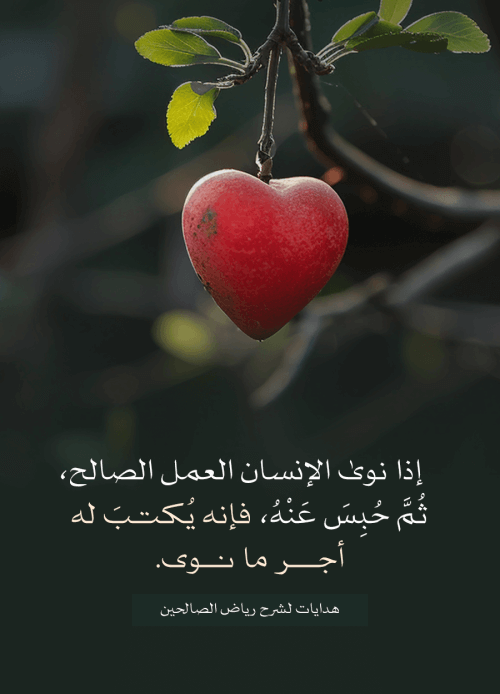
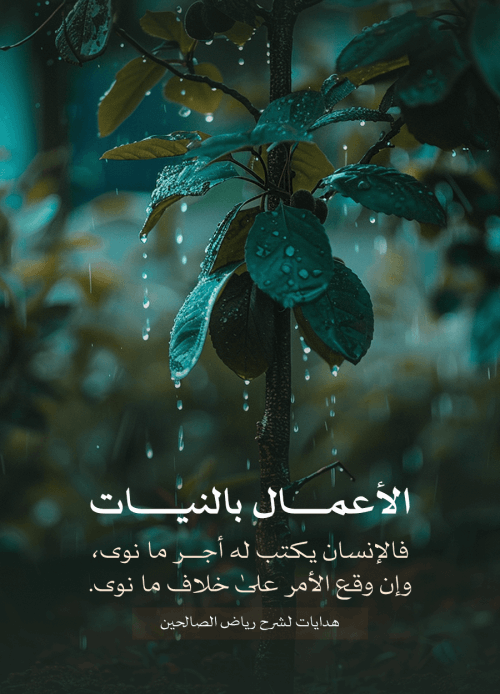
Truthfulness of the hearts is a cause to attain what is desired. Whoever intends to do a good deed will be rewarded for it even if he were unable to do it or failed to complete it.
Riyadh Al-Salheen with explanation and benefits
Thanking Allah for His blessings is one of the reasons for their permanence and increase.
Riyadh Al-Salheen with explanation and benefits
Once something is blessed, it becomes abundant even if it is little; and once something is stripped of blessings, it becomes little even if it is abundant.
Riyadh Al-Salheen with explanation and benefits
Taqwa is a [metaphorical] light helping the individual to discern between the truth and falsehood, the good and the harmful, and the [standard practice] of Sunnah from [religious] innovation.
Riyadh Al-Salheen with explanation and benefits