








Categories
Discover our diverse collection of categories covering multiple topics to meet your various interestsDa\'wa cards that highlight great meanings of the verses of the Holy Quran and the noble prophetic hadiths in a simple style and attractive display that helps the Muslim to have a deeper understanding of his religion in an easy way
﴿ إِنَّآ أَرۡسَلۡنَا عَلَيۡهِمۡ حَاصِبًا إِلَّآ ءَالَ لُوطٖۖ نَّجَّيۡنَٰهُم بِسَحَرٖ ﴾
سورة القمر
34. Verily, We sent against them a violent storm of stones (which destroyed them all), except the family of Lût (Lot), them We saved in the last hour of the night,

﴿ يَٰٓأَيُّهَا ٱلنَّبِيُّ حَسۡبُكَ ٱللَّهُ وَمَنِ ٱتَّبَعَكَ مِنَ ٱلۡمُؤۡمِنِينَ ﴾
سورة الأنفال
O Prophet, Allah is sufficient for you[40] and for the believers who follow you.
﴿ يَوۡمَ يَرَوۡنَ ٱلۡمَلَٰٓئِكَةَ لَا بُشۡرَىٰ يَوۡمَئِذٖ لِّلۡمُجۡرِمِينَ وَيَقُولُونَ حِجۡرٗا مَّحۡجُورٗا ﴾
سورة الفرقان
The day they see the angels[1014] - no good tidings will there be that day for the criminals, and [the angels] will say, "Prevented and inaccessible."[1015]
﴿ وَلَوۡ أَنَّهُمۡ ءَامَنُواْ وَٱتَّقَوۡاْ لَمَثُوبَةٞ مِّنۡ عِندِ ٱللَّهِ خَيۡرٞۚ لَّوۡ كَانُواْ يَعۡلَمُونَ ﴾
سورة البقرة
103. And if they had believed, and guarded themselves from evil and kept their duty to Allâh, far better would have been the reward from their Lord, if they but knew!
﴿ لَا يَسۡتَـٔۡذِنُكَ ٱلَّذِينَ يُؤۡمِنُونَ بِٱللَّهِ وَٱلۡيَوۡمِ ٱلۡأٓخِرِ أَن يُجَٰهِدُواْ بِأَمۡوَٰلِهِمۡ وَأَنفُسِهِمۡۗ وَٱللَّهُ عَلِيمُۢ بِٱلۡمُتَّقِينَ ﴾
سورة التوبة
Those who believe in Allah and the Last Day will not ask you to be exempted from striving with their wealth and their lives in Allah’s cause. Allah is All-Knowing of those who fear Him.
﴿ أَوۡ يُوبِقۡهُنَّ بِمَا كَسَبُواْ وَيَعۡفُ عَن كَثِيرٖ ﴾
سورة الشورى
Or He could destroy them[1424] for what they earned; but He pardons much.
﴿ فَكَذَّبُوهُ فَأَنجَيۡنَٰهُ وَٱلَّذِينَ مَعَهُۥ فِي ٱلۡفُلۡكِ وَأَغۡرَقۡنَا ٱلَّذِينَ كَذَّبُواْ بِـَٔايَٰتِنَآۚ إِنَّهُمۡ كَانُواْ قَوۡمًا عَمِينَ ﴾
سورة الأعراف
64. But they belied him, so We saved him and those along with him in the ship, and We drowned those who belied Our Ayât (proofs, evidence, verses, lessons, signs, revelations, etc.). They were indeed a blind people.
﴿ ثُمَّ إِذَا كَشَفَ ٱلضُّرَّ عَنكُمۡ إِذَا فَرِيقٞ مِّنكُم بِرَبِّهِمۡ يُشۡرِكُونَ ﴾
سورة النحل
Then when He removes the adversity from you, at once a party of you associates others with their Lord
﴿ لِمَن شَآءَ مِنكُمۡ أَن يَسۡتَقِيمَ ﴾
سورة التكوير
for those among you who wish to take the straight path.
Sa‘d ibn Abi Waqqās (may Allah be pleased with him) reported that the Prophet (may Allah's peace and blessings be upon him) said: "Anyone falsely claims to be the son of other than his father, knowing that he is not his father, will be forbidden to enter Paradise."
Narrated by Bukhari & Muslim
This Hadīth warns against one of the practices done by people in the pre-Islamic era. It was attributing oneself to other than one's real father. Man has to be attributed to one's real family, i.e. the father, the grandfather, up to all levels. It is not permissible for the Muslim to attribute oneself to other than his father, knowing that such a man is not one's real father. For example, if one's father belongs to a certain tribe that has some inferiority, and he thus claims to belong to a superior tribe, this person is forbidden to enter Paradise.
Abu Hurayrah (may Allah be pleased with him) reported directly from the Prophet (may Allah's peace and blessings be upon him) that he said: “Do not disown your fathers. Whoever disowns his father has disbelieved.”
Narrated by Bukhari & Muslim
Disowning one's father willingly is forbidden. This practice is similar to an act of disbelief. Actually, it is not the kind of disbelief that takes one to Hell forever. Rather, it is minor disbelief.
Sahl ibn Sa‘d As-Sā‘idi (may Allah be pleased with him) reported: News about the dispute among the people of Banu ‘Amr ibn ‘Awf reached the Messenger of Allah (may Allah's peace and blessings be upon him) and so he went to them, along with some of his Companions, to effect reconciliation between them. The Messenger of Allah (may Allah's peace and blessings be upon him) did not come back, and the time of the prayer was due. Bilāl went to Abu Bakr and said to him: "The Messenger of Allah (may Allah's peace and blessings be upon him) has not come yet and the time of prayer is due. Could you lead the people in prayer?" Abu Bakr said: "Yes, if you wish." Bilāl pronounced the Iqāmah and Abu Bakr went forward and said Takbīr and the people said it after him. In the meantime, the Messenger of Allah (may Allah's peace and blessings be upon him) came in crossing the rows (of the praying people) and stood in the (first) row and the people started clapping. Abu Bakr (may Allah be pleased with him) would never glance side-ways in his prayer, but when the people clapped much he looked back and saw the Messenger of Allah (may Allah's peace and blessings be upon him). The Messenger of Allah (may Allah's peace and blessings be upon him) beckoned to him to carry on with the prayer. Abu Bakr (may Allah be pleased with him) raised his hands and praised Allah, and retreated till he reached the (first) row. The Messenger of Allah (may Allah's peace and blessings be upon him) went forward and led the people in the prayer. When he completed the prayer, he faced the people and said: "O people, why did you start clapping when something unusual happened to you in the prayer? Clapping is only for women. So whoever among you comes across something in the prayer should say 'Subhān Allah' for there is none who will not turn around on hearing 'Subhān Allah'. O Abu Bakr, what prevented you from leading the people in the prayer when I beckoned to you to do so?" Abu Bakr (may Allah be pleased with him) replied: "How dare the son of Abu Quhāfah lead the prayer in the presence of the Messenger of Allah (may Allah's peace and blessings be upon him)?"
Narrated by Bukhari & Muslim
There was a dispute between the tribesmen of Banu ‘Amr ibn ‘Awf that reached the point of fighting, and the Messenger of Allah (may Allah's peace and blessings be upon him) was informed of that. He went to them, with some of his Companions, and was late there while the time for prayer, i.e. the ‘Asr prayer, was due. Al-Bukhāri clarified this in his narration, the wording of which is: "And when the ‘Asr prayer was due, He called the Adhān and Iqāmah and asked Abu Bakr to step forward and lead the people in the prayer, and he did." Then Bilāl came to Abu Bakr and said: "The Messenger of Allah (may Allah's peace and blessings be upon him) has not come yet and the time of prayer is due. Could you lead the people in prayer?" Abu Bakr said: "Yes, if you wish." Bilāl then pronounced the Iqāmah and Abu Bakr stepped forward and said Takbīr and so did the people. In the meantime, the Messenger of Allah (may Allah's peace and blessings be upon him) came crossing the rows (in his narration, Al-Bukhāri added "splitting the rows"), and stood in the first row, according to the narration of Muslim which states: "crossing the rows until he stood in the first row". When the people realized that the Prophet (may Allah's peace and blessings be upon him) was present with them, they began to clap their hands, out of their love for praying behind the Messenger of Allah (may Allah's peace and blessings be upon him). Abu Bakr (may Allah be pleased with him) heard their clapping, however he did not know the reason. Also, he would never glance sideways in his prayer due to his knowledge that it is forbidden, and that it is a furtive glance that the devil snatches from the slave during his prayer as mentioned by At-Tirmidhi and others. However, when the people clapped much more, he looked back (may Allah be pleased with him) and saw that the Messenger of Allah (may Allah's peace and blessings be upon him) was there. The Messenger of Allah (may Allah's peace and blessings be upon him) beckoned to him to carry on with leading the people in prayer, as stated in the narration of Al-Bukhāri: "He beckoned to him to remain in his place". Abu Bakr (may Allah be pleased with him) however, raised his hands and praised Allah, the Exalted, due to what he saw of the Prophet's (may Allah's peace and blessings be upon him) kind treatment of him, then he retreated a few steps back until he stood among the people being led in prayer. The Messenger of Allah (may Allah's peace and blessings be upon him) went forward and led the people in the prayer. When he completed the prayer, he faced the people and said: "O people, why did you start clapping when something unusual happened to you in the prayer? Clapping is only for women." Then he explained to them what was permissible for them to do when something happens to them during the prayer, saying: "Whoever among you comes across something in the prayer should say: 'Subhān Allah' for there is none who will not turn around on hearing 'Subhān-Allah.'" Then he said: "O Abu Bakr, what prevented you from leading the people in the prayer when I beckoned to you to do so?" Abu Bakr replied: "It is not proper for the son of Abu Quhāfah to lead the prayer in the presence of the Messenger of Allah (may Allah's peace and blessings be upon him)." Abu Bakr (may Allah be pleased with him) did that out of his love, exaltation and reverence for the Messenger of Allah (may Allah's peace and blessings be upon him).
Asmā' (may Allah be pleased with her) reported that a woman asked the Messenger of Allah (may Allah’s peace and blessings be upon him): "I have a co-wife; is it sinful for me to boast (before her) of receiving from my husband what he has not given me?" He replied: "The one who boasts of receiving what he has not been given is like the one who has put on two garments of falsehood."
Narrated by Bukhari & Muslim
A woman tells the Messenger of Allah (may Allah’s peace and blessings be upon him) that her husband is married to a second wife and that she (the one asking the question) would like to say to the other wife: "My husband gave me such-and-such," while she is lying. She would only say this to anger her co-wife and make her jealous. She asked the Messenger if she would be sinful for doing this. The Messenger (may Allah's peace and blessings be upon him) told her that the one who embellishes himself by claiming to have what he does not have is someone who is lying and claiming falsehood.
Abu Sa‘īd al-Khudri (may Allah be pleased with him) reported: A woman came to the Messenger of Allah (may Allah's peace and blessings be upon him) and said: "O Messenger of Allah, men have taken the biggest share of your company. So, kindly allocate a day to us to come to you so you would teach us from what Allah has taught you." He said: "Assemble on such-and-such day." They assembled and the Prophet (may Allah's peace and blessings be upon him) came to them and taught them from what Allah had taught him and he then said: "No woman among you loses three of her children to death except that they will screen her from Hellfire." A woman said: "What about two?" Thereupon, the Messenger of Allah (may Allah's peace and blessings be upon him) said: "And two."
Narrated by Bukhari & Muslim
A woman said to the Prophet (may Allah's peace and blessings be upon him): Men have taken up all of your time, leaving us no time to ask you about our religious affairs, as they accompany you all day long. So, make a special day for us as women, wherein we can meet with you and you teach us our religion. The Prophet (may Allah's peace and blessings be upon him) thus, made a special day for them to gather, and the women gathered on that day. Then he came to them and taught them the knowledge they were in need of from what Allah had taught him. After that he gave them the glad tidings that any woman who has three children – male or female – that pass away, preceding her to the Hereafter, and she is patient and anticipates the reward from Allah, her calamity concerning them will be a protection for her from Hellfire, even if she deserves it due to her sins. A woman then said: Even if only two died, will she still have the reward of the one whose three children died? The Messenger of Allah (may Allah's peace and blessings be upon him) said: Yes, even if only two of her children died, her reward will be the same.
Ibn ‘Umar (may Allah be pleased with him) reported: The Messenger of Allah (may Allah’s peace and blessings be upon him) saw a boy who had part of his head shaved and part left unshaven, so he forbade them from doing this, and said: "Shave it all or leave it all."
An-Nasaa’i - Narrated by Abu Daoud
The Messenger of Allah (may Allah’s peace and blessings be upon him) saw a boy who had part of his head shaved and the rest unshaven, so he forbade the adults from doing this to the boy again. He told them not to shave part of the head and leave the other part unshaven.
Abu Hurayrah (may Allah be pleased with him) reported that he heard the Messenger of Allah (may Allah’s peace and blessings be upon him) say: "If the strap of the sandal of one of you breaks, let him not walk in the other sandal until he fixes it."
Narrated by Muslim
The Prophet (may Allah's peace and blessings be upon him) forbade the Muslim from walking with only one shoe on if the strap of his other shoe were to break. Instead, he should fix the broken strap, or take both shoes off and walk barefoot.
Jābir (may Allah be pleased with him) reported: Abu Quhāfah, father of Abu Bakr As-Siddīq (may Allah be pleased with him), was brought on the day of the Conquest of Makkah with his head and beard as white as Thaghāmah (a white plant). Therefore, the Messenger of Allah (may Allah’s peace and blessings be upon him) said: "Change this and avoid black."
Narrated by Muslim
On the day of the Conquest of Makkah, Abu Quhāfah, father of Abu Bakr As-Siddīq, was brought to the Prophet (may Allah's peace and blessings be upon him) and his head and beard were as white as an intensely white plant called Thaghāmah. When the Prophet (may Allah's peace and blessings be upon him) saw him, he said: “Change this and avoid black.” He ordered that his white hair be dyed with anything other than black, because black makes an old person look younger, and this is a challenge to the natural constitution that Allah gives to man. Red, yellow, and henna mixed with katam-dye are fine to use, so long as black is excluded. If the synthesized dye is something between red and black, it is fine. In a Hadīth by Anas (may Allah be pleased with him), Abu Bakr and ‘Umar (may Allah be pleased with him) dyed their hair with henna and katam-dye.
‘Amr ibn Shu‘ayb (may Allah be pleased with him) reported from his father and grandfather that the Prophet (may Allah's peace and blessings be upon him) said: "Do not pluck out grey hair, for it is the light of the Muslim on the Day of Judgment.”
Narrated by Ibn Majah - Narrated by At-Termedhy - An-Nasaa’i - Narrated by Abu Daoud
The Prophet (may Allah's peace and blessings be upon him) forbade plucking grey hairs, whether they are on one's head or beard or any other place on the body, as this grey hair will be light for the person on the Day of Judgment.
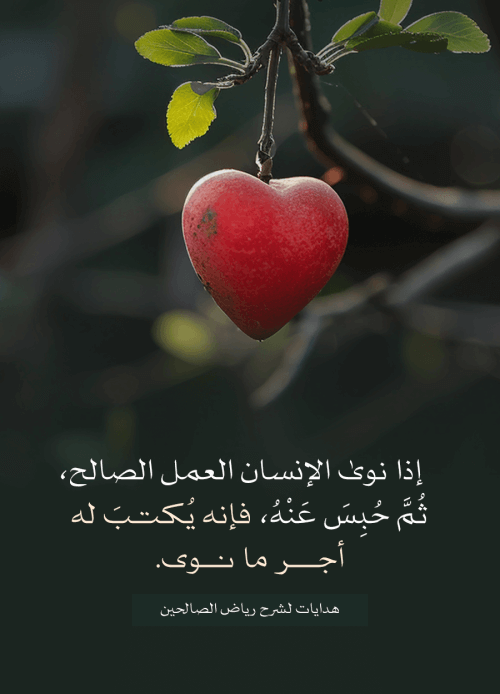
A believer who loves a people of faith becomes one of them even if his deeds are comparatively less.
Riyadh Al-Salheen with explanation and benefits
The absolute best day of a person’s life is the day Allah accepts his repentance and forgives him.
Riyadh Al-Salheen with explanation and benefits
Whoever feels remorse for a sin, Allah will guide him to repentance and help him fulfill it.
Riyadh Al-Salheen with explanation and benefits
Whomever Allah Almighty loves, He afflicts him with trials to fend off harm heading his way, or to absolve him of a sin, or to raise him in rank in this life and the Hereafter.
Riyadh Al-Salheen with explanation and benefits
One of the best blessings the servant is granted is to have patience in all his affairs.
Riyadh Al-Salheen with explanation and benefits
When the servant suffices himself with what Allah gives him rather than beg people for what they have, Allah will make him needless of people and aid him in keeping his integrity intact without having to beg.
Riyadh Al-Salheen with explanation and benefits
When the servant refrains from unlawful deeds, Allah, Exlated and Glorified, will grant him virtuousness and protect him and his relatives from such unlawful deeds and their allure.
Riyadh Al-Salheen with explanation and benefits
Prayer illuminates the path of truth for its observer in this life and the Sirāt (bridge over hellfire) in the Hereafter.
Riyadh Al-Salheen with explanation and benefits
Patience is a virtue and a praiseworthy behavior endured only by strong-willed individuals.
Riyadh Al-Salheen with explanation and benefits