





Categories
Discover our diverse collection of categories covering multiple topics to meet your various interestsDa\'wa cards that highlight great meanings of the verses of the Holy Quran and the noble prophetic hadiths in a simple style and attractive display that helps the Muslim to have a deeper understanding of his religion in an easy way
﴿ حمٓ ﴾
سورة الزخرف
Ḥā, Meem.[1429]

﴿ قَالُوٓاْ إِنَّآ أُرۡسِلۡنَآ إِلَىٰ قَوۡمٖ مُّجۡرِمِينَ ﴾
سورة الحجر
They said, "Indeed, we have been sent to a people of criminals,
﴿ وَلَا يَحۡسَبَنَّ ٱلَّذِينَ كَفَرُوٓاْ أَنَّمَا نُمۡلِي لَهُمۡ خَيۡرٞ لِّأَنفُسِهِمۡۚ إِنَّمَا نُمۡلِي لَهُمۡ لِيَزۡدَادُوٓاْ إِثۡمٗاۖ وَلَهُمۡ عَذَابٞ مُّهِينٞ ﴾
سورة آل عمران
Those who disbelieve should not think that whatever respite We give them is good for them. We only give them respite so that they may increase in sin, and for them there will be a disgracing punishment.
﴿ فَبِأَيِّ ءَالَآءِ رَبِّكُمَا تُكَذِّبَانِ ﴾
سورة الرحمن
So which of the favors of your Lord would you deny?
﴿ ٱرۡكُضۡ بِرِجۡلِكَۖ هَٰذَا مُغۡتَسَلُۢ بَارِدٞ وَشَرَابٞ ﴾
سورة ص
[Allah said], “Stamp [the ground] with your foot: here is a cool spring for bathing and drinking.”
﴿ قُلۡ هُوَ ٱللَّهُ أَحَدٌ ﴾
سورة الإخلاص
1. Say (O Muhammad صلى الله عليه وسلم): "He is Allâh, (the) One.[1]
﴿ وَمَن لَّمۡ يُؤۡمِنۢ بِٱللَّهِ وَرَسُولِهِۦ فَإِنَّآ أَعۡتَدۡنَا لِلۡكَٰفِرِينَ سَعِيرٗا ﴾
سورة الفتح
13. And whosoever does not believe in Allâh and His Messenger (Muhammad صلى الله عليه وسلم), then verily, We have prepared for the disbelievers a blazing Fire.[4]
﴿ قُلۡ إِن تُخۡفُواْ مَا فِي صُدُورِكُمۡ أَوۡ تُبۡدُوهُ يَعۡلَمۡهُ ٱللَّهُۗ وَيَعۡلَمُ مَا فِي ٱلسَّمَٰوَٰتِ وَمَا فِي ٱلۡأَرۡضِۗ وَٱللَّهُ عَلَىٰ كُلِّ شَيۡءٖ قَدِيرٞ ﴾
سورة آل عمران
29. Say (O Muhammad صلى الله عليه وسلم): "Whether you hide what is in your breasts or reveal it, Allâh knows it, and He knows what is in the heavens and what is in the earth. And Allâh is Able to do all things."
﴿ وَيَسۡـَٔلُونَكَ عَنِ ٱلۡمَحِيضِۖ قُلۡ هُوَ أَذٗى فَٱعۡتَزِلُواْ ٱلنِّسَآءَ فِي ٱلۡمَحِيضِ وَلَا تَقۡرَبُوهُنَّ حَتَّىٰ يَطۡهُرۡنَۖ فَإِذَا تَطَهَّرۡنَ فَأۡتُوهُنَّ مِنۡ حَيۡثُ أَمَرَكُمُ ٱللَّهُۚ إِنَّ ٱللَّهَ يُحِبُّ ٱلتَّوَّٰبِينَ وَيُحِبُّ ٱلۡمُتَطَهِّرِينَ ﴾
سورة البقرة
222. They ask you concerning menstruation. Say: that is an Adha (a harmful thing for a husband to have a sexual intercourse with his wife while she is having her menses), therefore keep away from women during menses and go not unto them till they are purified (from menses and have taken a bath). And when they have purified themselves, then go in unto them as Allâh has ordained for you (go in unto them in any manner as long as it is in their vagina). Truly, Allâh loves those who turn unto Him in repentance and loves those who purify themselves (by taking a bath and cleaning and washing thoroughly their private parts, bodies, for their prayers).
Mu‘ādh ibn Jabal (may Allah be pleased with him) reported: The Messenger of Allah (may Allah's peace and blessings be upon him) said: "Allah, the Almighty, said: 'Those who love one another for the sake of My glory will have pulpits of light for which the prophets and martyrs will envy them.'"
Narrated by At-Termedhy - Narrated by Ahmad
The Prophet (may Allah's peace and blessings be upon him) relates to us about a group of believers who, on the Day of Judgment, will have pulpits and elevated places where they will sit as a sign of honor for them from Allah. This is due to their love of each other for the sake of Allah and glorifying Him, and their love for each other due to the faith that they are united in. Even the prophets (peace be upon them) will wish to have their status. This does not necessarily mean that they are better than the prophets, because this particular virtue does not supersede the general virtue.
Abu Sa‘īd al-Khudri (may Allah be pleased with him) reported that the Prophet (may Allah's peace and blessings be upon him) said: "When a dead body is placed on a bier and men carry it on their shoulders, if the deceased was righteous, it (the corpse) would say: 'Send me forward, send me forward'. But if he was not righteous, it would say: 'Woe to it! Where are you taking it?' Everything hears its voice except humans. If they were to hear it, they would fall unconscious."
Narrated by Bukhari
When the body of a dead person is placed on the bier, then the men carry it on their shoulders, if the dead person was righteous, his corpse would say: "Hasten in taking me to the grave" out of happiness with what it sees ahead of the bliss of Paradise. If the dead person was not righteous, his corpse would say: "What ruin and what destruction (awaits me)!" because of what it sees of an evil destination, so it hates to be taken to the grave. All of Allah's creation hears it, of animals and inanimate objects, except human beings. If a human being were to hear it, they would fall unconscious or die of terror.
Al-Miqdād ibn al-Aswad (may Allah be pleased with him) reported that the Prophet (may Allah's peace and blessings be upon him) said: "On the Day of Judgment, the sun will be drawn near people until it becomes a mile away from them." The narrator Sulaym ibn ‘Āmir quoted al-Miqdād as saying: "By Allah, I do not know what he meant by this mile? Is it a distance of one mile or the stick used for applying kohl to the eye? He (may Allah's peace and blessings be upon him) said: "People will be submerged in sweat according to their deeds. Some will be submerged up to their heels, some up to their knees, some up to their waist, and some will be bridled with sweat (reaching their mouths)." He (the narrator) said: "The Messenger of Allah (may Allah's peace and blessings be upon him) pointed to his mouth." Abu Hurayrah (may Allah be pleased with him) reported that the Messenger of Allah (may Allah's peace and blessings be upon him) said: "On the Day of Judgment, people will sweat and their sweat will go seventy cubits down in the earth and it will bridle them until it reaches their ears."
Narrated by Muslim - Narrated by Bukhari & Muslim
Allah, the Exalted, will bring the sun close to people on the Day of Judgment until it will be at a distance of four-thousand cubits away from them. People's conditions will vary according to their deeds. In other words, the amount of sweat surrounding them on this Day will vary according to their good and bad deeds. There will be some people whose sweat will reach up to their heels, others up to their knees, others up to their waist, and others up to their mouths and ears so that they are bridling with it. People have such a hard experience due to the severe distress and terrors of the Day of Resurrection.
‘Ā'ishah (may Allah be pleased with her) reported the Prophet (may Allah's peace and blessings be upon him) said: "An army will invade the Ka‘bah and when it reaches a desert, all of them will be swallowed up by the earth." She asked: "O Messenger of Allah, how will they be swallowed up by the earth while amongst them will be their marketeers and people not belonging to them?" He replied: "All of them will be swallowed up by the earth, then they will be resurrected for judgment according to their intentions."
Narrated by Bukhari & Muslim
The Prophet (may Allah's peace and blessings be upon him) informs us that a huge army will invade the Sacred House of Allah. When they reach an open desert area, Allah will make the earth swallow them up. The Mother of the Believers ‘Ā'ishah (may Allah be pleased with her) asked him about the ones who came for buying and selling, without any evil intention to invade the Ka‘bah, and the people who followed them, but did not belong to them or know their evil plan. The Prophet (may Allah's peace and blessings be upon him) informed her that the earth would swallow them up because they were in their company. Later, they will be resurrected and judged according to their intentions, and everyone will be dealt with according to one's good or evil intentions.
Abu Hurayrah (may Allah be pleased with him) reported that the Messenger of Allah (may Allah's peace and blessings be upon him) said: "Between the two Blows (of the Trumpet), there will be (an interval of) forty." The people said: "O Abu Hurayrah, do you mean forty days?" He said: "I cannot say anything." They said: "Do you mean forty years?" He said: "I cannot say anything." They said: "Do you mean forty months?" He said: "I cannot say anything." (The Prophet added) "Everything of the human body will perish except the end of the coccyx (tailbone), and from that part, Allah will reconstruct the whole body. Then Allah will send down water from the sky, and the people will grow like green vegetables."
Narrated by Bukhari & Muslim
The great Companion Abu Hurayrah (may Allah be pleased with him) reported that he heard the Prophet (may Allah's peace and blessings be upon him) say that the period between the first blow of the Trumpet, which will cause the people to die, and the second blow, after which they will be resurrected, will be forty. Abu Hurayrah was asked: Forty what: days, months, or years? He refused to reply, as he had not heard a specification for this number from the Messenger of Allah (may Allah's peace and blessings be upon him). Then he mentioned that Allah, the Exalted, will send down rain as thick as men's semen, and from this rain, the people will grow in their graves as seeds grow after a flood. Then the people will be resurrected to their Lord on the Day of Reckoning.
Abu Hurayrah (may Allah be pleased with him) reported that the Prophet (may Allah's peace and blessings be upon him) said: "He who has wronged his brother, concerning his honor or anything else, let him ask for his pardon today before there comes a time when there will be neither a dinar nor a dirham. If he has good deeds, an amount equivalent to the wrong he has done will be taken from his good deeds (and given to the one whom he has wronged). If he has no good deeds, then some of that person's bad deeds will be taken and loaded upon him."
Narrated by Bukhari
This Hadīth describes one of the aspects of social justice which Islam is keen to spread among its followers. Abu Hurayrah (may Allah be pleased with him) reports that the Messenger of Allah (may Allah’s peace and blessings be upon him) said: "He who has wronged his brother": the term “brother” here means a brother in Islam. Wronging one’s brother takes several forms including violating his honor or anything else related to him. "concerning his honor": honor refers to all that a person is keen to protect and rejects its defamation, like his life, his lineage, and family reputation. "or anything else": any other type of wronging such as taking his money or preventing him from utilizing it. This may also be a form of generalization of speech after specifying it. "let him ask for his pardon today": he should ask the one whom he has wronged to forgive him for his wrongdoing. To indicate the urgency of the matter, the Prophet (may Allah's peace and blessings be upon him) said 'today', meaning the days of the worldly life. He then refers to the opposite of the worldly life by saying "before there is no dinar or dirham"; i.e. on the Day of Judgment. He is thus urging the Muslim to seek the pardon of the person whom he has wronged, even if he would have to spend much money (dinar or dirham) to achieve that. That is because the loss of money in the worldly life is much easier than the loss of one’s good deeds or bearing the bad deeds of another (in case he has no good deeds to be given to the one whom he has wronged) in the Hereafter. "If he has good deeds, an amount equivalent to the wrong he has done will be taken and given to his brother. If he has no good deeds, then some of the bad deeds of the one whom he has wronged will be taken and loaded upon him." This is the case when the wrongdoer is a believer who is not pardoned by the one whom he has wronged. The amount that will be taken from him is determined by Allah in proportion to the wrong he did. Knowledge of such obedience and sinfulness in quantity and quality is referred to Allah, the Exalted, alone. However, if the wrongdoer was bankrupt of all good deeds on the Day of Reckoning, then, as told by the Prophet (may Allah's peace and blessings be upon him) he will be subject to a harsh reckoning that will burden him and increase his punishment; some of the bad deeds of the person whom he wronged will be transferred to the wrongdoer.
‘Ā'ishah, the Mother of the Believers, (may Allah be pleased with her) reported: I heard the Messenger of Allah (may Allah's peace and blessings be upon him) saying: "People will be gathered on the Day of Resurrection barefooted, naked, and uncircumcised." I said: 'O Messenger of Allah, men and women together, looking at each other?!" He replied: "O ‘Ā'ishah, the situation will be too grave for them to be concerned with that." Another narration reads: "The situation will be too serious for them to be looking at each other."
Narrated by Bukhari & Muslim
‘Ā'ishah (may Allah be pleased with her) reported that she heard the Prophet (may Allah's peace and blessings be upon him) say: Allah will gather the people on the Day of Judgment barefooted without footwear, and with no clothes on and uncircumcised. They will come out of their graves as the day their mothers gave birth to them. ‘Ā'ishah (may Allah be pleased with her) said (in astonishment): O Messenger of Allah, men and women, naked, looking at one another?! He said: O ‘Ā'ishah, the situation will be too serious and too hard for them to care about that, or to look at one another.
‘Abdullāh ibn ‘Umar (may Allah be pleased with him) reported that the Messenger of Allah (may Allah's peace and blessings be upon him) said: “People will rise from their graves and stand before the Lord of the Worlds. Some of them will get submerged in their perspiration up to the middle of their ears.”
Narrated by Bukhari & Muslim
People will rise from their graves on the Day of Resurrection and stand before Allah, the Lord of the Worlds, so that He will recompense them. Some of them will stand with their own perspiration reaching up to the middle of their ears.
Abu Hurayrah (may Allah be pleased with him) reported that the Prophet (may Allah's peace and blessings be upon him) said: "All rights will be restored on the Day of Judgment, until even the hornless sheep will settle its score with the horned one."
Narrated by Muslim
The oppressed one will retaliate against his oppressor on the Day of Judgment; even the hornless sheep will settle its score with the one that has horns, {and your Lord is not unjust to anyone.} [Sūrat al-Kahf: 49]
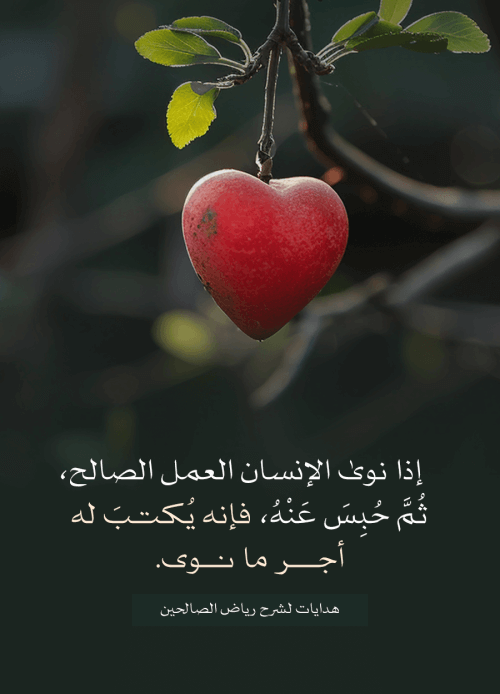
If someone intends to do a good deed but was prevented by a valid excuse, he shall gain the reward of his intention.
Riyadh Al-Salheen with explanation and benefits
Variation of reward for good deeds is based on sincerity and following of the Prophet’s guidance. The more a person is sincere to Allah, and the keener he is on following the Prophet (may Allah’s peace and blessings be upon him), the more perfect his worship will be, and consequently his reward will be bigger.
Riyadh Al-Salheen with explanation and benefits
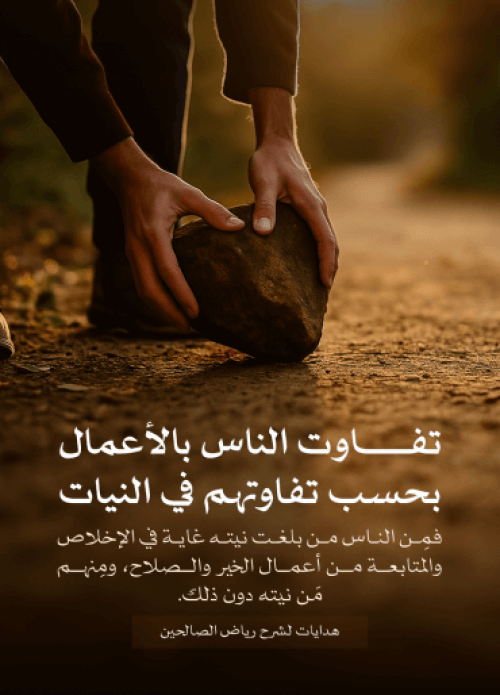
People differ with regards to their acts of worship according to their intentions. The intentions of some people have reached the ultimate level of sincerity (to Allah) and keenness in following the Sunnah (of the Messenger of Allah) with regard to doing good and righteous deeds, while the intentions of others are below that.
Riyadh Al-Salheen with explanation and benefits
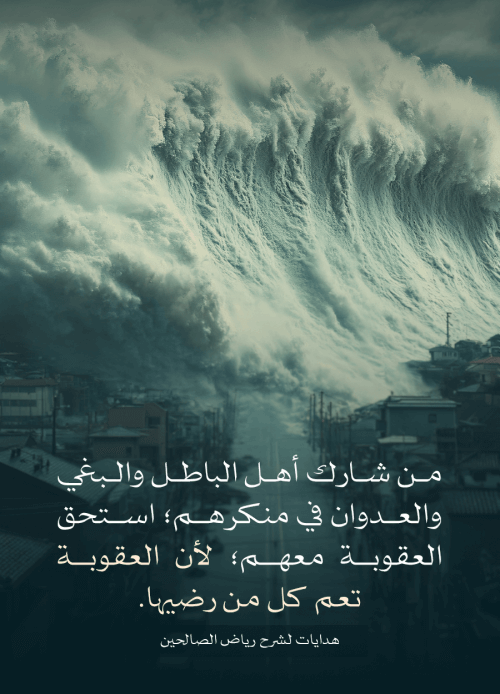
Anyone partaking a role with transgressors and wrongdoers will share their punishment because it is inclusive.
Riyadh Al-Salheen with explanation and benefits
If someone intends to do a good deed but was prevented by a valid excuse, he shall gain the reward of his intention.
Riyadh Al-Salheen with explanation and benefits
Actions are recompensed according to the intentions behind them, and the individual shall receive the reward of what he intended even if the outcome was contrary to his intention.
Riyadh Al-Salheen with explanation and benefits
There is not a single good deed intended sincerely to please Allah except that its doer will be raised in rank and status thereby, so that he would reap the full reward.
Riyadh Al-Salheen with explanation and benefits
Love and contentment is measured by good deeds and intentions because they are the criteria for Allah’s acceptance of the servant; perhaps a small deed reaps great reward because of the intention behind it and perhaps a big deed reaps little reward because of the intention behind it
Riyadh Al-Salheen with explanation and benefits
One of the proofs Allah supports the servant is the latter’s sincere endeavor to rectify his intention and purify his heart by good deeds.
هدايات لشرح رياض الصالحين