




Categories
Discover our diverse collection of categories covering multiple topics to meet your various interestsDa\'wa cards that highlight great meanings of the verses of the Holy Quran and the noble prophetic hadiths in a simple style and attractive display that helps the Muslim to have a deeper understanding of his religion in an easy way
﴿ ۞ يَٰٓأَيُّهَا ٱلنَّاسُ أَنتُمُ ٱلۡفُقَرَآءُ إِلَى ٱللَّهِۖ وَٱللَّهُ هُوَ ٱلۡغَنِيُّ ٱلۡحَمِيدُ ﴾
سورة فاطر
15. O mankind! it is you who stand in need of Allâh. But Allâh is Rich (Free of all needs), Worthy of all praise.

﴿ حَتَّىٰٓ إِذَا بَلَغَ بَيۡنَ ٱلسَّدَّيۡنِ وَجَدَ مِن دُونِهِمَا قَوۡمٗا لَّا يَكَادُونَ يَفۡقَهُونَ قَوۡلٗا ﴾
سورة الكهف
93. Until, when he reached between two mountains, he found, before (near) them (those two mountains), a people who scarcely understood a word.
﴿ وَجَآءَهُۥ قَوۡمُهُۥ يُهۡرَعُونَ إِلَيۡهِ وَمِن قَبۡلُ كَانُواْ يَعۡمَلُونَ ٱلسَّيِّـَٔاتِۚ قَالَ يَٰقَوۡمِ هَٰٓؤُلَآءِ بَنَاتِي هُنَّ أَطۡهَرُ لَكُمۡۖ فَٱتَّقُواْ ٱللَّهَ وَلَا تُخۡزُونِ فِي ضَيۡفِيٓۖ أَلَيۡسَ مِنكُمۡ رَجُلٞ رَّشِيدٞ ﴾
سورة هود
And his people came hastening to him, and before [this] they had been doing evil deeds.[569] He said, "O my people, these are my daughters;[570] they are purer for you. So fear Allāh and do not disgrace me concerning my guests. Is there not among you a man of reason?"
﴿ عَلَى ٱلۡأَرَآئِكِ يَنظُرُونَ ﴾
سورة المطففين
while sitting on the couches, gazing around.
﴿ وَتَجۡعَلُونَ رِزۡقَكُمۡ أَنَّكُمۡ تُكَذِّبُونَ ﴾
سورة الواقعة
and instead [of thanking Allah] for the provision you are given, you show ingratitude?
﴿ لَوۡ يَجِدُونَ مَلۡجَـًٔا أَوۡ مَغَٰرَٰتٍ أَوۡ مُدَّخَلٗا لَّوَلَّوۡاْ إِلَيۡهِ وَهُمۡ يَجۡمَحُونَ ﴾
سورة التوبة
If they could find a refuge or some caves or any place to enter [and hide], they would turn to it while they run heedlessly.
﴿ إِنَّ ٱلَّذِينَ يُحَآدُّونَ ٱللَّهَ وَرَسُولَهُۥٓ أُوْلَٰٓئِكَ فِي ٱلۡأَذَلِّينَ ﴾
سورة المجادلة
Indeed, those who oppose Allah and His Messenger, they are among the most debased.
﴿ وَٱذۡكُر رَّبَّكَ فِي نَفۡسِكَ تَضَرُّعٗا وَخِيفَةٗ وَدُونَ ٱلۡجَهۡرِ مِنَ ٱلۡقَوۡلِ بِٱلۡغُدُوِّ وَٱلۡأٓصَالِ وَلَا تَكُن مِّنَ ٱلۡغَٰفِلِينَ ﴾
سورة الأعراف
205. And remember your Lord within yourself, humbly and with fear and without loudness in words in the mornings, and in the afternoons and be not of those who are neglectful.[17]
﴿ وَمَنَوٰةَ ٱلثَّالِثَةَ ٱلۡأُخۡرَىٰٓ ﴾
سورة النجم
20. And Manât (another idol of the pagan Arabs), the other third?
Humayd ibn ‘Abdur-Rahmān reported that he heard Mu‘āwiyah (may Allah be pleased with him) in the year he made pilgrimage — having taken a lock of hair that was in the hand of a guard — say on the pulpit: "O people of Madīnah, where are your scholars? I heard the Prophet (may Allah's peace and blessings be upon him) forbidding the like of this and saying: 'The children of Israel were ruined when their women started using this.’"
Narrated by Bukhari & Muslim
Humayad ibn ‘Abdur-Rahmān ibn ‘Awf (may Allah have mercy upon him) tells this story. In the year he made pilgrimage, Mu‘āwiyah was on the pulpit with a tangled lock of hair in his hand. He took it from one of his guards and said: ''O people of Madīnah, where are your scholars?'' With this rhetorical question, he meant to show disapproval of their inaction toward evildoing. He told them that he heard the Messenger of Allah (may Allah's peace and blessings be upon him) say that Allah, the Almighty, destroyed the Children of Israel when their women started using hair extensions. Indeed, they were all ruined because of their approval of evil, in addition to their committing other prohibitions.
Abu Hurayrah (may Allah be pleased with him) reported that Prophet (may Allah's peace and blessings be upon him) said: "While a man was walking on a road, he became very thirsty. He found a well and went down in it and drank. When he came out, there was a dog panting and eating moist earth out of thirst. The man said: 'This dog is so thirsty just as I was.' So, he went down into the well, filled his shoe with water and held it in his mouth until he climbed out. Then, he gave the dog water to drink. Allah accepted his deed and, thus, forgave him." They said: "O Messenger of Allah, are we rewarded for taking care of animals?" He said: "There is a reward for (quenching the thirst of) every living creature." Another narration reads: "Allah accepted his deed and, thus, forgave him and admitted him into Paradise." Another narration reads: "Once a dog was moving around a well, and it was about to die from thirst. When a prostitute from Children of Israel saw it, she removed her shoe, filled it with water, and gave it to the dog to drink. She was forgiven for that."
Narrated by Bukhari - Narrated by Bukhari & Muslim
As a man was walking along the road on a journey, he became thirsty. So, he went down into a well and drank from it and quenched his thirst. When he came out of it, there was a dog eating mud (trying) to suck any water from it due to its extreme thirst. So the man said: "By Allah, this dog is just as thirsty as I was." Then he went down into the well and filled his shoe with water, holding it with his mouth to get out of the well with it, then gave the dog water to drink. Allah accepted this deed from him, forgave him, and admitted him into Paradise because of it. When the Prophet (may Allah's peace and blessings be upon him) said this Hadīth to the Companions, they asked: "O Messenger of Allah, do we get a reward for looking after animals?" i.e. Do we get reward for giving animals water to drink? He replied that there is a reward for quenching thirst of every creature with a moist liver, since the moist liver needs water, and without water it will dry up and the animal will die. Another narration states that a prostitute from Children of Israel saw a thirsty dog moving around a well, unable to reach the water. So she took off her shoe and filled it with water and gave the dog water to drink. So Allah forgave her because of that deed.
‘Ā'ishah, the wife of the Prophet (may Allah's peace and blessings be upon him), reported: Al-Hawlā' bint Tuwayt ibn Habīb ibn ‘Abd al-‘Uzza passed while I was sitting with the Messenger of Allah, may Allah’s peace and blessings be upon him. So I said: "This is Al-Hawlā' bint Tuwayt, and they claim that she does not sleep at night." Upon hearing this, the Messenger of Allah (may Allah’s peace and blessings be upon him) said: "She does not sleep at night! Do what you are capable of doing (regularly). By Allah, Allah never grows weary (of giving rewards) until you grow weary (of doing good deeds).”
Narrated by Bukhari & Muslim
As Al-Hawlā' bint Tuwayt passed by ‘Ā'ishah, ‘Ā'ishah told the Prophet (may Allah's peace and blessings be upon him) that this woman's name was Al-Hawlā bint Tuwayt and that she used to pray all night without sleeping at all. The Prophet (may Allah's peace and blessings be upon him) condemned this act and said: "Do what you are capable of doing." Thus, the Prophet (may Allah's peace and blessings be upon him) ordered that woman to stop the tedious act that she was doing as she could find it difficult and become incapable of continuing it in the future. Then the Prophet (may Allah's peace and blessings be upon him) ordered that people should do only acts which they are capable of for "Allah will never grow weary until you grow weary." This means that Allah, Glorified and Exalted, rewards people according to their acts of worship. When a slave continues to do a good deed, then Allah continues to reward him for that. However, if the slave grows weary of and bored with this act of worship, and consequently abandons it, then Allah will stop the reward of that particular act. This is because people are rewarded for their deeds, so whoever stops a specific deed, the reward of that particular deed will stop if that deed is stopped for no valid excuse such as sickness or travel. This is the most correct interpretation of "growing weary" that is understood from the apparent meaning of the Hadīth as a description of Allah, the Exalted. Allah's 'Malal' (boredom/weariness), is not similar to people's 'Malal', for ours means fatigue, tiredness, and laziness whereas that of Allah is an attribute that is exclusive to Him in a way that befits His majesty. Indeed Allah, Glorified and Exalted, does not feel tired or lazy.
‘Ā'ishah (may Allah be pleased with her) reported: The Messenger of Allah (may Allah's peace and blessings be upon him) ordered us to build mosques in different localities and that they should be kept clean and perfumed.
Narrated by Abu Daoud
The Messenger of Allah (may Allah's peace and blessings be upon him) ordered that mosques to be built in different neighborhoods, i.e. every neighborhood should have a mosque. They should also be cleaned from all dirty and filthy things. They should also be perfumed with incense and other things that have good scents.
Abu Hurayrah reported that ‘Umar happened to pass by Hassān (may Allah be pleased with him) as he was reciting verses of poetry in the mosque. He (‘Umar) looked at him (meaningfully). Upon which, Hassān said: "I used to recite poetry (in the presence) of one better than you (the Prophet). He then looked at Abu Hurayrah and said to him: "I implore you by Allah (to tell me) if you heard the Messenger of Allah (may Allah's peace and blessings be upon him) saying: '(Hassān) answer on my behalf. O Allah, aid him with the Holy Spirit (Jibrīl).’” He (Abu Hurayrah) said: “By Allah, yes (I did).”
Narrated by Muslim
The meaning of this Hadīth: Hassān,(may Allah be pleased with him) was reciting poetry in the mosque while ‘Umar was present. ‘Umar looked at him with a disapproving glance. When Hassān noticed, he said to him: "I used to recite poetry in the mosque in the presence of one better than you.” Hassān then asked Abu Hurayrah to testify with his knowledge about Hassān's recitation of poetry in the mosque in the presence of the Messenger (may Allah's peace and blessings be upon him) and his knowledge of his approval and encouragement to it. So ‘Umar said: "I implore you by Allah", meaning: I ask you to swear by Allah, did you hear this from the Messenger of Allah, may Allah's peace and blessings be upon him? When he said: "Answer on behalf of the Messenger of Allah, O Hassān", meaning: answer the (abusing) poetry of the polytheists with your poetry to defend the Prophet (may Allah's peace and blessings be upon him) and aid the religion. Did you hear him say: “O Allah aid him with the Holy Spirit (Jibrīl)", meaning: Jibrīl will aid him by inspiring him with some lines of poetry that strike the nerve of the polytheists like arrows. Abu Hurayrah replied: 'Yes,' meaning: he had heard him reciting poetry in front of the Messenger in the mosque and he heard the Prophet saying that.
Zayd ibn Arqam (may Allah be pleased with him) reported that he saw some people pray in the forenoon, so he said: "They know that praying at an hour other than this one is better, for the Messenger of Allah (may Allah's peace and blessings be upon him) said: 'The prayer of the oft-returning to Allah is when weaned camels are bitten by excessive heat.'"
Narrated by Muslim
Zayd ibn Arqam (may Allah be pleased with him) saw some people pray in the forenoon, so he said that he heard the Prophet (may Allah's peace and blessings be upon him) say that the prayer of the oft-returning to Allah is when the heat is so scorching that the hooves of little camels burn on the ground. That is the best time to pray the Duha prayer for those who obey Allah and often return to Him.
Sa‘īd ibn Jubayr reported that Ibn ‘Umar (may Allah be pleased with him) once passed by some young men of the Quraysh who had tied a bird and made it a target at which they were shooting arrows. Every arrow that they missed became the possession of the owner of the bird. When they saw Ibn ‘Umar, they dispersed. Thereupon, Ibn ‘Umar said: "Who has done this? May Allah curse whoever has done this. Verily, the Messenger of Allah (may Allah’s peace and blessings be upon him) invoked curse upon whoever makes any living creature a target (of his marksmanship, archery, etc.)"
Narrated by Muslim
Sa‘īd ibn Jubayr (may Allah have mercy upon him) reported that ‘Abdullāh ibn ‘Umar (may Allah be pleased with him) once passed by some young men of the Quraysh tribe who had tied a bird and made it a target at which they were shooting arrows to see who is more skilled at archery. When they saw Ibn ‘Umar coming, they dispersed and ran away from him. He inquired about what was going on, and when the people told him, he said: "May Allah curse whoever has done this," and he mentioned that the Prophet (may Allah's peace and blessings be upon him) invoked the curse of Allah upon whoever takes any living creature as a target to shoot at. That is because such action makes the bird suffer pain as one hits its wing, another hits its chest, and a third hits its back or head, and so on. Thus, the bird suffers without dying, while it is possible to slaughter it at the neck in the lawful manner which kills it instantly without making it suffer. That is why the Prophet (may Allah's peace and blessings be upon him) invoked curse upon whoever makes any living creature a target of shooting.
Jābir ibn ‘Abdullāh (may Allah be pleased with him) reported: The Messenger of Allah (may Allah's peace and blessings be upon him) forbade killing an animal by tying it up and taking aim at it.
Narrated by Muslim
This Hadīth forbids killing animals by tying them up and making them targets for shooting (which is called Sabr). This action involves torturing the animal, taking its life in vain, wasting its monetary value, and missing the chance to slaughter it in a lawful manner (for food). So, for these harms and for the lack of benefit in killing it in this manner, it is forbidden to tie it up and take aim at it to kill it; and forbiddance entails prohibition.
Abu Bakrah (may Allah be pleased with him) reported: During the days (of the battle) of the Camel, Allah benefited me with a word that I had heard from the Messenger of Allah (may Allah's peace and blessings be upon him) after I had been about to join the Companions of the Camel and fight along with them. When the Messenger of Allah (may Allah's peace and blessings be upon him) was informed that the Persians had crowned the daughter of Khosrow as their ruler, he said: "A people who appointed a woman to be in charge of their affairs will never succeed.”
Narrated by Bukhari
Abu Bakrah (may Allah be pleased with him) says that Allah, the Almighty, benefited him on the battle of the Camel with a word that he had heard from the Messenger of Allah (may Allah's peace and blessings be upon him). That benefit was such that he did not set forth to participate in the civil strife. He had heard the Prophet (may Allah's peace and blessings be upon him) say — when he was told that the Persians crowned the daughter of Khosrow as their queen after her father's death: "A people who appointed a woman to be in charge of their affairs will never succeed.'' It means that those who give women high public positions of presidency, ministry, management, or judiciary achieve no good to the nation. The reason is that Allah, the Almighty, gave men a merit over women in their own nature and made men stronger and more resourceful than women in taking up such positions.
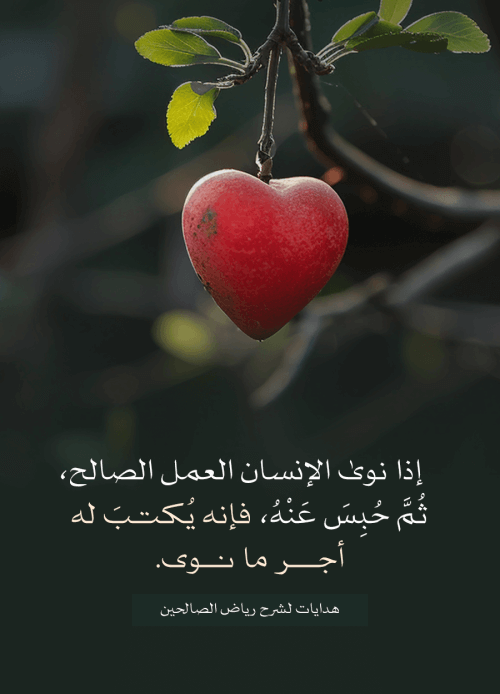
If someone intends to do a good deed but was prevented by a valid excuse, he shall gain the reward of his intention.
Riyadh Al-Salheen with explanation and benefits
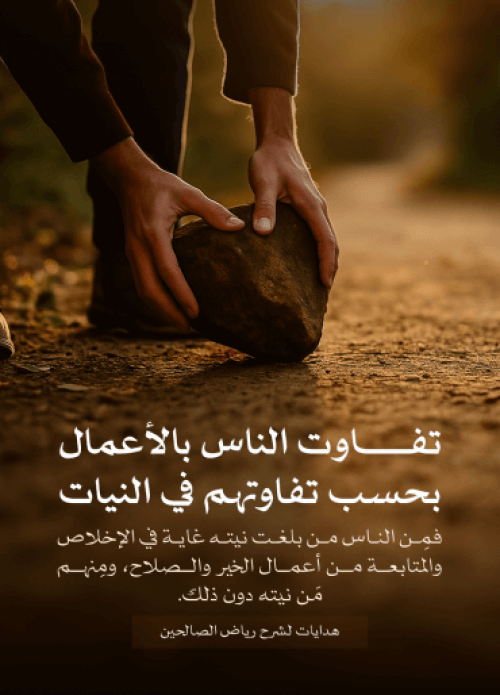
Variation of reward for good deeds is based on sincerity and following of the Prophet’s guidance. The more a person is sincere to Allah, and the keener he is on following the Prophet (may Allah’s peace and blessings be upon him), the more perfect his worship will be, and consequently his reward will be bigger.
Riyadh Al-Salheen with explanation and benefits
People differ with regards to their acts of worship according to their intentions. The intentions of some people have reached the ultimate level of sincerity (to Allah) and keenness in following the Sunnah (of the Messenger of Allah) with regard to doing good and righteous deeds, while the intentions of others are below that.
Riyadh Al-Salheen with explanation and benefits
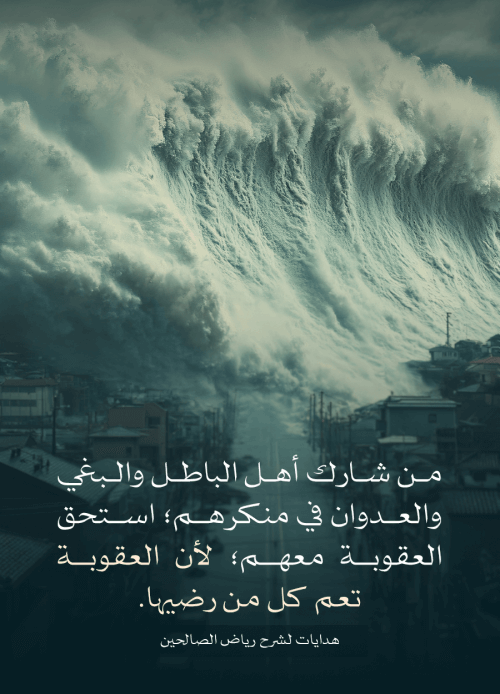
Anyone partaking a role with transgressors and wrongdoers will share their punishment because it is inclusive.
Riyadh Al-Salheen with explanation and benefits
If someone intends to do a good deed but was prevented by a valid excuse, he shall gain the reward of his intention.
Riyadh Al-Salheen with explanation and benefits
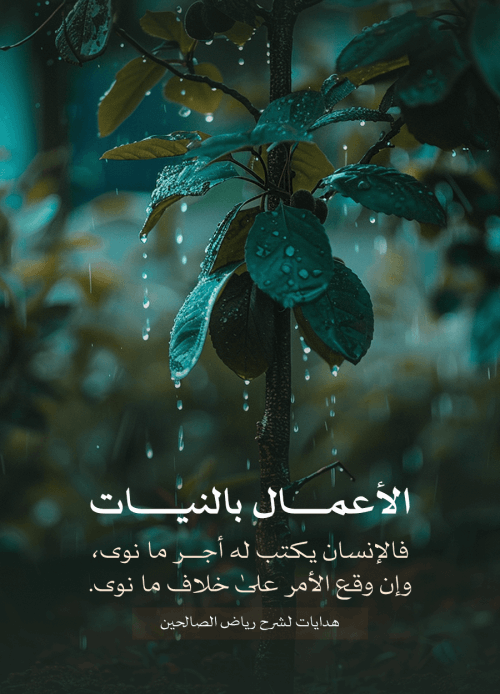
Actions are recompensed according to the intentions behind them, and the individual shall receive the reward of what he intended even if the outcome was contrary to his intention.
Riyadh Al-Salheen with explanation and benefits
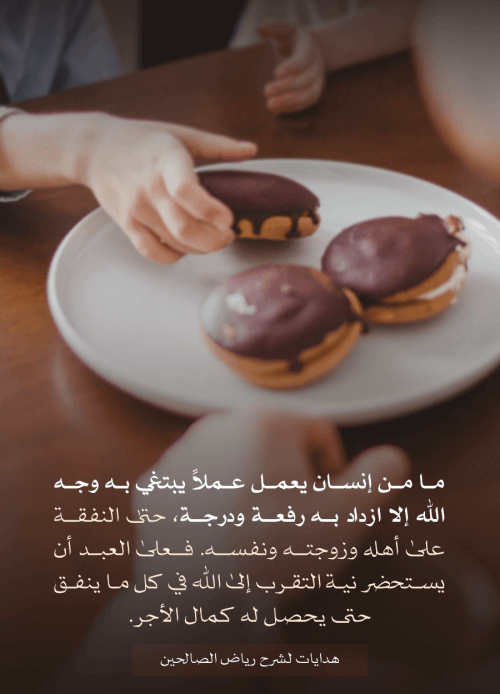
There is not a single good deed intended sincerely to please Allah except that its doer will be raised in rank and status thereby, so that he would reap the full reward.
Riyadh Al-Salheen with explanation and benefits
Love and contentment is measured by good deeds and intentions because they are the criteria for Allah’s acceptance of the servant; perhaps a small deed reaps great reward because of the intention behind it and perhaps a big deed reaps little reward because of the intention behind it
Riyadh Al-Salheen with explanation and benefits
One of the proofs Allah supports the servant is the latter’s sincere endeavor to rectify his intention and purify his heart by good deeds.
هدايات لشرح رياض الصالحين